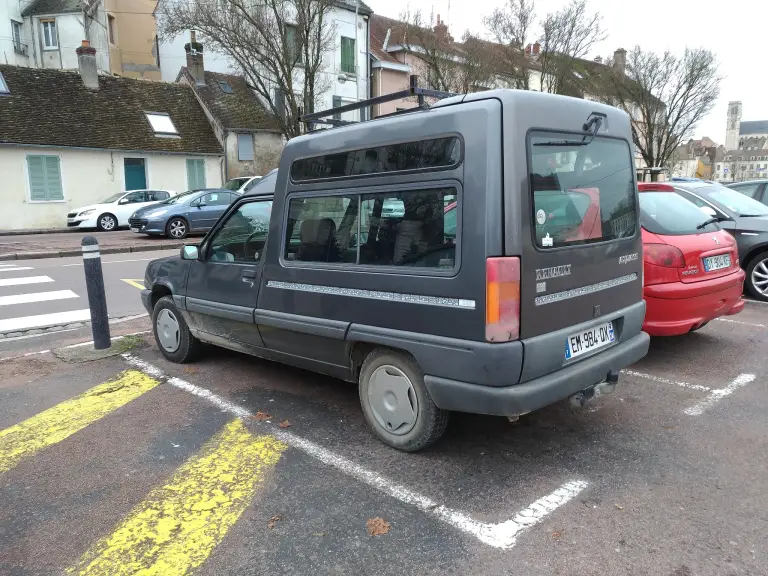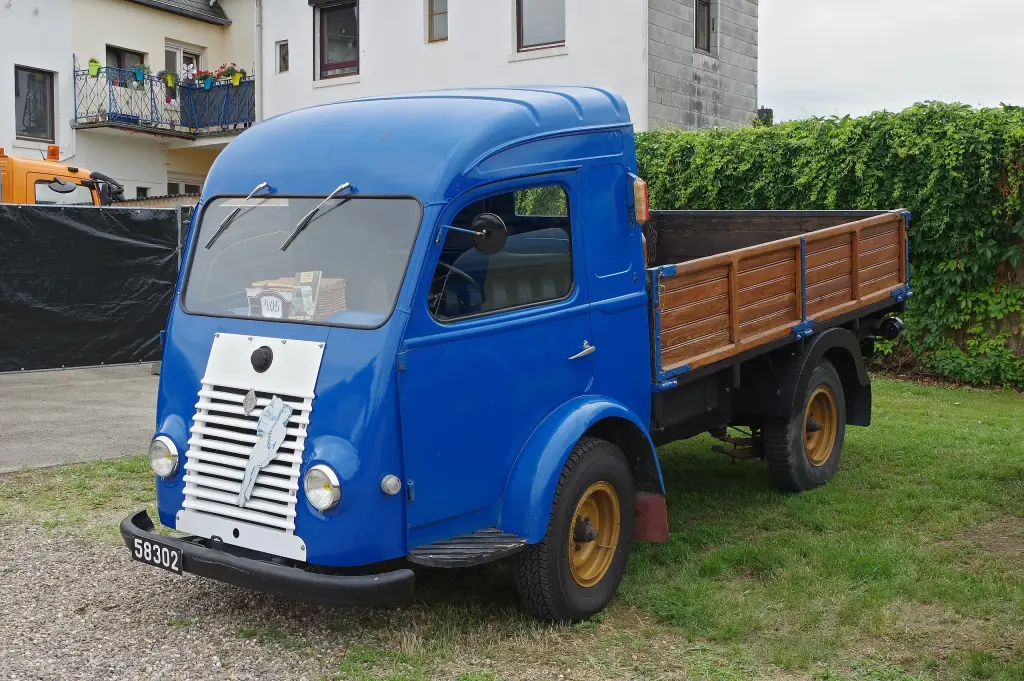
The Renault 1 000 kg is a light van of one-ton capacity introduced in 1947 and built for nearly two decades. A 1,400 kg version followed in 1949 and became the more popular choice, and from 1959 the two were branded Renault Voltigeur and Renault Goélette.
Renault 1 000 kg at a glance
| Maker | Renault, France |
|---|---|
| Production | 1947 to the mid-1960s |
| Type | light van, one-ton class |
| Prototype | 1945, designed for the military |
| Project code | 206 E1 |
| Later names | Voltigeur (1,000 kg) and Goélette (1,400 kg), from 1959 |
| Layout | rear-wheel drive, rigid axles, large wheels |
| Load volume | 7.45 m³ |
| Built | 124,570 |
Based on one source, the English Wikipedia article on the Renault 1 000 kg.
History of the Renault 1 000 kg
Plan Pons
The van was first presented in 1945 as a prototype light van designed for the military, and went on general sale in February 1947. In the summer of 1944 the French Ministry of Industrial Production had set out a prescriptive plan for the post-war motor industry, headed by Paul-Marie Pons: Renault and Peugeot were restricted to vans for the 1,000–1,400 kg market, while Citroën was to make trucks of two to three and a half tonnes. Citroën had already developed a van in the same class before the war and went ahead with the H Van, launched in 1947, which became Renault’s most effective rival. Renault still beat it on volume in the early years, helped by large orders from the military, the police and the postal service.
A conventional design
Renault followed the agreement with the 206 E1 project, built on general pre-war ideas: a chassis with a bolted body, made until 1950 by fitting metal panels to a wooden frame, which was quick and cheap to produce in an era of low industrial wages. Unlike the front-wheel-drive Citroën, the Renault used rear-wheel drive with rigid axles. Large wheels and a short wheelbase gave a tight turning circle and good ground clearance, reflecting plans for a four-wheel-drive version for military sales and for the poor state of French rural roads; the price was a raised interior floor. At launch the boxy, flat-sided van had an advertised load volume of 7.45 m³ against 7.3 m³ for the Citroën H.
Long life
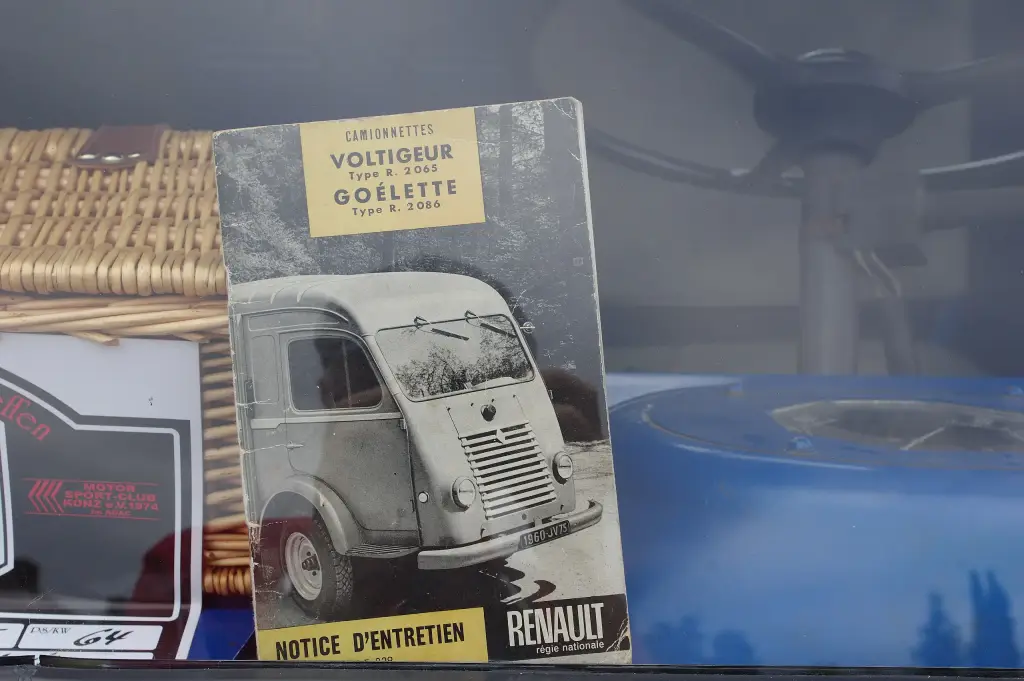
The basic architecture and silhouette barely changed over almost twenty years, but there were many small changes to the sheet metal, door hinges, bumpers, lights and indicators, and extensive adaptations for military and police versions. Police vans were nicknamed ‘panier à salade’, the paddy wagon, and appeared in newsreels removing arrested suspects in the troubled 1950s. Vans from the 1960s can be recognised by a small extra window behind each front door. A 1,400 kg version arrived in 1949 and soon outsold the original, and in 1959 the vans were renamed Voltigeur and Goélette, although the old 1,000 kg name is still often used. Altogether 124,570 were built, and by some measures it was France’s best-selling vehicle in its class in the 1950s.
Design and features
- Plan Pons product: built to the post-war plan that reserved the one-ton van class for Renault and Peugeot.
- Rear-wheel drive: rigid axles and a chassis-cab layout, simpler than the front-wheel-drive Citroën H.
- Large wheels: a short wheelbase and high ground clearance for rough roads and military use.
- Two payloads: the one-ton original and the 1,400 kg Goélette that replaced it in popularity.
Renault 1 000 kg versions
- 1 000 kg (1947): the original one-ton van, renamed Voltigeur in 1959.
- 1 400 kg (1949): heavier version, renamed Goélette in 1959.
- Military and police versions: adapted bodies for the gendarmerie and public services.
- Later 1960s vans: identified by the extra window behind the front doors.
Renault’s next light van was the Estafette, and the larger Galion took over heavier work. More Renaults are in the Renault collection.
Video: Renault Goelette from France to Allemagne
Video by A AS on YouTube.
Sources
- Renault 1 000 kg, English Wikipedia: Plan Pons, design, production figures