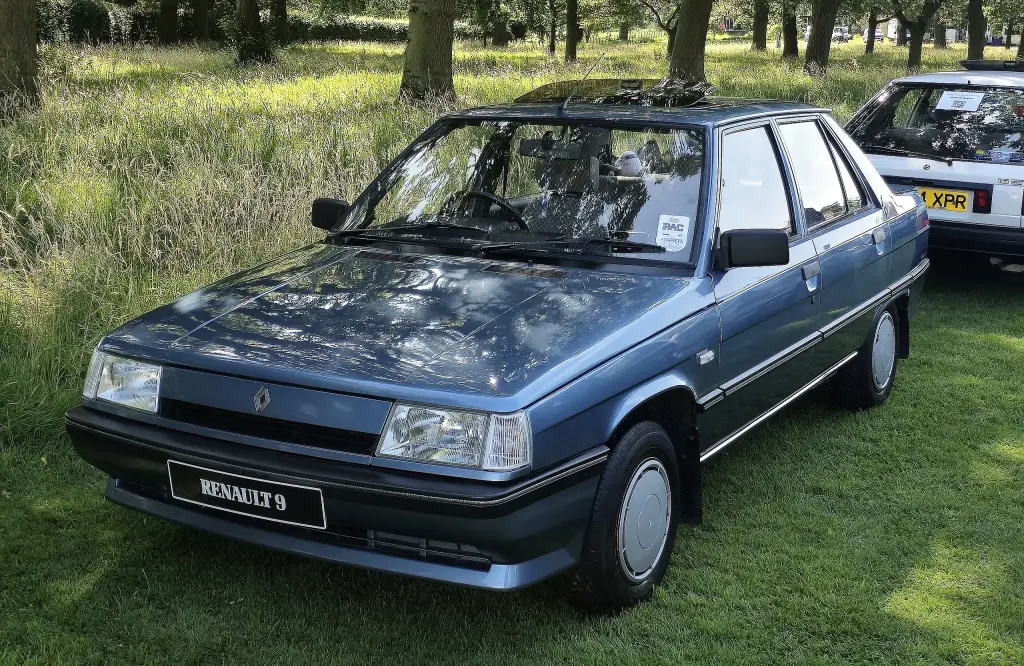
The Renault 9 and Renault 11 are small family cars produced from 1981 to 1989 as a saloon and a hatchback respectively. Both were styled by Robert Opron, shared the L42 project, and were chosen European Car of the Year in 1982.
Renault 9 and 11 at a glance
| Maker | Renault, France; AMC in the United States |
|---|---|
| Production | 1981–1989, to 2000 in Turkey |
| Bodies | Renault 9 four-door saloon, Renault 11 three- or five-door hatchback |
| Project code | L42 |
| Styling | Robert Opron |
| Layout | transverse front-wheel drive, independent suspension |
| Awards | European Car of the Year 1982, Motor Trend Car of the Year 1983 |
| American names | Renault Alliance and Renault Encore |
Based on one source, the English Wikipedia article on the Renault 9 and 11.
History of the Renault 9 and 11
One design, two bodies
The Renault 9 was introduced in October 1981 as a four-door saloon, reaching Britain in right-hand-drive form in March 1982; the 11 followed at the beginning of 1983 as a three- or five-door hatchback, in Britain from June that year. Both originated under the code name L42 and were designed by Robert Opron, and development of the 9 in 1977 as a ‘four metre’ model aimed to place it between the Renault 5 and the Renault 14. Opron used a traditional three-box design to appeal to more conventional buyers. The cars had transverse front-wheel drive and four-wheel independent suspension, and they won European Car of the Year in 1982, Motor Trend’s Car of the Year and a place among Car and Driver’s 10Best in 1983.
Three facelifts
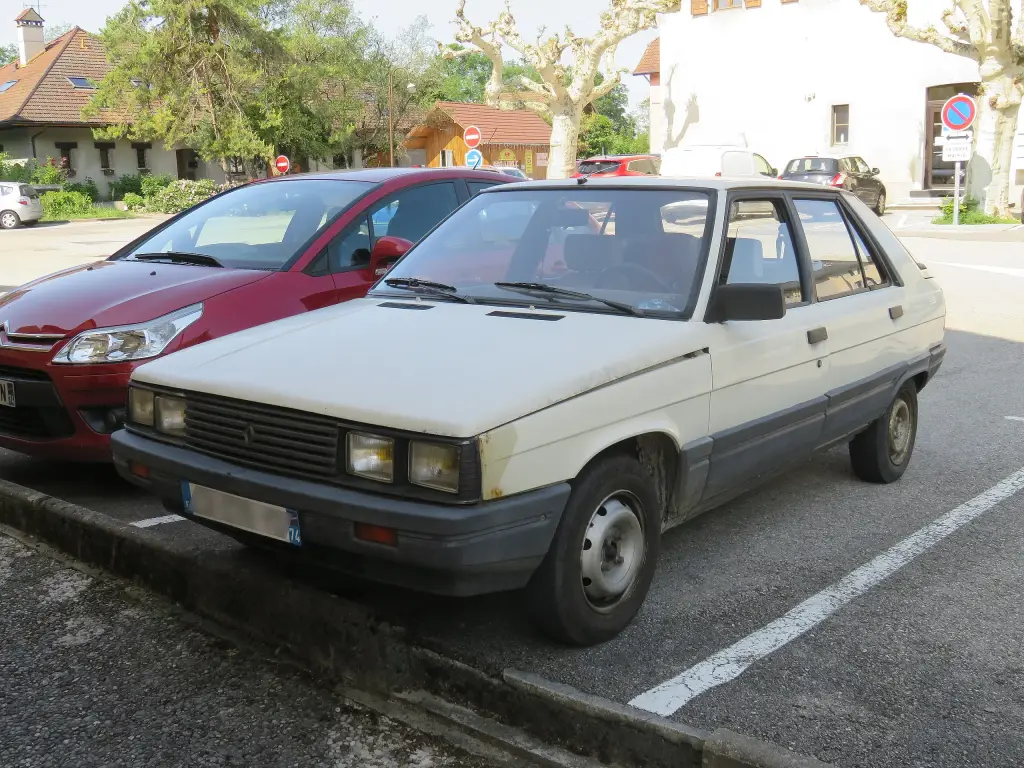
The 9 was facelifted three times and the 11 twice. When the 11 was released in 1983 it had double headlights, unlike the 9; in 1985 the 9 received the same double-headlight front and look as the 11, but only in the GTS, GTD, TSE, TDE, TXE and GTX levels, while the cheaper C, TC, GTC, TL, GTL and TD models kept the phase 1 front. The later Renault 9 Broadway series also had the four-headlight front. The more aerodynamic Phase 2 appeared in 1987, and from then on the 9 and 11 differed only at the rear. Phase 3, not sold in most of Europe, was released in Turkey in 1997 with rounder head and tail lights and oval body cladding around the bumpers and boot lid; its front design had originally been developed for the 1993 facelift assembled in Taiwan as the Renault Luxmore. These Turkish cars carried a Broadway badge alongside the Renault 9 name.
In America
For North America the cars were built by American Motors Corporation as the Renault Alliance and Renault Encore, produced in Kenosha, Wisconsin, on the Renault 9 and 11 platform.
Design and features
- Two bodies, one project: saloon and hatchback developed together as L42.
- Robert Opron styling: a conventional three-box saloon and a sportier hatchback.
- Independent suspension: four-wheel independent layout with transverse front-wheel drive.
- Long production: built in Turkey until 2000 as the Renault 9 Broadway.
Renault 9 and 11 versions
- Renault 9 (1981): the four-door saloon.
- Renault 11 (1983): three- and five-door hatchback with double headlights.
- Phase 2 (1987): more aerodynamic front and rear.
- Phase 3 Broadway (1997): Turkish-built final revision.
- Renault Alliance and Encore: American versions built by AMC.
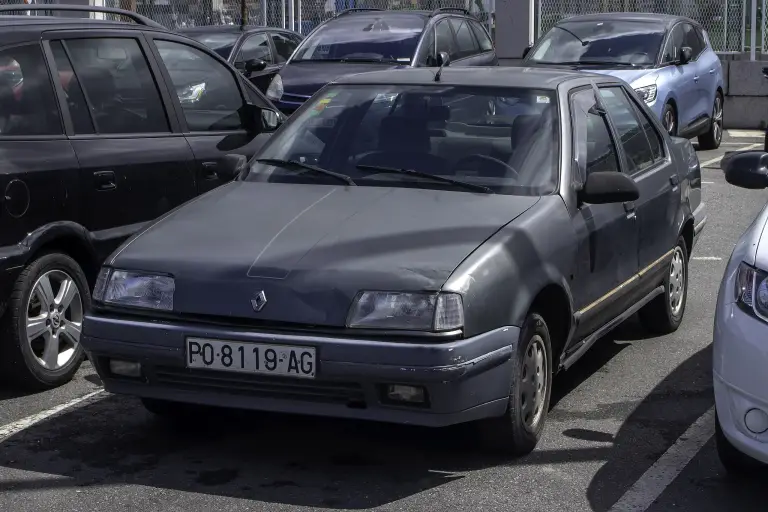
The 9 and 11 replaced the Renault 14 in the range and were replaced by the Renault 19; their American versions appear in Renault Alliance. More cars are in the Renault collection.
Video: Renault 11 Turkey advertisement
Video by 9gtl9 on YouTube.
Sources
- Renault 9 and 11, English Wikipedia: development, facelifts, awards, American versions