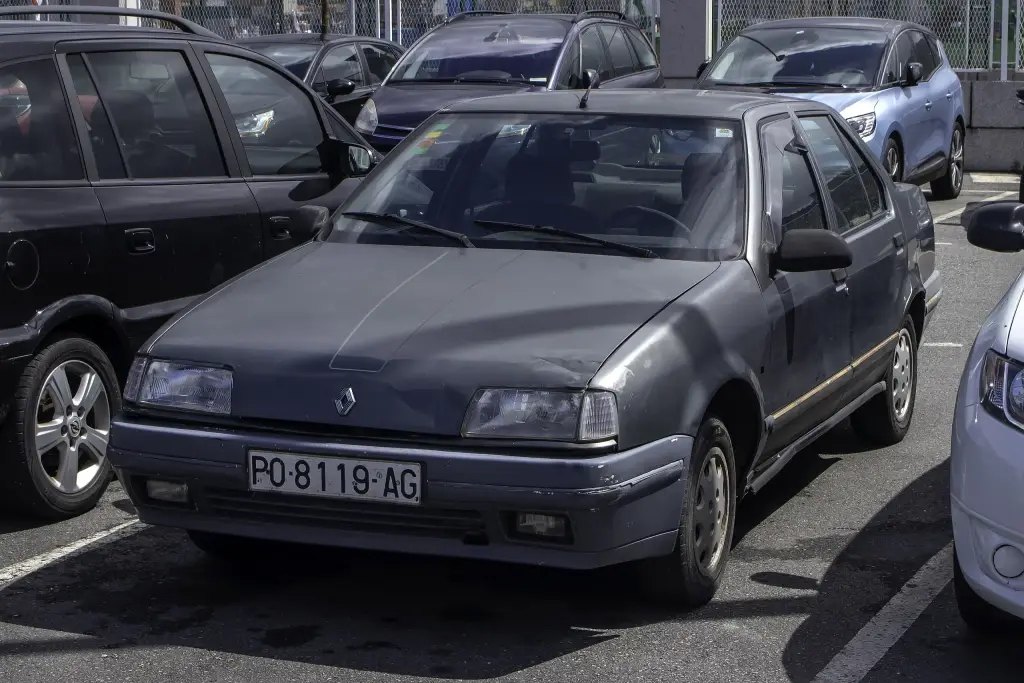
The Renault 19 is a small family car produced between 1988 and 1996, continuing in Turkey and Argentina until 2000. It replaced the Renault 9 and 11, was styled by Giorgetto Giugiaro, and was meant to be Renault’s last numerically named car.
Renault 19 at a glance
| Maker | Renault, France |
|---|---|
| Production | 1988–1996, to 2000 in Turkey and Argentina |
| Development code | X53, with B53, C53, L53 and D53 body codes |
| Styling | Giorgetto Giugiaro |
| Engines | Energy 1.4, F-type 1.7, later 1.8 |
| Bodies | three- and five-door hatchback, Chamade saloon, convertible |
| Convertible | built by Karmann, on sale from early 1992 |
| Facelift | summer 1992 |
| Replaced by | Renault Mégane |
Based on one source, the English Wikipedia article on the Renault 19.
History of the Renault 19
A new naming policy
The Renault 19 was presented in June 1988, with French sales starting in September, and went on sale in Britain in right-hand-drive form in February 1989. It replaced the 9 and 11, both ageing by the end of the 1980s. The internal code was X53, with the five-door using the B53 chassis code, the three-door C53, the Chamade L53 and the convertible D53. It was intended to be Renault’s last numerically named car, and it brought in a new naming policy under which the saloon versions were called the 19 Chamade to distinguish them from the hatchbacks. The saloon was launched in 1989, and in many markets the Chamade badge was dropped after the 1992 facelift, sometimes replaced by the tag Europa. Chamade buyers were more often men, more often married and more rural and older than hatchback buyers.
Engines and bodies
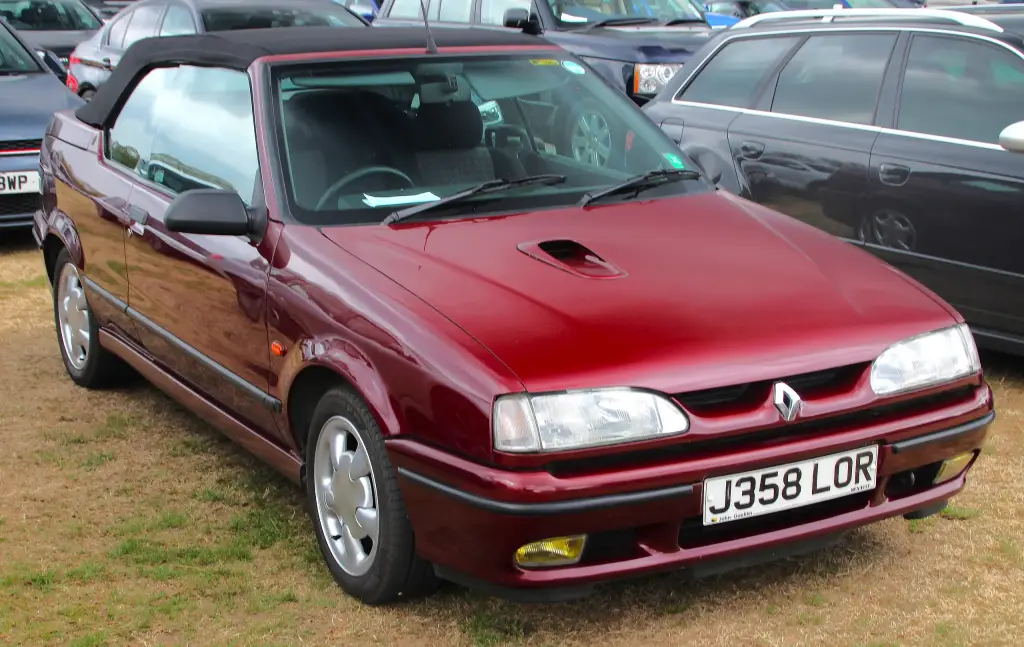
The car used Renault’s new E-type or Energy 1.4-litre engine and F-type 1.7-litre versions, while base models used the older OHV C-type Cléon engines of 1.2 and 1.4 litres depending on the market. At first only an atmospheric diesel was offered, with a turbocharged version arriving at the beginning of 1992. A convertible bodystyle built by Karmann was shown in 1991 and went on sale at the beginning of 1992, available only with the two most powerful engines; few were made in the Phase I design because the facelift followed so quickly. A four-speed automatic became available on fuel-injected top versions in autumn 1990, while lesser models had four- or five-speed manuals or a three-speed automatic.
Facelift and the end
In the summer of 1992 a revamped model appeared with a substantially restyled front and rear, a new dashboard and interior, although right-hand-drive cars kept the original dashboard. Smaller Energy engines gradually replaced the old pushrod units and 1.8-litre engines took over at the top from the more powerful 1.7. The 19 was sold in most of Europe until 1996, in Argentina until 2000 and in Colombia until 2001, and Turkish production also lasted until 2000. Its platform and running gear continued in the first-generation Renault Mégane. The car was Car of the Year in Spain and Germany in 1989, in Ireland in 1990 and in Argentina in 1993. The exterior design drew a muted response but the interior comfort, handling and build quality were praised as better than earlier Renaults.
Design and features
- Giugiaro styling: a conservative but praised shape with a notably better interior than previous Renaults.
- Chamade saloon: the first use of the new naming policy for saloon versions.
- Karmann convertible: a factory soft-top from early 1992.
- Energy engines: the new E-type 1.4 and F-type 1.7, later 1.8 units.
Renault 19 versions
- 19 three- and five-door hatchback: the main body styles, codes C53 and B53.
- 19 Chamade: four-door saloon on the L53 code.
- 19 Cabriolet: Karmann-built convertible on the D53 code.
- Post-1992 facelift cars: restyled front and rear with Energy and 1.8-litre engines.
The 19 replaced the Renault 9 and 11 and was replaced by the Renault Mégane. Its bigger relative was the Renault 21; more cars are in the Renault collection.
Video: Renault 19 Europa owner review
Video by Жизнь Нивавода on YouTube.
Sources
- Renault 19, English Wikipedia: codes, engines, bodies, facelift, production