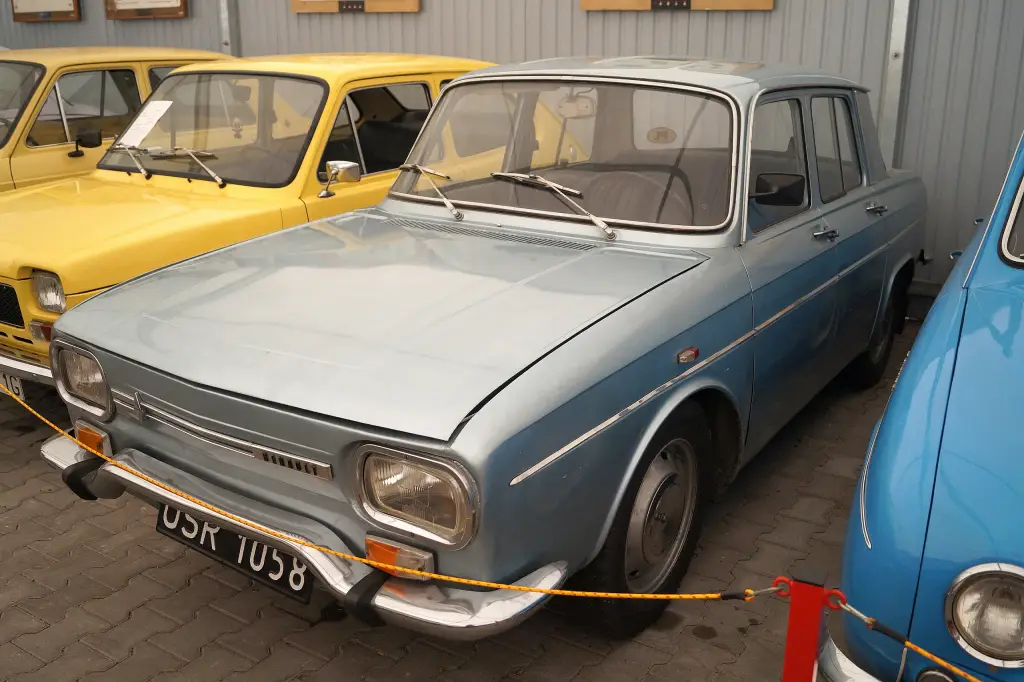
The Renault 10 is a small family saloon with a rear engine and rear-wheel drive, produced from 1965 to 1972. It was a longer and more upmarket version of the Renault 8, and in 1972 it was replaced by the front-wheel-drive Renault 12.
Renault 10 at a glance
| Maker | Renault, Flins, France |
|---|---|
| Production | 1965–1972 (to 1972 in Bulgaria and Spain) |
| Body | four-door saloon |
| Layout | rear engine, rear-wheel drive |
| Launched | September 1965 as the 10 Major |
| Engine | 1,108 cc, later 1,289 cc in the 10-1300 |
| Front boot | 315 litres, up from 240 in the Renault 8 |
| Top speed | 135 km/h (10-1300) |
| Replaced by | Renault 12 |
Based on one source, the English Wikipedia article on the Renault 10.
History of the Renault 10
The 10 Major
In September 1965 Renault launched the Renault 10 Major, branded the Renault 1100 in some markets, as a replacement for the Renault 8 Major. It was a lengthened Renault 8 with a longer front overhang and a much larger front luggage compartment, which grew from 240 to 315 litres. The front and rear were completely redesigned, while the dimensions and sheet metal of the central cabin were unchanged. The 1,108 cc engine, already used in top versions of the Renault 8 in some markets, came from the Renault Caravelle. In France the 10 struggled against the Peugeot 204 launched in the same year, while in the United States it was advertised as ‘The Renault for people who swore they would never buy another one’, after the Dauphine’s poor reputation.
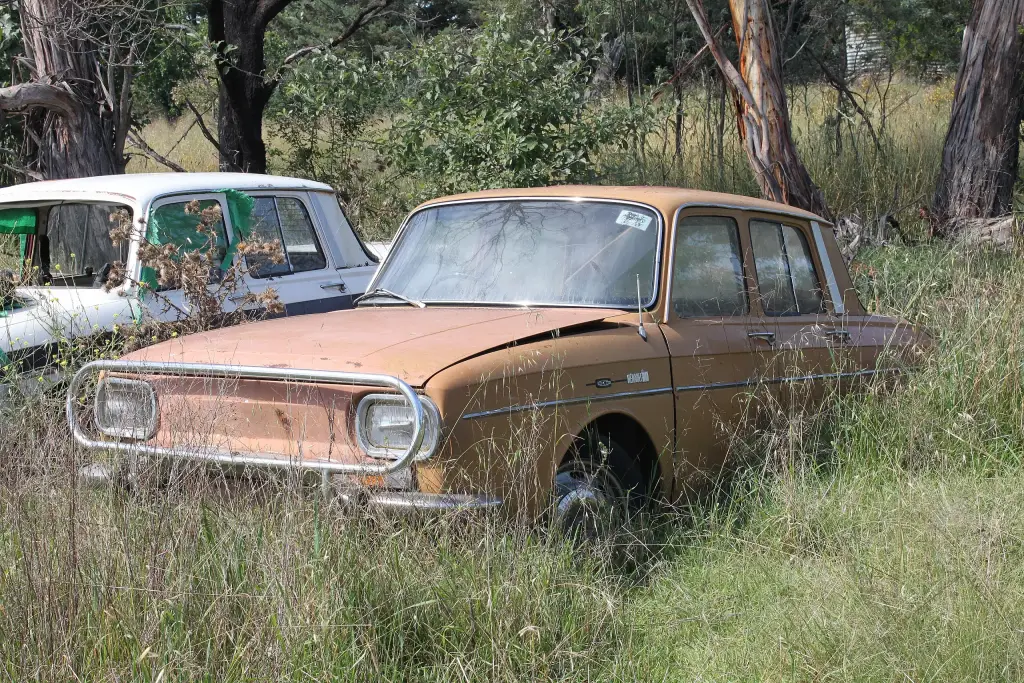
Rectangular headlights
Early cars had round headlights, but two years after launch the 10 was facelifted with rectangular headlights that further separated it from the Renault 8; round sealed-beam lights were kept for the United States and Canada. Less powerful versions of the Renault 8 stayed in production alongside it at the Flins plant with the shorter body. In October 1970, at the motor show, the 1,289 cc engine of the new Renault 12 was fitted to the Renault 10 to create the Renault 10-1300. Although the rear-mounted engine was in most respects identical to the front-mounted unit of the 12, it was detuned with a lower compression ratio and a listed 52 PS SAE (48 PS DIN) against 60 PS SAE (54 PS DIN) for the 12.
Two competing Renaults
Renault thus sold two competing models in the same class, but the older rear-engined car was some 1,000 francs cheaper and reached 135 km/h against 145 km/h for the entry-level 12. The 1,108 cc version was still offered for 1970, but only with the Jaeger button-operated semi-automatic transmission available since 1963. French production ended at the end of summer 1971, after two years alongside the more successful 12, though the Renault 8 was still sold in France as late as 1973. The 10 was also built in Bulgaria until 1972 and in Spain, and in South Africa a tuned version was assembled and sold as the Renault Alconi, with 68 bhp.
Design and features
- Bigger front boot: 315 litres instead of the Renault 8’s 240, thanks to a longer front overhang.
- Caravelle engine: the 1,108 cc unit from Renault’s coupé.
- Rectangular headlights: from the 1967 facelift, except for North American cars.
- Semi-automatic option: the Jaeger button-operated transmission, standard with the 1,108 cc engine in 1970.
Renault 10 versions
- 10 Major (1965): the original, sold as the Renault 1100 in some markets.
- Facelifted 10: rectangular headlights and a revised front and rear.
- 10-1300 (1970): 1,289 cc engine from the Renault 12, 135 km/h.
- Renault Alconi: South African performance version with 68 bhp.
The 10 was the bigger brother of the Renault 8 and shared its engine with the Renault Caravelle. It was replaced by the Renault 12; more cars are in the Renault collection.
Video: Renault 10 Major
Video by Ruben Hubregtse on YouTube.
Sources
- Renault 10, English Wikipedia: history, engines, production, export versions