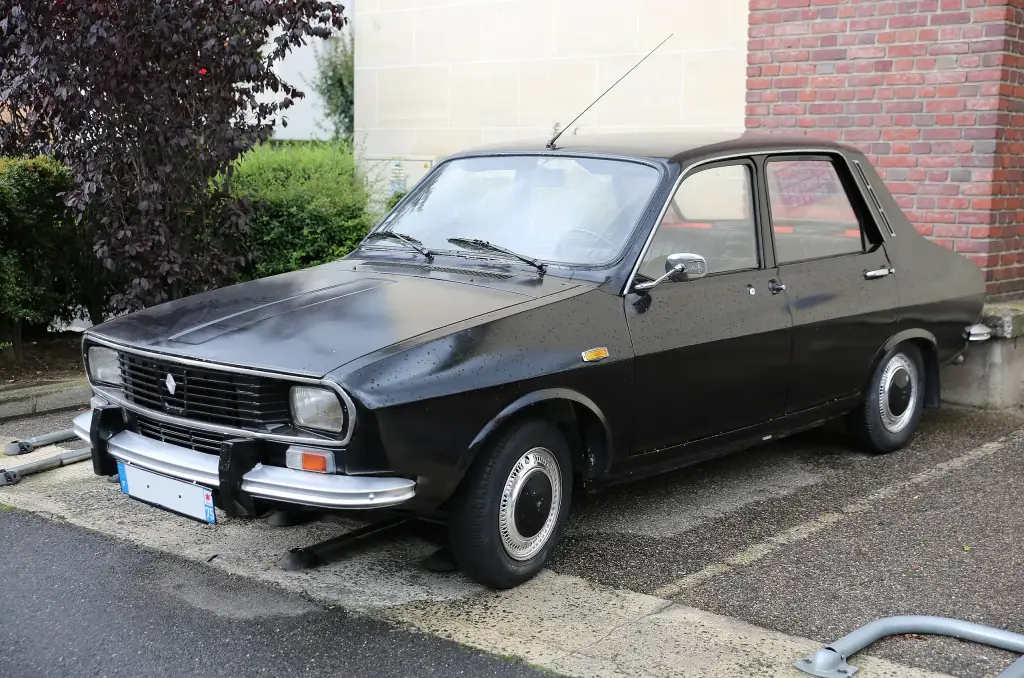
The Renault 12 is a small family car introduced at the Paris Motor Show in October 1969 and built in France until 1980. It was sold as a saloon and an estate and made under licence in many countries well into the 21st century, with about 2.5 million built.
Renault 12 at a glance
| Maker | Renault, France |
|---|---|
| Production | 1969–1980 in France, to 2000 in Turkey |
| Bodies | four-door saloon (Berline), estate (Break) |
| Project | 117, started in January 1964 |
| Layout | front-wheel drive, longitudinal engine ahead of the front wheels |
| Engine | 1,289 cc Cléon four, 60 PS SAE / 54 PS DIN |
| Top speed | 145 km/h |
| Sales | about 2.5 million |
| Licensed versions | Dacia 1310 until 2004, Dacia Pick-Up until 2006 |
Based on one source, the English Wikipedia article on the Renault 12.
History of the Renault 12
Project 117
In January 1964 Renault’s styling centre began work on the 117, a model to bridge the gap between the Renault 8 and the Renault 16. The brief was explicit: the car had to be economical and not very sophisticated, with a roomy interior and a large boot; a small engine would do. It had to be easy to produce so it could be built all over the world, reliable for export markets and comfortable enough for France, and it should serve as a base for many variations. The design dated back to the genesis of the Renault 16, and some early R16 proposals looked more like the eventual 12.
Mechanical layout
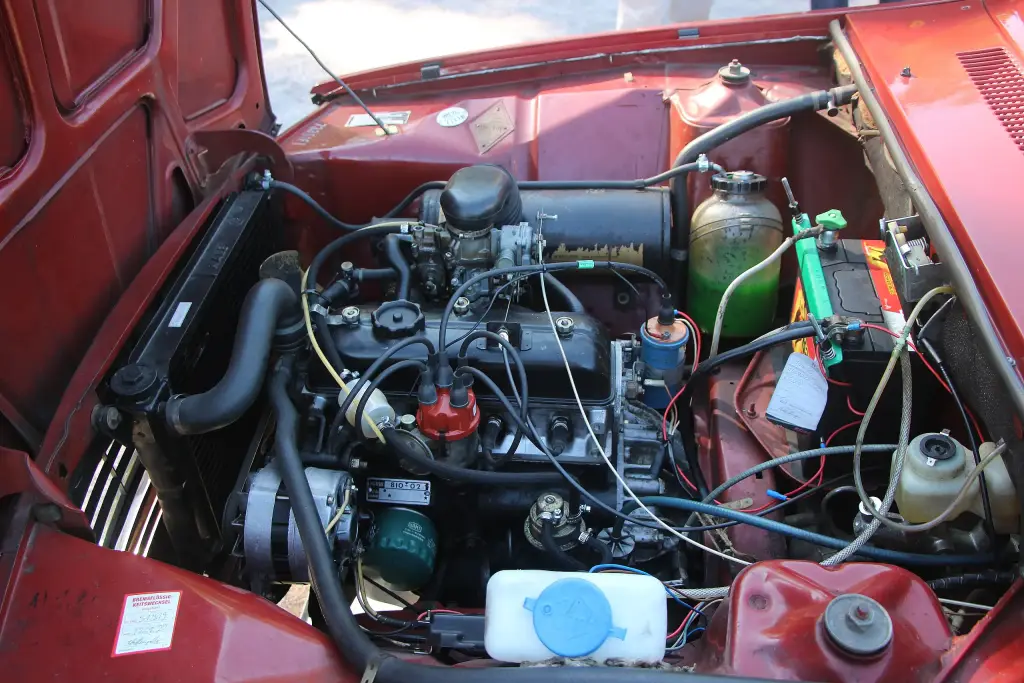
Like all new Renaults of the time the 12 had front-wheel drive, but a very different layout from the Renault 4 and 16: the engine sat longitudinally ahead of the front wheels, not behind them. The aluminium engine of the Renault 16 would have fitted easily and was later used in some high-end versions, but at launch it was rejected on cost grounds. Instead Renault enlarged the iron Cléon unit used since 1962 in the Renault 8 and 10 to 1,289 cc, giving 60 PS SAE (54 PS DIN) and a top speed of 145 km/h.
Launch and reception
At the Paris Motor Show in October 1969 the 12 came only as a four-door saloon in L and TL specifications; the TL had two separate reclining front seats instead of a bench, door armrests, boot and glovebox lights, a heated rear window and extra warning lights. In its first years the European press praised its spacious and comfortable interior, styling, performance and low fuel consumption, while Road & Track in 1974 called the engine noise obtrusive and the heavy unassisted steering a serious design flaw, and marked the ventilation very poorly.
Around the world
Renault 12 sales ended in western Europe in 1980, but affiliates kept building it. The last R12 was made in Turkey in 2000, while Dacia in Romania built the R12-based 1310 saloon and estate until 2004 and the R12-based pick-up until December 2006. The car’s successor in the Renault range, the Renault 18, was developed from its underpinnings.
Design and features
- Room and boot: the brief’s priorities, with a spacious cabin and a large luggage compartment.
- Easy to build: simple construction designed for licensed production around the world.
- Longitudinal front engine: an unusual front-wheel-drive layout for Renault at the time.
- Economical Cléon engine: a 1,289 cc iron four giving 145 km/h and low fuel consumption.
Renault 12 versions
- 12 L and TL (1969): the original saloons, the TL better equipped.
- 12 Break: estate version.
- High-end versions: later cars with the aluminium engine from the Renault 16.
- Dacia 1310: Romanian version built until 2004.
- Dacia Pick-Up: R12-based pick-up built until December 2006.
The 12 replaced the Renault 10 and was itself replaced by the Renault 18; its coupé derivative was the Renault 15 and 17. More cars are in the Renault collection.
Video: Renault 12 Autotest
Video by wiperfluid on YouTube.
Sources
- Renault 12, English Wikipedia: project brief, engine, reception, licensed production