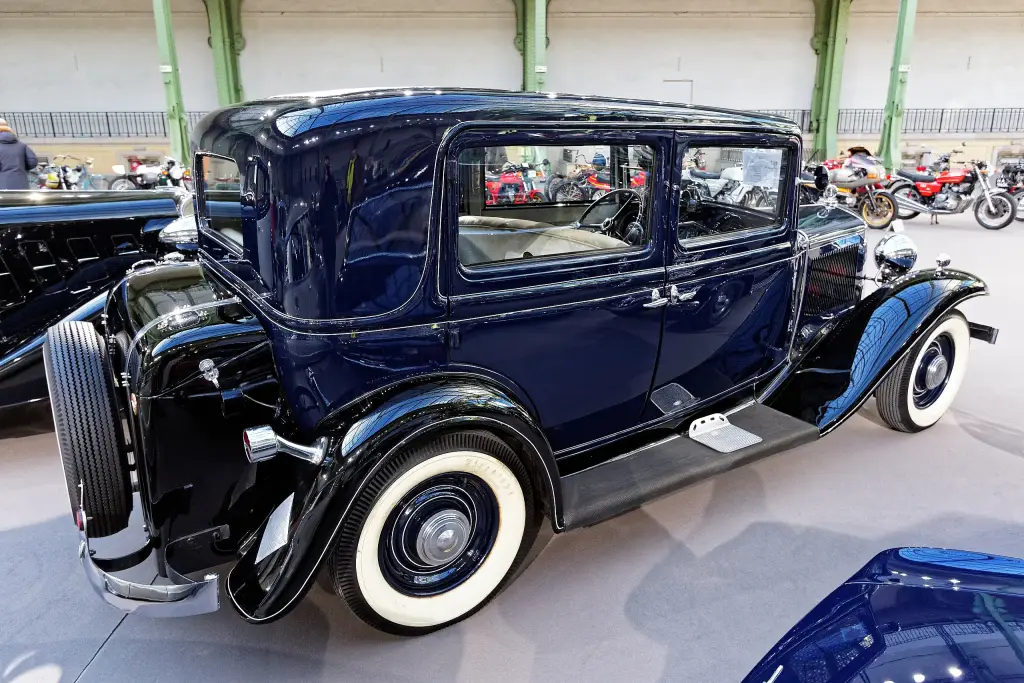
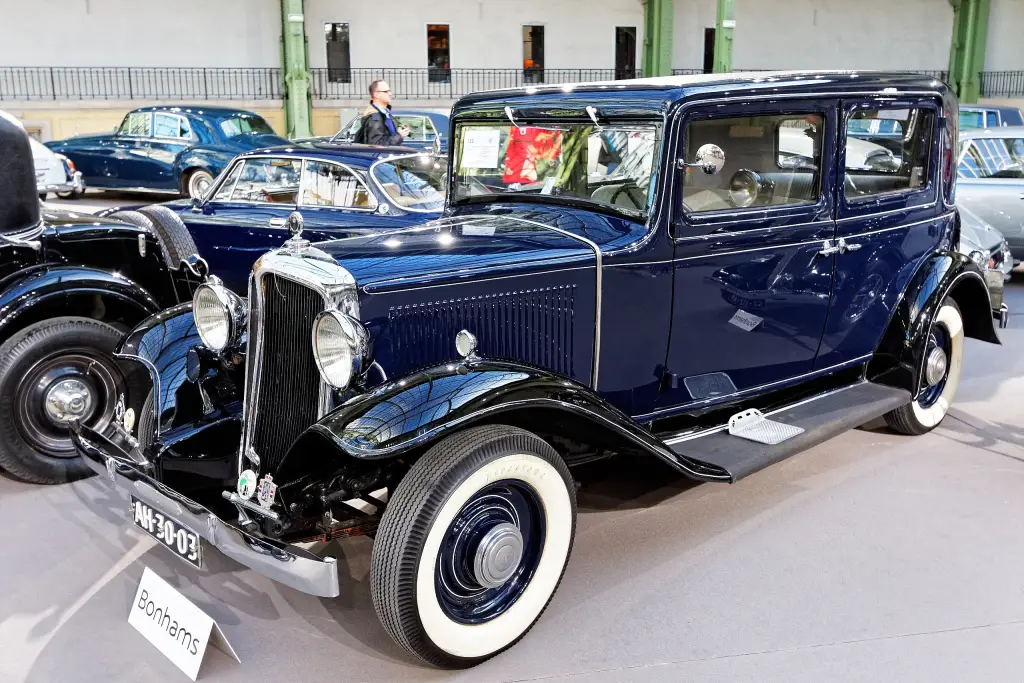
The Renault Vivaquatre is a car produced between 1932 and 1939. Its large four-cylinder engine placed it initially in the 10CV car tax class, though a larger engine later made it a contender in the 11CV class.
Renault Vivaquatre at a glance
| Maker | Renault, France |
|---|---|
| Production | 1932–1939 |
| Tax class | 10CV, later 11CV |
| Origins | developed from the Renault Primaquatre |
| Project code | KZ7, against KZ6 for the Primaquatre |
| Wheelbase | 26 cm longer than the Primaquatre |
| Taxi version | G7 long-wheelbase, from April 1933 |
| In service | Vivaquatre taxis until the end of the 1950s |
Based on one source, the English Wikipedia article on the Renault Vivaquatre.
History of the Renault Vivaquatre
An offshoot of the Primaquatre
The Vivaquatre originated as an offshoot of the Primaquatre’s development, which had come to the market a year earlier. The two cars shared a broadly similar chassis, although the Vivaquatre had, even in normal configuration, a wheelbase lengthened by 26 cm. Factory project codes hint at the shared origins: the original Vivaquatre was project KZ7 while the original Primaquatre was KZ6, and both replaced the car known at the time as the Renault 10CV and identified in retrospect as the KZ. The Vivaquatre replaced a robust, unpretentious car.
Taxi work
The long-wheelbase G7 version was offered for taxi work from April 1933, and Vivaquatre taxis continued to operate until the end of the 1950s, long after the model itself had gone out of production.
Design and features
- Longer chassis: 26 cm more wheelbase than the Primaquatre.
- 10CV then 11CV: a large four-cylinder engine that grew during production.
- G7 taxi: a long-wheelbase version for Paris taxi fleets from 1933.
- Long after-life: taxis still working at the end of the 1950s.
Renault Vivaquatre versions
- Vivaquatre (1932): the standard car.
- Vivaquatre G7 (1933): long-wheelbase taxi version.
The Vivaquatre was developed from the Renault Primaquatre and sat alongside the Renault Monaquatre in the range. More cars are in the Renault collection.
Video: Renault Vivaquatre KZ23 1935
Video by Ronald Vermeulen on YouTube.
Sources
- Renault Vivaquatre, English Wikipedia: origins, wheelbase, tax class, taxi version