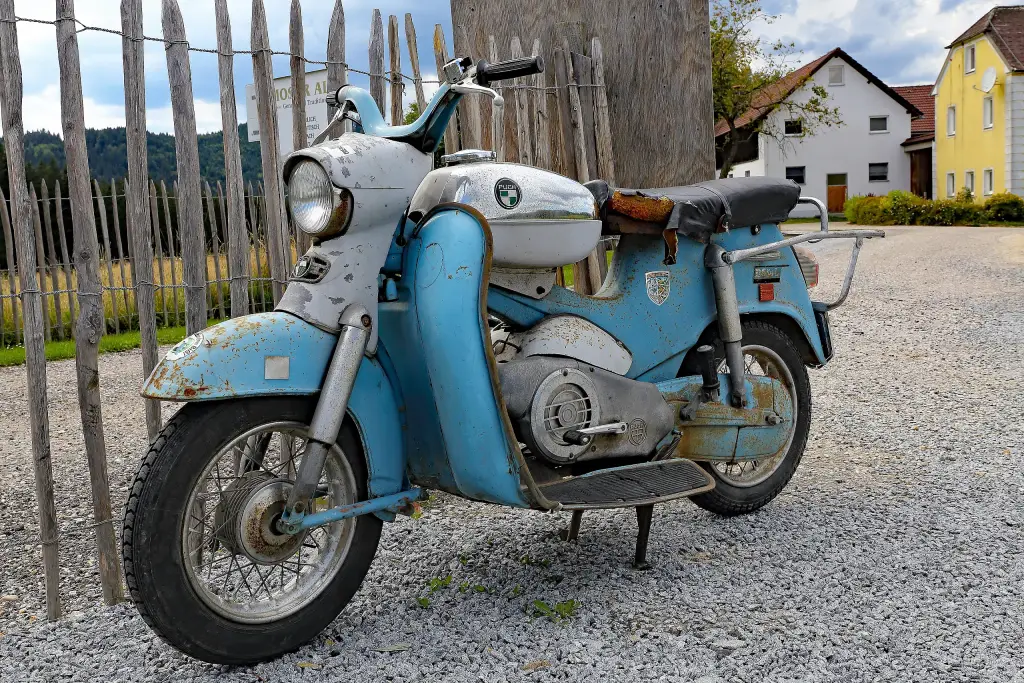
The Puch DS 50, also known as the DS 50 N, is a moped and motor scooter that Steyr-Daimler-Puch built in Graz from 1959 to 1981. Its name stands for Doppelsitzer-Schalenrahmen — a two-seat pressed-steel shell frame — and the number 50 for its displacement of about 50 cc.
Puch DS 50 at a glance
| Maker | Steyr-Daimler-Puch, Graz, Austria |
|---|---|
| Production | 1959–1981 |
| Type | moped and motor scooter |
| Engine | 48.8 cc fan-cooled single-cylinder two-stroke, from the VS 50 |
| Power | 1.0–1.7 kW |
| Bore × stroke | 38 × 43 mm |
| Gearbox | three-speed, four-speed from 1967 |
| Frame | pressed-steel shell frame, two seats |
| Tyres | 3.00–12 |
| Tank | 5.5 litres, later 10.5 litres |
| Weight | 70 kg |
| Top speed | 40 km/h |
| Built | 283,554 |
The DS 50 is described only in the German Wikipedia, and this page is based on that article alone.
History of the Puch DS 50
The DS 50 was introduced in 1959 and stayed in the catalogue until 1981, a run of twenty-two years. It used a fan-cooled single-cylinder two-stroke of 48.8 cc derived from the Puch VS 50, with the clutch and gearbox combined in one block. The first models had a three-speed gearbox with a twist-grip hand shift, and a three-speed foot shift was available at extra cost; from 1967 the DS 50 received a four-speed foot shift and modified front and rear lights. Extras offered for a surcharge were a luggage carrier, a frame guard for the front mudguard and crash bars.
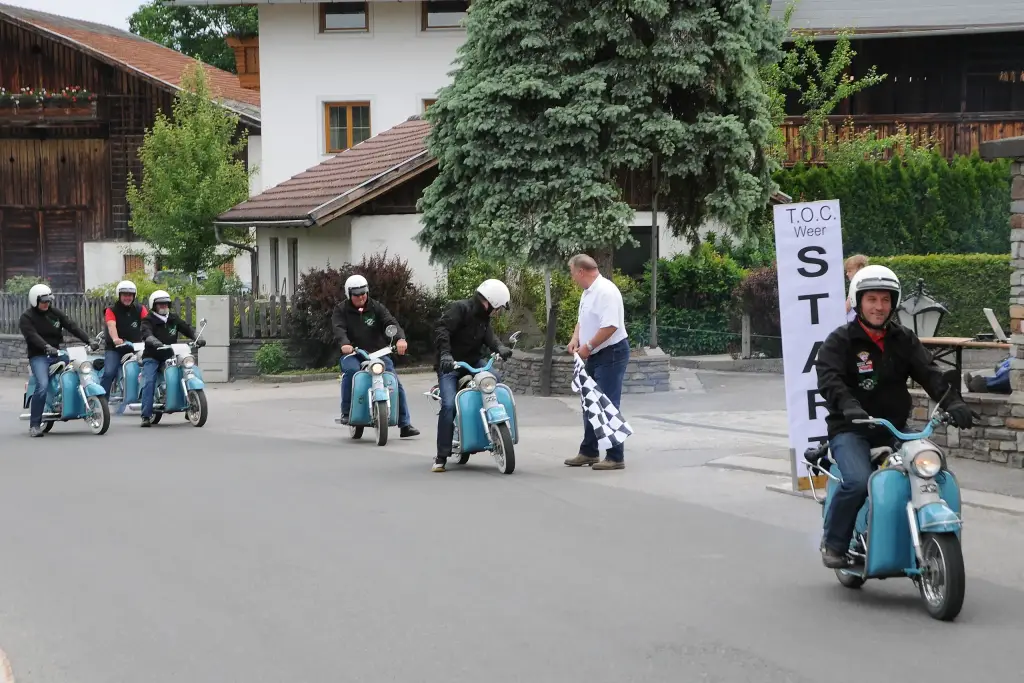
Colours and equipment
The first DS 50s were painted light blue. Later models came in champagne-yellow-cream with a larger 10.5-litre tank and a chrome handlebar, and export models sometimes had different colour schemes. The 1960 DS 50 N, whose technical data are known in detail, had a 5.5-litre tank with a reserve tap, 3.00–12 tyres, a tachometer reading to 60 km/h, a steering lock, a centre stand, a bell and a tool kit. It weighed 70 kg ready to ride and had a top speed of 40 km/h.
The DS 60 and the special models
Between 1960 and 1966 Puch also built the DS 60, with a 60 cc engine of 2.9 kW. It was painted grey, differed little from the DS 50 apart from the so-called R engine and an exhaust routed under the footboard instead of along the right side, and reached up to 70 km/h according to the maker; 27,469 were built. The DS 50 itself was offered in a long list of special versions: the DS 50 N Alabama of 1967, the DS 50 V Twen of 1969 in orange with a chrome crash frame instead of footboards, a larger tank and a high chrome handlebar, and the DS 50 V/II, L, K, DS 50-4 and RX Elegant. The 1959–1960 DS 50 Tandem had a special frame because two-seat mopeds of the time had to let the passenger pedal as well.
Prices
The DS 50 stayed cheap transport for a long time. In 1974 it cost 10,556 schillings, and by 1981, its last year, the price had risen to 15,517 schillings — roughly 1,128 euros at the rate used by the German Wikipedia. With 283,554 examples built, it was one of the most numerous Puch two-wheelers of the post-war years.
Design and features
- Two-seat shell frame: a pressed-steel frame designed from the start for a passenger, hence the name Doppelsitzer-Schalenrahmen.
- VS 50 engine: a fan-cooled 48.8 cc two-stroke with clutch and gearbox in one block.
- Three, then four speeds: twist-grip hand shift at first, four-speed foot shift from 1967.
- Practical extras: luggage carrier, frame guard and crash bars were available at extra cost.
- Long production: twenty-two years and 283,554 machines.
Puch DS 50 versions
- DS 50 / DS 50 N: the standard moped-scooter.
- DS 60 (1960–1966): 60 cc, 2.9 kW, grey, exhaust under the footboard, 27,469 built.
- DS 50 N Alabama (1967): a named special version.
- DS 50 V Twen (1969): orange, chrome crash frame, larger tank, high handlebar.
- DS 50 L, K, V/II, DS 50-4 and RX Elegant: further equipment and export versions.
- DS 50 Tandem (1959–1960): built so that the passenger could pedal too.
The DS 50’s engine came from the Puch MS 50 family, and the simpler Puch Maxi was the firm’s mass-market moped. More Puch models are in the Puch collection.
Sources
- Puch DS 50, German Wikipedia: history, versions, technical data, production total
- Puch, English Wikipedia: the Graz factory and its moped range