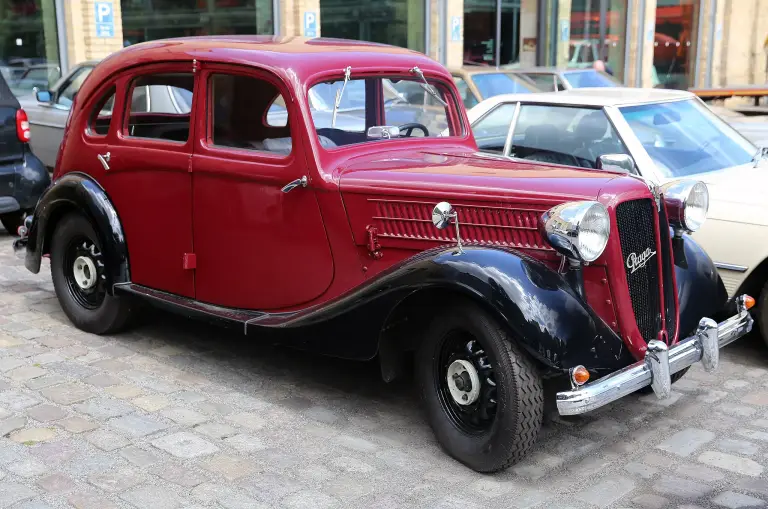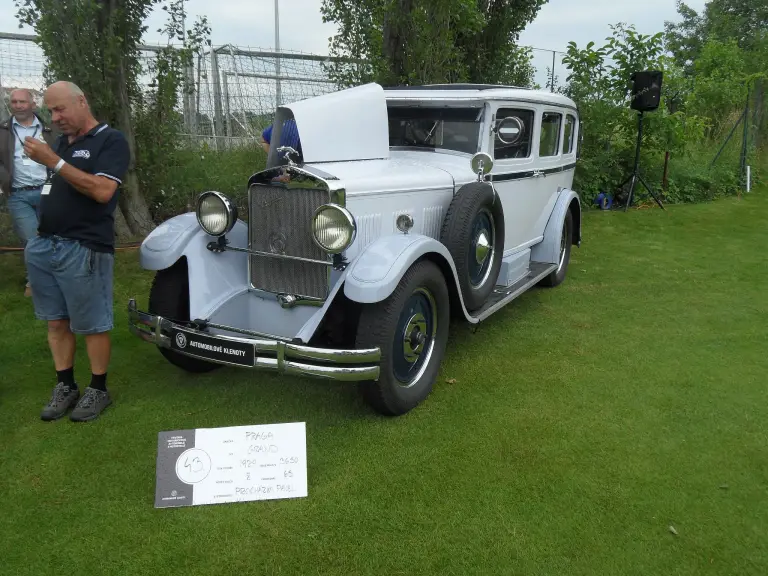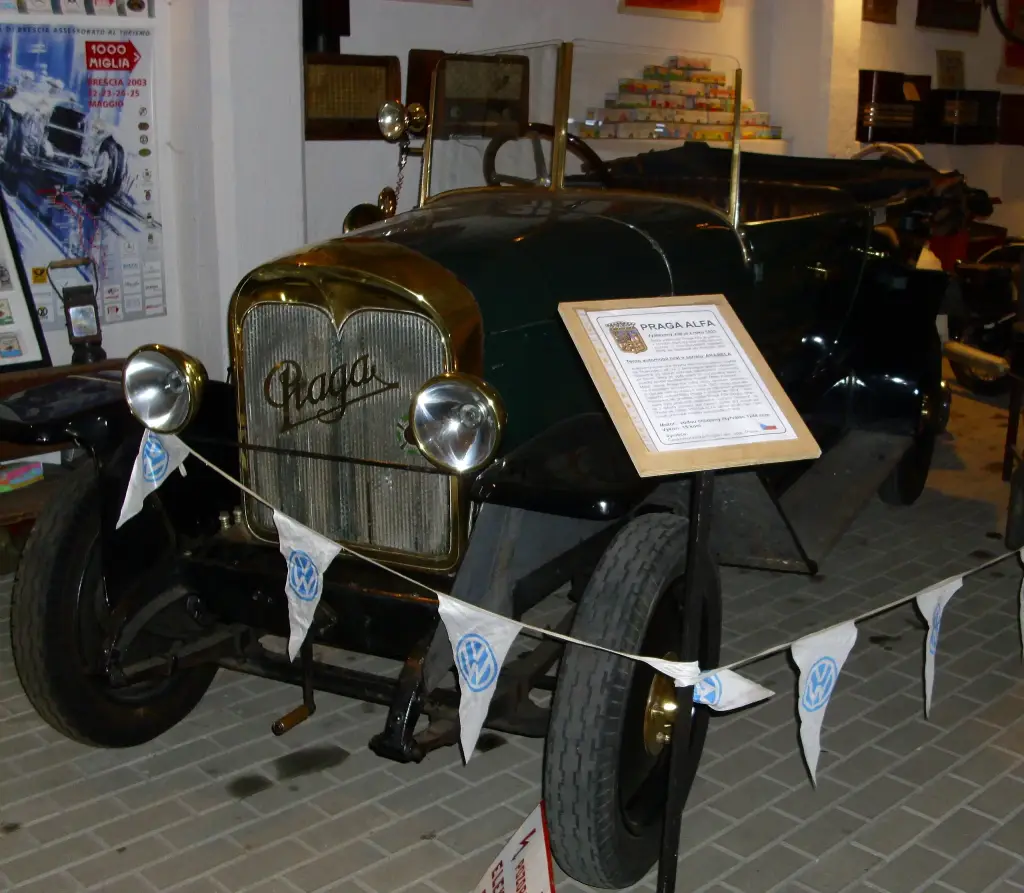
The Praga Alfa was one of the principal car ranges of the Praga works in Prague-Libeň, produced from 1913 until 1942. It was conceived as a cheaper, smaller companion to the Grand and Mignon, a “people’s car” that combined an affordable price with reasonable comfort and practicality.
Praga Alfa at a glance
| Maker | Praga, Prague-Libeň |
|---|---|
| Production | 1913–1942 |
| Designer | František Kec |
| First model | Alfa 5/15HP, 1913 |
| Engine, 1913 | 1,130 cc side-valve four, 15 hp |
| Top speed, 1913 | 56 km/h |
| Wheelbase, 1913 | 2,650 mm |
| Weight, 1913 | 750 kg |
| Price, 1923 | 50,000 Kč |
| 1925 update | front-wheel brakes, nickel-plated radiator with a runner mascot |
| Alfa 8/25HP, 1927 | six cylinders, 34 hp, 80 km/h |
| Built in total | 9,257 |
History of the Praga Alfa
The first Alfa appeared in 1913, designed under the leadership of František Kec with a backbone frame, all-independent suspension and a side-valve engine. The front-mounted 1,130 cc four drove the rear wheels through a four-speed gearbox; the car was 3,545 mm long and 1,400 mm wide, weighed 750 kg and reached 56 km/h on about 10 litres per 100 km. It was sold as a three-door, four-seat phaeton, and every car built in that first year was sold within it. Mobilisation for the First World War then stopped civilian car production.
Production resumed in 1923, in the new Czechoslovak Republic, with the design unchanged and a factory-gate price of 50,000 crowns. Two years later the car was slightly improved: brakes were added to the front wheels, and a statuette of a runner holding a laurel wreath was mounted on a new nickel-plated radiator.
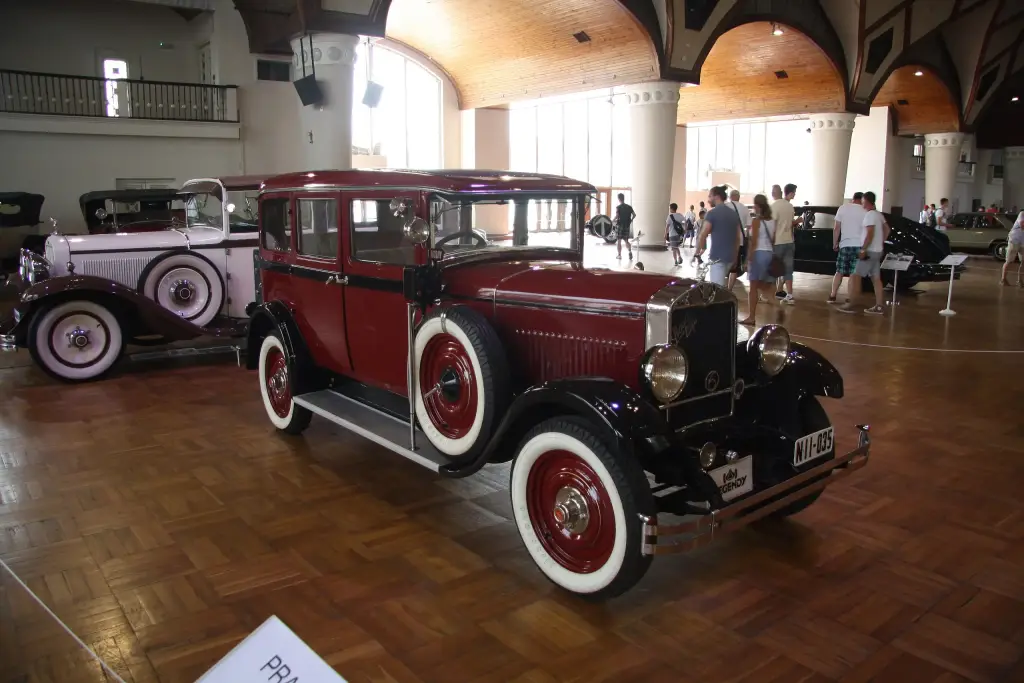
September 1927 brought the first radical redesign. The Alfa 8/25HP was a “small six” powered by a 25 kW (34 hp) water-cooled six with a removable head and Ricardo combustion chambers — the smallest six-cylinder engine then built in Czechoslovakia. The wheelbase grew to 2,900 mm, a new four-door phaeton body measured 4,100 by 1,530 mm and weighed 1,150 kg, and a closed six-window saloon was added at 1,250 kg. Top speed was 80 km/h and the price 64,000 crowns; 2,500 were built between 1927 and 1929. In 1929 the engine was enlarged to 1,795 cc and 36 hp, raised to 38 hp in 1932, which took the top speed to 90 km/h. A completely new model followed in October 1937, and the Alfa remained in production until 1942, by which time 9,257 had been made.
Design and features
- Modern for 1913: a backbone frame with all-independent suspension was unusual in a cheap small car.
- Side-valve four: simple and durable, with a four-speed gearbox and rear-wheel drive.
- Six-cylinder step in 1927: the Alfa 8/25HP brought the smallest six in the country and a 90 km/h top speed by 1932.
- Long life: one basic range stayed in production, with interruptions, for twenty-nine years.
Praga Alfa versions
- Alfa 5/15HP (1913–1914): 1,130 cc four, 15 hp, phaeton body, 750 kg.
- Alfa 5/15HP resumed (1923–1927): unchanged design, front brakes and a new radiator from 1925.
- Alfa 8/25HP (1927–1929): 34 hp six, 2,900 mm wheelbase, phaeton or six-window saloon.
- Alfa 8/25HP uprated (1929–1932): 1,795 cc and 36 hp, then 38 hp in 1932.
- 1937 model: a completely new design introduced in October 1937.
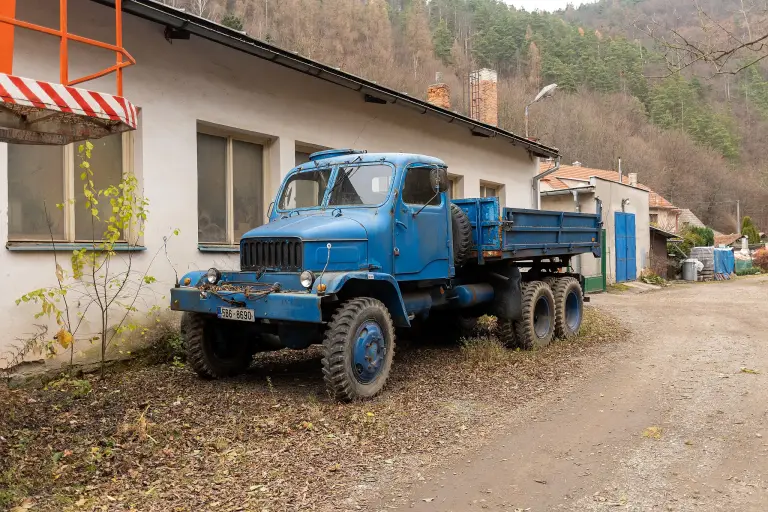
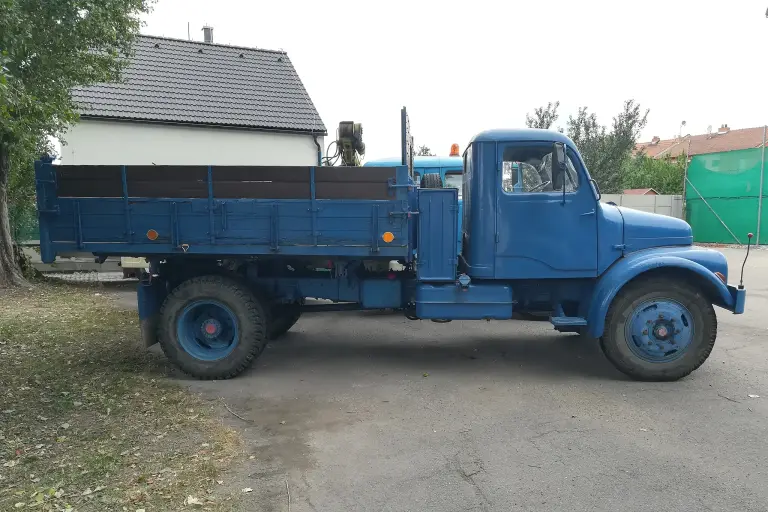
- Praga AN: the light truck and van built on Alfa mechanicals from 1924.
The Alfa was the smaller stablemate of the Praga Grand and Praga Mignon, and its chassis was the basis of the Praga AN light truck. More cars are in the Praga collection.
Video: Praga Alfa
Video on YouTube.
Sources
- Praga Alfa, English Wikipedia: design, 5/15HP and 8/25HP specifications, production total
- Praga Alfa, Czech Wikipedia: history, 1923 resumption, 1927 redesign