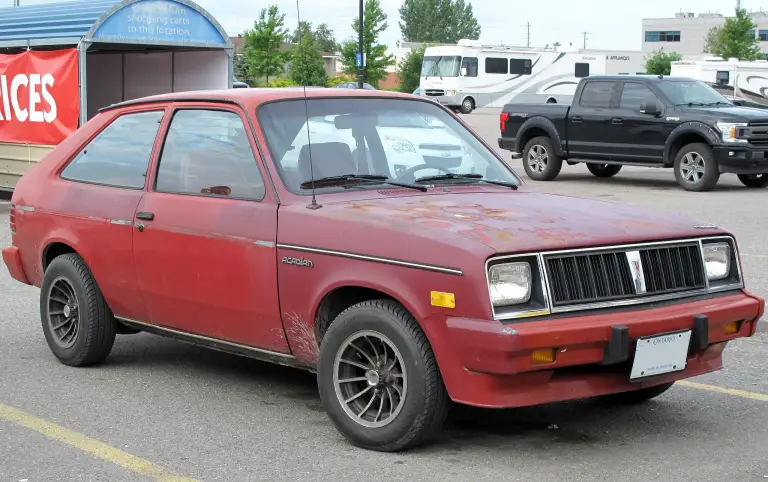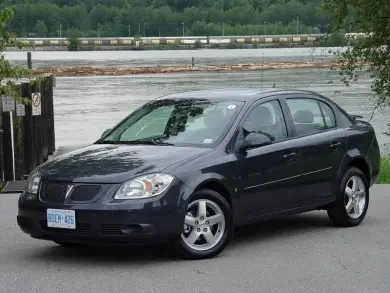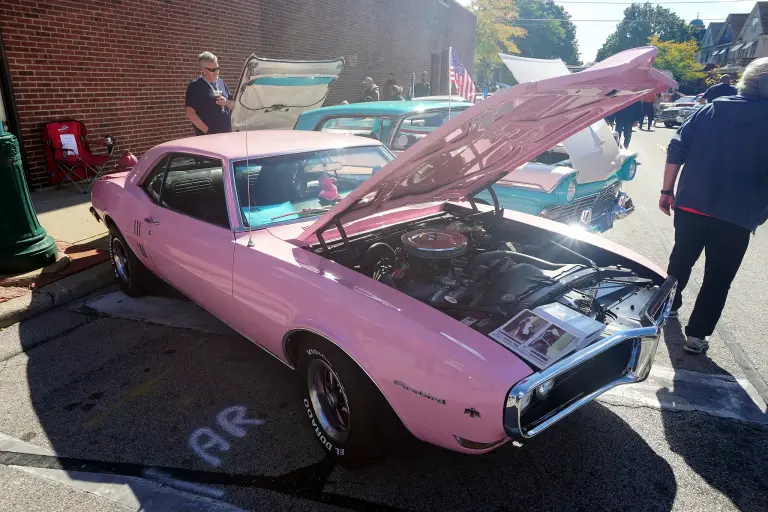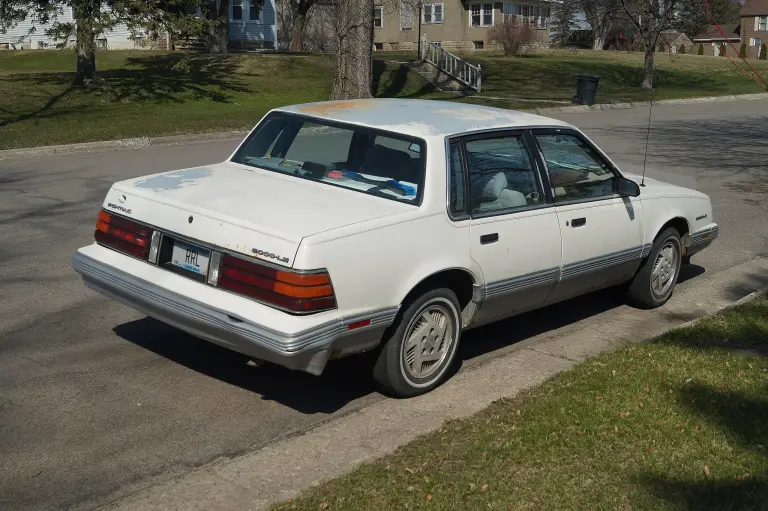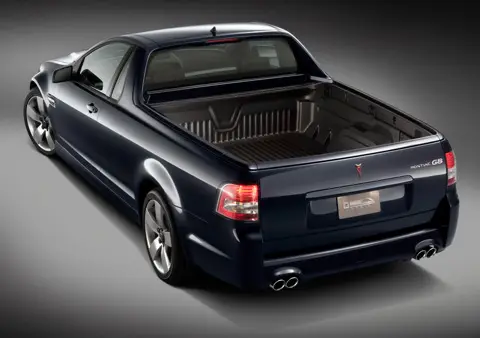
The Pontiac T1000, later called the 1000, was Pontiac’s version of the rear-wheel-drive Chevrolet Chevette, sold in the United States from 1981 to 1987. It was the smallest and cheapest Pontiac of its day, below the Sunbird.
Pontiac T1000 at a glance
| Maker | Pontiac, General Motors |
|---|---|
| Years | 1981–1987 (US) |
| Based on | Chevrolet Chevette, GM T platform |
| Layout | front engine, rear-wheel drive |
| Engine | 1.6 L OHV four |
| Gearbox | four-speed manual; three-speed automatic optional |
| Body styles | three-door and five-door hatchback |
| Steering | rack and pinion |
| Brakes | front discs, rear drums |
| Also sold as | Vauxhall Chevette, Opel Kadett C, Isuzu Gemini, Holden Gemini |
Based on one source: the English Wikipedia article on the Chevrolet Chevette, which lists the Pontiac T1000 as one of its T-platform versions. The record’s original picture is kept.
History of the Pontiac T1000
The T-car
The T1000 was Pontiac’s US version of the Chevrolet Chevette, which used GM’s global rear-drive T platform co-developed by Opel and Isuzu in 1973. The first T-car had been the Brazilian Chevrolet Chevette of 1973, followed six months later by the Opel Kadett C in Europe. Worldwide GM built and sold more than seven million T-cars under many names, including the Pontiac Acadian in Canada, the Pontiac T1000/1000 in the United States from 1981 to 1987, the Vauxhall Chevette, Opel Kadett C, Isuzu Gemini, Holden Gemini and, in South America, a coupe utility called the Chevy 500. The platform stayed in production in South America into 1998.
What the car was
The Chevette was a conventional small car with unitary construction, rear-wheel drive and a live rear axle, introduced in North America in September 1975 to replace the Vega as Chevrolet’s entry model. It was the first American car built to metric measurements and the first with a diagnostic plug. The 1.4 and 1.6 litre overhead-valve fours produced between 52 and 70 hp, driving through a four-speed manual as standard with a three-speed automatic optional. Equipment included rack-and-pinion steering, front disc brakes, a front anti-roll bar, 13-inch tyres, front bucket seats and an onboard diagnostic system. The EPA rated the base 1.4 litre engine at 28 mpg in the city and 40 on the highway. Later critics were unkind: the New York Times called the Chevette haphazardly made, sparsely trimmed and underpowered, and Consumer Guide called it unimaginative to an extreme.
The Pontiac version
Pontiac sold the car as the T1000 from 1981, later shortening the name to 1000, and it sat below the Sunbird as the division’s smallest model. Production of the Chevette in the United States continued until December 1986, with the last car a light-blue two-door hatchback, while the T-car lived on in South America. Pontiac replaced the T1000 in its range with the Korean-built LeMans for 1988.
Design and features
- T platform: one of the most widely badge-engineered GM designs.
- Rear-wheel drive: conventional layout in a small car.
- Metric dimensions: the first American car built to metric measurements.
- Diagnostic plug: another American first.
- Economy: up to 40 mpg on the highway with the 1.4 litre engine.
Pontiac T1000 versions
- T1000 (1981–84): the original name.
- 1000 (later cars): the shortened name.
- Hatchback bodies: three- and five-door versions.
The T1000 was the smallest Pontiac below the Sunbird and was replaced in the range by the LeMans. More Pontiacs are in the Pontiac collection.
Sources
- Chevrolet Chevette, English Wikipedia: T platform, engines, Pontiac version