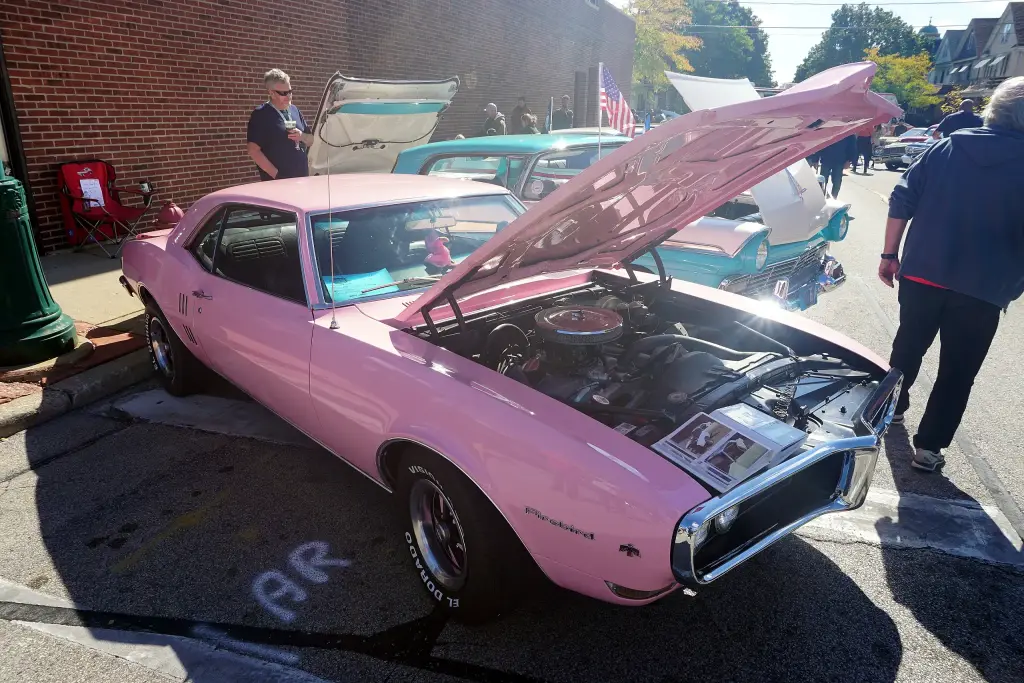
The Pontiac Firebird was built from the 1967 to the 2002 model years as Pontiac’s pony car and rival to the Ford Mustang. It was introduced on 23 February 1967, five months after the Chevrolet Camaro that shared its F-body platform.
Pontiac Firebird at a glance
| Maker | Pontiac, General Motors |
|---|---|
| Model years | 1967–2002 |
| Introduced | 23 February 1967 |
| Platform | GM F-body, shared with the Chevrolet Camaro |
| Class | pony car |
| Base engine, 1967 | 230 cu in (3.8 L) SOHC six, 165 hp |
| V8s, 1967 | 326 cu in 250 or 285 hp; 400 cu in 325 hp |
| Price, 1967 coupe | $2,666 before options |
| Trans Am package | from March 1969, $1,083 |
| Trans Am 1969 output | 689 hardtops and 8 convertibles |
| Generations | four, 1967–2002 |
Based on one source: the English Wikipedia article on the Firebird.
History of the Pontiac Firebird
First generation (1967–1969)
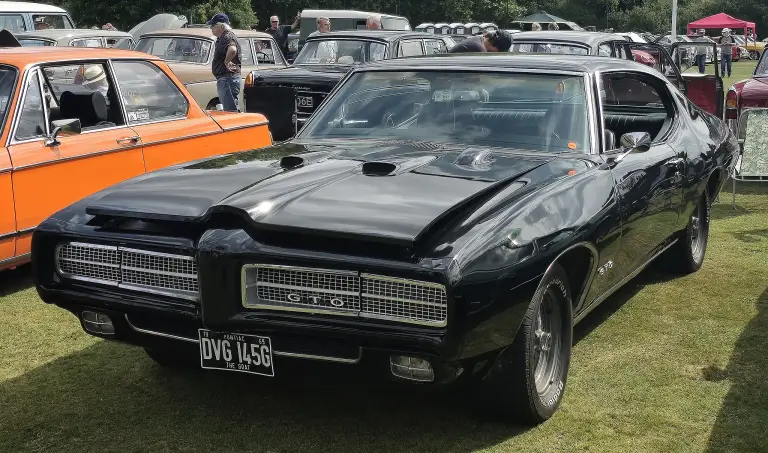
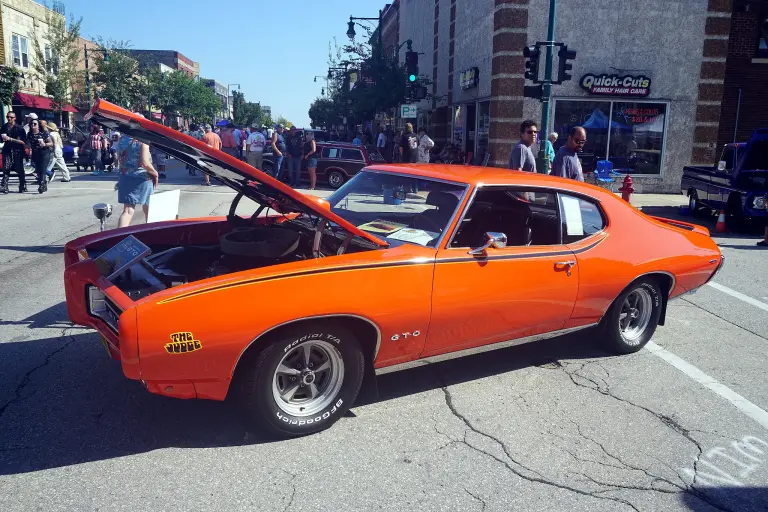
The first Firebird had the Coke-bottle styling of its Camaro cousin, but its bumpers were integrated into the front end for a smoother look, and its rear “slit” lights were inspired by the 1966–67 GTO and Grand Prix. A two-door hardtop and a convertible were offered through 1969. The car was a consolation prize for Pontiac, which had wanted a two-seat sports car based on the Banshee concept; GM feared that would hurt Corvette sales and instead gave Pontiac a share of the pony-car market. The coupe listed at $2,666 before options and the convertible at $2,903. The base engine was Pontiac’s 230 cu in SOHC six with a one-barrel carburettor and 165 hp, or 215 hp in four-barrel Sprint form. Most buyers chose a V8: the 326 with two or four barrels (250 or 285 hp) or the 325 hp 400 from the GTO. A Ram Air option added functional bonnet scoops, better-flowing heads and a hotter camshaft. For 1968 the six grew to 250 cu in and the 326 gave way to the 350; side marker lights, Astro Ventilation and a one-piece door glass arrived. The 1969 facelift brought a new front end, a revised instrument panel and an ignition switch moved to the steering column.
The Trans Am package
In March 1969 Pontiac added a $1,083 handling and appearance option called the Trans Am performance and appearance package, UPC WS4, named after the SCCA racing series. Only 689 hardtops and eight convertibles were built. A 303 cu in engine was designed for SCCA road racing but never offered in production cars.
Second generation and beyond
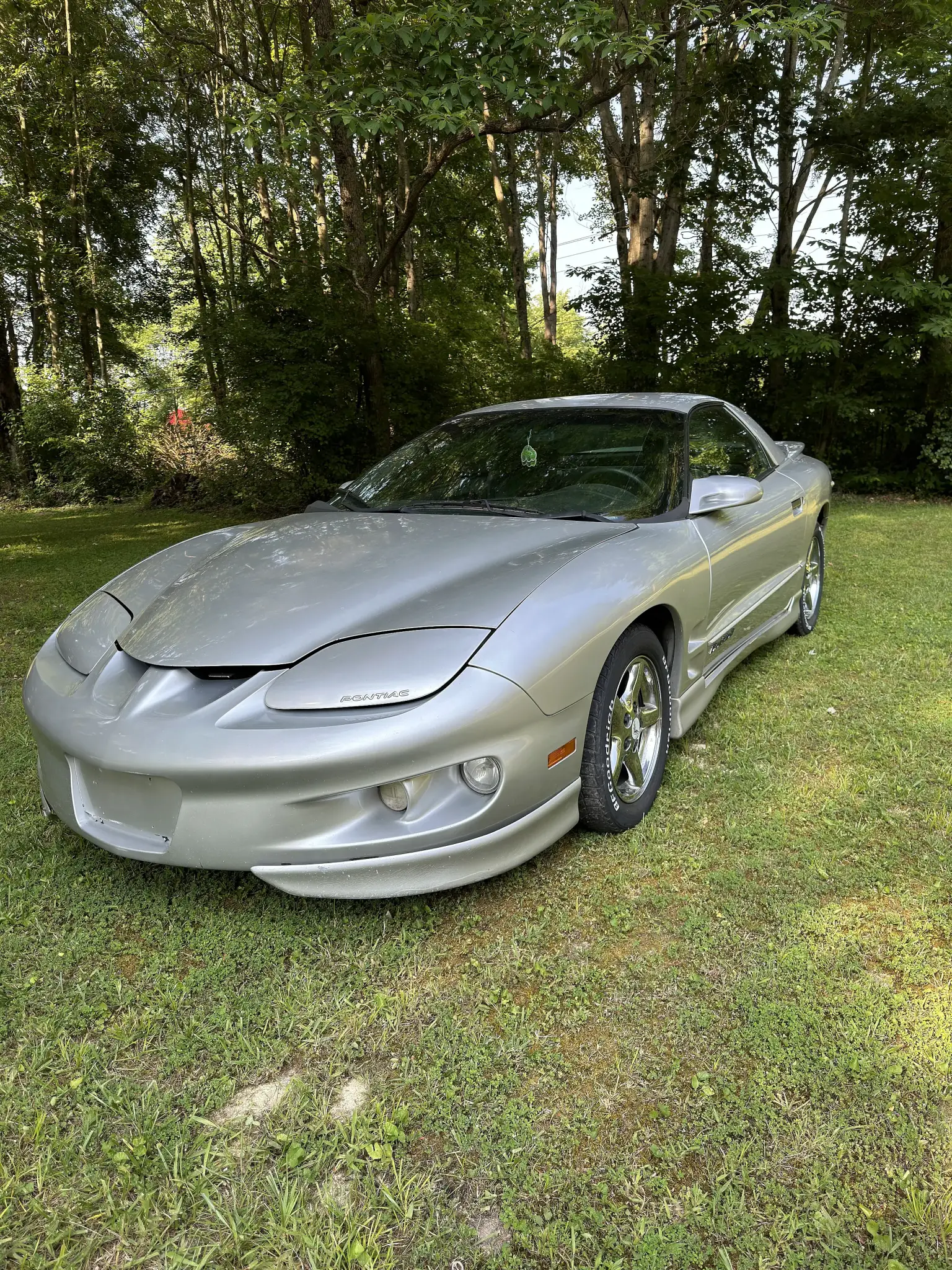
The second-generation Firebird was delayed by tooling and engineering problems and did not appear until 26 February 1970, which is why it is often called the 1970½ model; leftover 1969 cars were sold without model-year references. From 1970 the Firebird came only as a coupe, with a swoopier body and a large C-pillar until the rear window was enlarged in 1975. Convertibles did not return until 1989. The line continued through four generations until 2002.
Design and features
- Coke-bottle styling: shared with the Camaro but with Pontiac’s own integrated bumpers.
- Slit tail lights: borrowed from the GTO and Grand Prix.
- SOHC six: the 230 cu in overhead-cam engine, enlarged to 250 cu in for 1968.
- Ram Air: functional bonnet scoops, stronger valve springs and a hotter cam.
- Trans Am package: a $1,083 handling and appearance option from March 1969.
Pontiac Firebird versions
- Base coupe and convertible: the six-cylinder cars.
- Sprint: the four-barrel 215 hp version of the six.
- 326 and 350 V8s: the volume engines, in two- and four-barrel form.
- 400 and Ram Air: the GTO-derived V8 with the Ram Air hood and cam.
- Trans Am (1969): the SCCA-inspired package, 689 hardtops and 8 convertibles.
The Firebird shared its platform with the Camaro and inspired the Trans Am and the Firehawk. More Pontiacs are in the Pontiac collection.
Sources
- Pontiac Firebird, English Wikipedia: first and second generations, engines, Trans Am