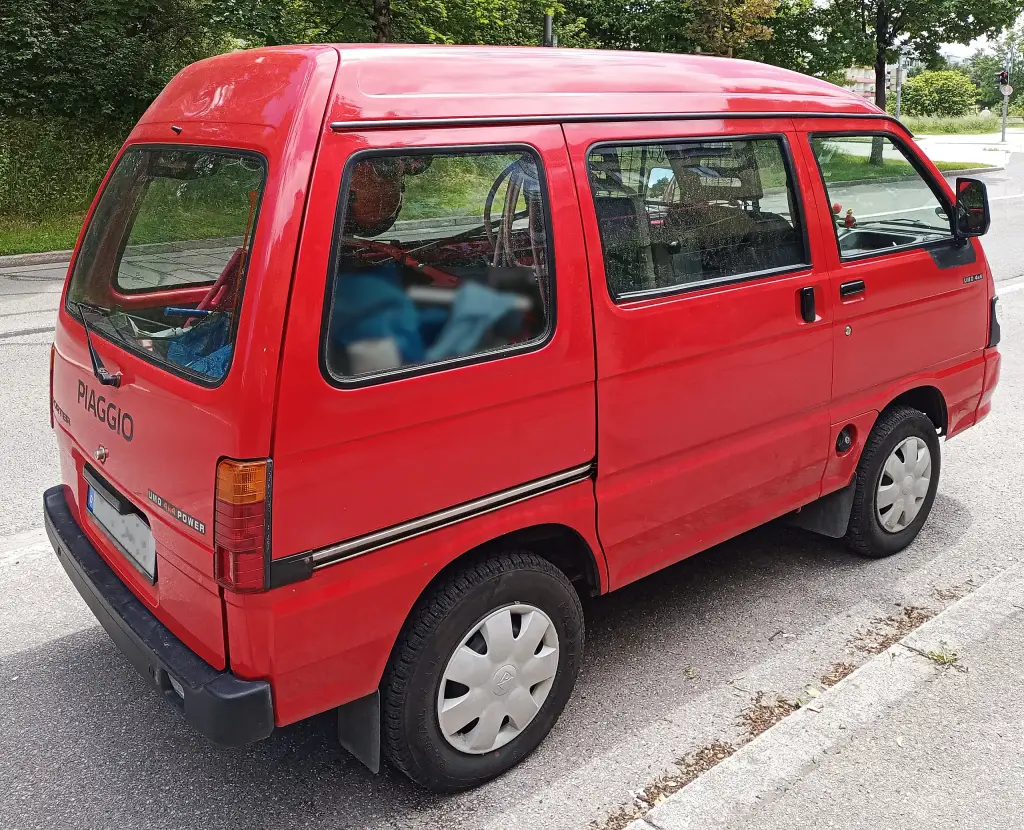
The Piaggio Porter is a cab-over microvan and pickup produced and sold by the Italian company Piaggio since 1992 under the Piaggio Commercial Vehicle brand. Larger and more capable than the Ape, it was developed together with Daihatsu.
Piaggio Porter at a glance
| Production | 1992–2020 (first generation) |
|---|---|
| Built in | Pontedera |
| Based on | Daihatsu Hijet S80 |
| Joint venture | 51% Piaggio, 49% Daihatsu, capital of 30 billion lire |
| First engines | 1000 cm3 three-cylinder petrol from Daihatsu |
| 1995 | 1200 cm3 four-cylinder Lombardini diesel; Porter Tipper |
| 1998 facelift | 1.3 16V Daihatsu petrol and 1.4 Lombardini diesel |
| 2002 | Maxxi version with twin rear wheels and a 1,100 kg payload |
| 2011 facelift | Euro 5 range with petrol, LPG, methane, diesel and electric versions |
| Replaced by | Porter NP6, made with Foton from 2020 |
The article is based on a single source, the English Wikipedia page on the Porter.
History of the Piaggio Porter
The collaboration between Piaggio and Daihatsu took the form of a joint venture with a capital of thirty billion lire, 51% held by Piaggio and 49% by Daihatsu. The minivans were to be built in Piaggio’s Pontedera factories, with an expected investment of about 150 billion lire, of which 65 were borne by the joint venture. The plans of 1990 foresaw 35,000 vehicles a year from the Pontedera lines; twenty thousand were to be sold in Europe and North Africa by Piaggio, and fifteen thousand marketed directly by Daihatsu in the UK and the ASEAN market. The new small commercial vehicle, called Porter for Europe, would give the Italian manufacturer a larger and more capable alternative to the classic Piaggio Ape.
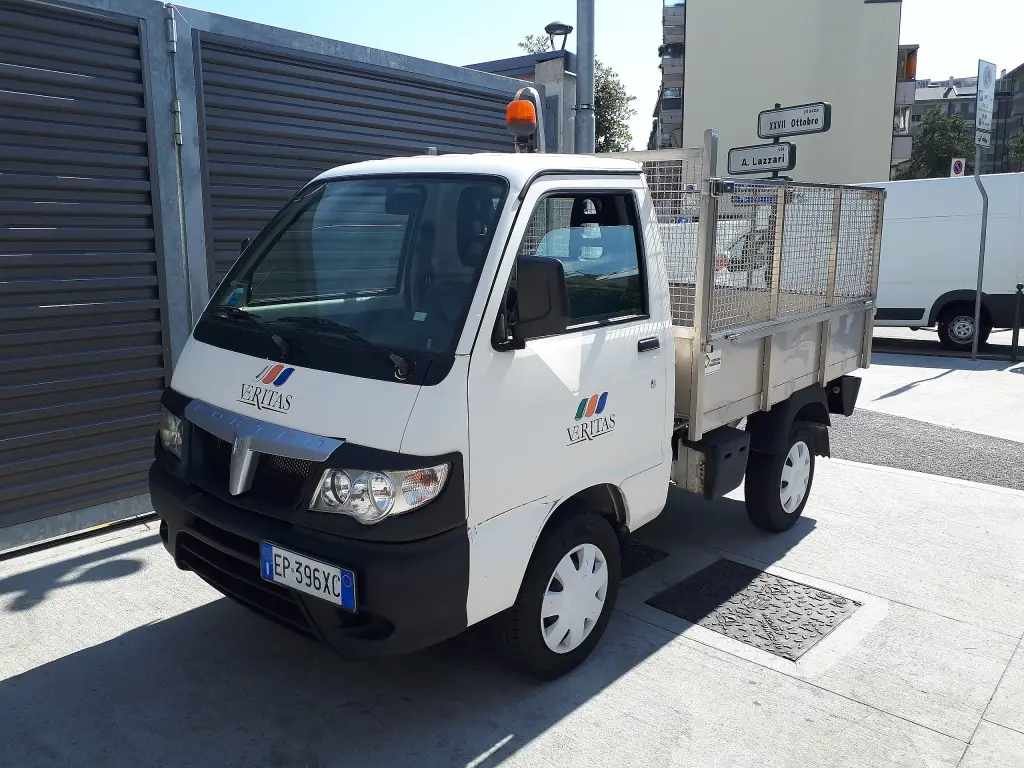
Debut in 1992
The definitive model went into production in Pontedera in September 1992 and was marketed in Europe in the spring of the following year, both as the Piaggio Porter and as the Daihatsu Hijet in some Asian and UK markets. Much of the mechanical content was produced by Daihatsu in Japan and assembled in Italy by Piaggio. The Porter was developed from the Japanese kei van Daihatsu Hijet S80, using the same frame and sheet metal, but the front section was redesigned and strengthened with reinforced steels to pass European crash tests, and the interior was completely new. The first three versions were a panel van, a glazed van with four seats and pickups, all with a 1000 cm3 three-cylinder petrol engine from Daihatsu; an ambulance version was added for Italian villages with access difficulties.
Diesel, tipper and the first facelift
In 1995 the diesel versions arrived with a 1200 cm3 four-cylinder Lombardini engine. In the same year the petrol version moved to multipoint electronic injection with a catalytic converter, and a fourth body, the Porter Tipper with a tipping platform, became available with both engines. An all-wheel-drive version followed with the petrol engine only, and an electric version joined the range. The four- and six-seat glazed vans were also sold between 1994 and 1997 by Innocenti as the Innocenti Porter. In 1998 the Porter had a major facelift with the new 1.3 16V Daihatsu petrol and 1.4 Lombardini diesel engines. In 2002 sales of the Daihatsu-branded version in Europe ended with the liquidation of the joint venture, and production continued under Piaggio alone. LPG versions arrived in 2003, and in 2002 the Maxxi appeared with twin rear wheels and a payload of up to 1,100 kg, also available as a 4×4.
Euro 4, Euro 5 and the end of the first generation
In 2006 the Euro 4 petrol version was presented, using the Daihatsu system with an Italian CF3000 control unit, and sales of the diesel ended at the same time. In 2008 the Euro 4 LPG version called Eco Power was launched, and the Maxxi was updated to a gross weight of 2,200 kg. The 2011 facelift brought Euro 5 petrol, LPG, methane, diesel and electric versions, a redesigned dashboard and grille, and new twin-cylinder diesel engines developed by Piaggio and Ricardo: the 1.2-litre P120 turbo with 64 hp and 140 Nm, and the naturally aspirated 1.0 P100 for emerging markets, both built in Baramati in India. A 4×4 version returned in 2013, and in November 2015 the range was homologated to Euro 6. Production of the first generation ended in 2020, replaced by the Porter NP6 built by Piaggio in Pontedera together with the Chinese manufacturer Foton. An Indian Porter was also built at Baramati from 2013 to 2019 in 600 and 1000 versions.
Design and features
- Japanese bones, Italian assembly: a Daihatsu Hijet S80 strengthened for European crash tests.
- Many fuels: petrol, diesel, LPG, methane and electricity over the years.
- Maxxi payload: twin rear wheels raised the load to 1,100 kg and later to a 2,200 kg gross weight.
- Working vehicles: panel van, glazed van, pickup, tipper and ambulance.
Piaggio Porter versions
- Porter 1992: petrol van, glazed van and pickup with the 1000 cm3 Daihatsu engine.
- Porter diesel (1995): 1200 cm3 Lombardini engine.
- Porter Tipper: pickup with a tipping platform.
- Porter Maxxi (2002): twin rear wheels and a 1,100 kg payload.
- Porter Eco Power (2008): Euro 4 LPG version.
- Porter 2011: Euro 5 range with the P120 and P100 diesels.
- Porter NP6 (2020): the second generation, developed with Foton.
The Porter was the four-wheeled alternative to the Ape, and it shared its base with the Quargo. More Piaggio vehicles are in the Piaggio collection.
Video: Test Piaggio Porter Maxxi D120
Video by Super SPEED la Pro TV on YouTube.
Sources
- Piaggio Porter, English Wikipedia: joint venture, versions, facelifts, engines