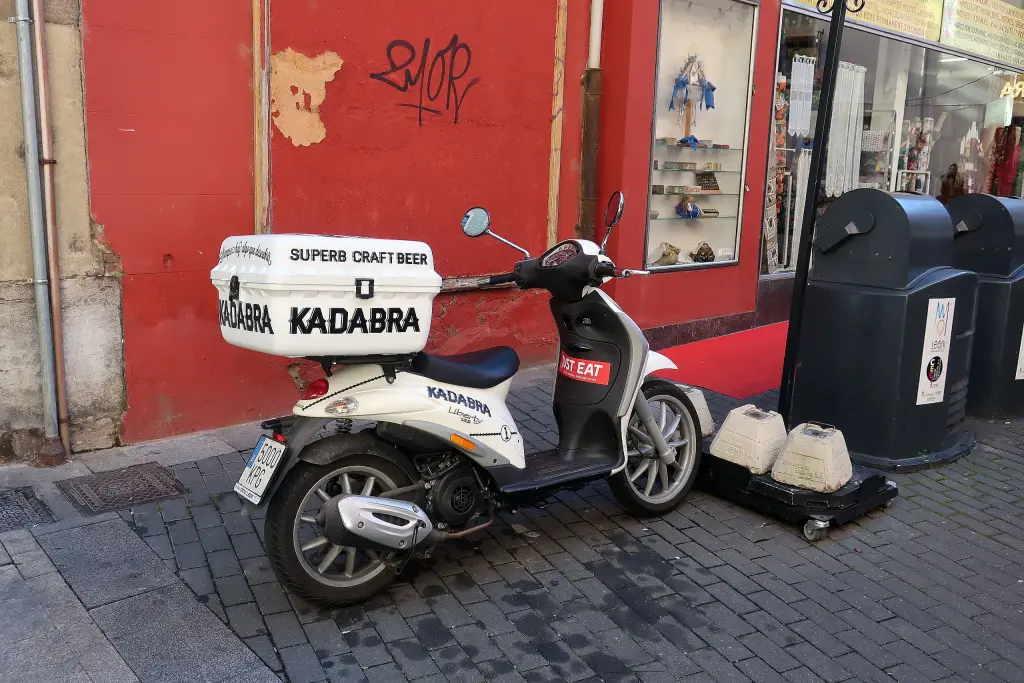
The Piaggio Liberty is a two-wheeled scooter from the Italian manufacturer Piaggio. The first Liberty was built in 1997; it was restyled in 2004 and again in 2009, and it is a popular scooter among couriers and postal delivery companies around Central Europe.
Piaggio Liberty at a glance
| Introduced | Barcelona motor show, May 1997 |
|---|---|
| Series | 1997–2004, 2004–2009, 2009–2013, 2013–2016, from 2016 |
| Engines | 50 cc two-stroke and four-stroke, 125 and 150 cc LEADER, 200 cc in 2004–2007 |
| Engine cooling | air, single cylinder on all versions |
| Third series news | seat 10 mm lower, 10-spoke alloy wheels, 240 mm front disc |
| Fourth series | new front shield with a tie grille, 10.8-litre underseat compartment |
| Fifth series | I-Get four-stroke three-valve Euro 4 engines, no more 50 two-stroke |
| Wheels | 16-inch front and 14-inch rear on the 50 of the fourth series; 15-inch front on the 3V |
| Brakes | 240 mm front disc with a two-piston caliper, 140 mm rear drum |
| Built in Vietnam | from 1 March 2012, for the Asian market |
The article is based on a single source, the English Wikipedia page on the Liberty.
History of the Piaggio Liberty
Presented at the Barcelona motor show in May 1997, the Liberty was born as a scooter with a 50 cm3 engine intended primarily for young riders. With highly innovative specifications it immediately stood out as one of the most popular high-wheeled scooters on the market, thanks to its original and dynamic line, good design quality and competitive price. In September of the same year the version with a 125 four-stroke engine was presented at the Milan show and went on sale a few months later. In 1999 the Liberty LE 150 arrived with a 150 cm3 four-stroke engine, a catalyst and Euro 1 approval, followed in December by the 50 LE and 125 LE.
Second series (2004–2009)
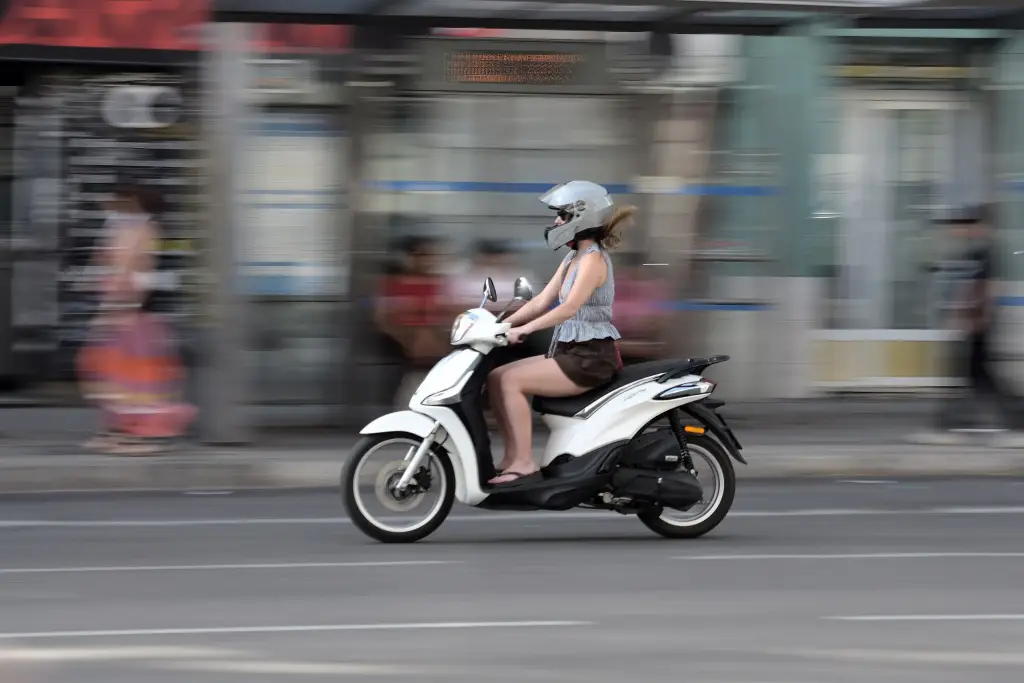
In the first months of 2004 the Liberty underwent a profound restyling in both style and mechanics, and the 150 cm3 engine made way for a new 200 cm3 four-stroke. The 50 was offered with either a two-stroke or a four-stroke engine, while the larger capacities were four-stroke only. From the middle of 2006 the sports version, the Liberty S, came on the market, with a fairing similar to the Beverly 125 and new instrumentation; it was updated again in 2007, when the 150 engine returned in place of the 200. The Liberty Delivery was chosen by Poste Italiane, and by postal services in Austria and Hungary, for delivering mail. All versions use an air-cooled single-cylinder engine, LEADER for the 125 and 150 and HI-PER for the 50. The high wheels limit the space under the saddle to a few objects and a jet helmet, but the large tank gives a good range.
Third series (2009–2013)
The third series of 2009 came in 50 cc two-stroke and four-stroke, 125 cc and 150 cc, with a seat 10 mm lower, 10-spoke alloy wheels and a new 240 mm front disc. The rear end was completely modernised, with more angular lines for the headlight and the indicators. In November 2009 the limited Liberty Elle was presented together with Elle magazine, with a pink body and top case, a 50 or 125 four-stroke engine and a seat lowered by 20 mm; it went on sale in March 2010. The Liberty Teens and an electric prototype for commercial fleets were shown at EICMA 2010, and the Teens went on sale in May 2011 with the 50 two-stroke only. On 1 March 2012 production also started in Vietnam for the Asian market.
Fourth series (2013–2016)
The fourth series was presented in July 2013, split between 50 models in two- and four-stroke form and the new Liberty 3V of 125 and 150 cm3. It brought a new front shield with the tie grille around the Piaggio logo, arrow-shaped front indicators, a triangular headlight, chrome inserts on the fenders and the glove box, better padding in the saddle and an underseat compartment enlarged by 23% to 10.8 litres, with the battery moved behind the front storage. The 50 measures 1,935 mm long with a 1,320 mm wheelbase, 16-inch front and 14-inch rear wheels, a 785 mm seat and a 6-litre tank; the 3V is 1,920 mm long with a 1,345 mm wheelbase, a 15-inch front wheel, a 790 mm seat and a 6.5-litre tank. All models use a 240 mm front disc with a two-piston caliper and a 140 mm rear drum.
Fifth series (from 2016)
The fifth series debuted at EICMA 2015 and entered production in early 2016. The 50 two-stroke disappeared, and the range was made of 50, 125 and 150 engines all from the I-Get family, four-stroke three-valve and Euro 4 approved. The design stayed close to the previous generation with a more rounded front shield and larger headlights, with LED position lights on the 125 and 150, while the chassis was completely new and all versions shared the same wheels and tyres.
Design and features
- High wheels: large wheels for stability, a Liberty signature since 1997.
- Five series: a continuous evolution from 1997 to the Euro 4 I-Get range.
- Delivery work: the Liberty Delivery was chosen by Poste Italiane and by postal services in Austria and Hungary.
- Practical size: a jet helmet fits under the saddle, and the tank gives a long range.
Piaggio Liberty versions
- Liberty 50 (1997): the original small high-wheeled scooter.
- Liberty 125 and LE 150: four-stroke versions with Euro 1 approval.
- Liberty S (2006): the sports version with a Beverly-style fairing.
- Liberty Delivery: the postal version used by Poste Italiane.
- Liberty Elle and Teens: special editions of 2010 and 2011.
- Liberty 3V (2013): 125 and 150 with a new chassis.
- I-Get range (from 2016): Euro 4 four-stroke three-valve engines.
The Liberty was the successor of the Free and sat above the Fly and the Carnaby in the range. More models are in the Piaggio collection.
Video: Piaggio Liberty 2T 50 Acceleration
Video by orang0r on YouTube.
Sources
- Piaggio Liberty, English Wikipedia: series, engines, dimensions, special editions