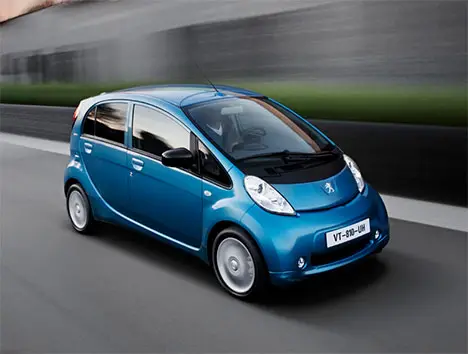
The Peugeot iOn is the Peugeot version of the Mitsubishi i-MiEV, a five-door electric city car produced in the 2010s. PSA sold it alongside the Citroën C-Zero, mainly in Europe.
Peugeot iOn at a glance
| Type | five-door electric city car |
|---|---|
| Based on | Mitsubishi i-MiEV |
| Sister models | Citroën C-Zero, Mitsubishi i |
| Motor | permanent magnet synchronous, rear axle |
| Peak power | 49 kW (66 hp), continuous 35 kW |
| Torque | 180 Nm |
| Battery | 16 kWh lithium-ion, 88 cells |
| Top speed | 130 km/h |
| Range | 130 km with 16 kWh, 160 km with 20 kWh |
| Gearbox | single-speed reduction |
source page covers the Mitsubishi original and its Peugeot version; free photographs of the Peugeot-badged car were not found, the existing thumbnail stays
History of the Peugeot iOn
A rebadged Mitsubishi
The i-MiEV, whose name stands for Mitsubishi innovative Electric Vehicle, was a five-door electric city car and the electric version of the Mitsubishi i. Rebadged variants were sold by PSA as the Peugeot iOn and Citroën C-Zero, mainly in Europe. The i-MiEV was the world’s first modern highway-capable mass-production electric car, launched to fleet customers in Japan in July 2009 and to the wider public on 1 April 2010, with international sales from 2010.
Development
The car was first exhibited at the 22nd International Battery, Hybrid and Fuel Cell Electric Vehicle Symposium in Yokohama. Mitsubishi chose a conventional layout of batteries, motor and inverter in place of the rear midship engine and fuel tank of the ordinary car. The company supplied vehicles to three power companies in 2006 and 2007 for research into charging infrastructure, and fleet testing by five power companies followed in 2007. The car had a range of 130 km with the 16 kWh lithium-ion pack and 160 km with the 20 kWh pack, and a top speed of 130 km/h. Plans to sell it in Europe as the Peugeot iOn and Citroën C-Zero were announced in 2008, and Mitsubishi supplied cars to PSA from 2010 under a commitment to buy 100,000 over a period that was never made public.
The car itself
The production car has a single permanent-magnet synchronous motor on the rear axle with a peak output of 49 kW between 2,500 and 8,000 rpm and 180 Nm of torque between 0 and 2,000 rpm; continuous power is 35 kW. The motor is water-cooled with a conventional radiator and electric fan at the front, and drive goes through a single-speed reduction gear to the rear wheels. The 16 kWh pack consists of 88 LEV50 cells in twelve modules, with 330 V nominal and forced-air cooling, and an optional heater for charging in cold weather. The American version of the Mitsubishi was larger and had extra features.
Design and features
- Rebadged i-MiEV: a Mitsubishi electric city car sold by Peugeot.
- Rear motor: 49 kW peak, 180 Nm, single-speed reduction.
- 16 kWh battery: 88 lithium-ion cells under the floor.
- 130 km/h: a highway-capable electric city car.
- Rapid charging: the pack could be cooled with air from the air conditioning.
Peugeot iOn versions
- Peugeot iOn: the European Peugeot version.
- Citroën C-Zero: the Citroën version of the same car.
- Mitsubishi i-MiEV: the original, sold worldwide.
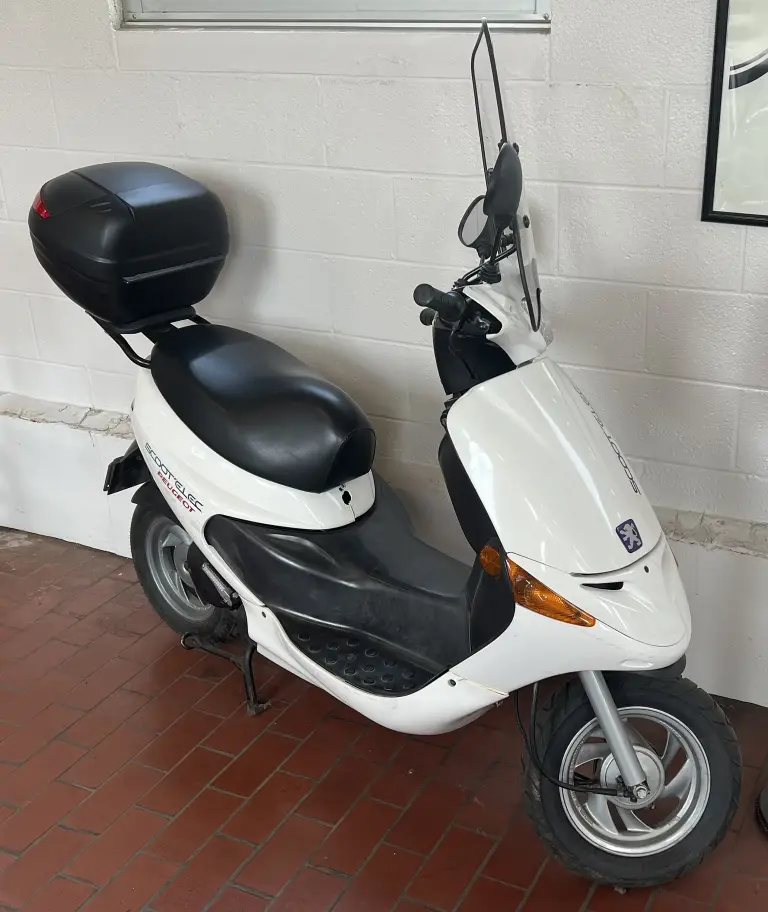
The iOn belongs with Peugeot’s electric history, from the Scoot’Elec to the electric versions of later vans. Its sibling in the PSA range was the Citroën C-Zero. More in the Peugeot collection.
Video: Peugeot iOn – Elektroauto im Alltagstest
Video by on YouTube.
Sources
- Mitsubishi i-MiEV, English Wikipedia: PSA versions, launch, powertrain, battery, range