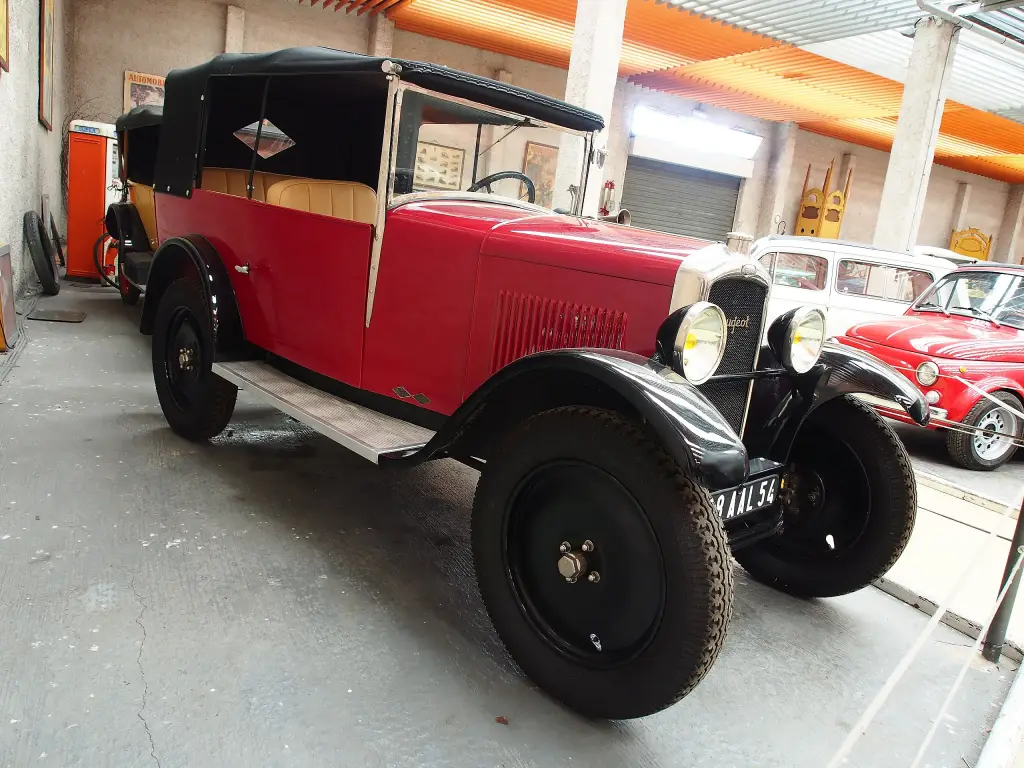
The Peugeot Type 177 B was a mid-range car produced between 1924 and 1929. With a fiscal horsepower of 10 CV and a wheelbase of 2,670 mm, it competed with the Citroën B2 and the Renault KZ.
Peugeot Type 177 at a glance
| Production | 1924–1929 |
|---|---|
| Tax class | 10 CV |
| Wheelbase | 2,670 mm, 2,695 mm on the 177 R |
| Engine (1924) | 1,525 cc overhead-valve four-cylinder |
| Power | 29 hp at 1,900 rpm |
| Derived from | Peugeot Type 173 |
| Trim levels | B, BH and BL |
| 177 M (1927) | transparent roof |
| 177 R (1928) | longer wheelbase, 1,393 cc engine, 25 hp |
| Total built | more than 40,000 |
History of the Peugeot Type 177
A car for the middle of the market
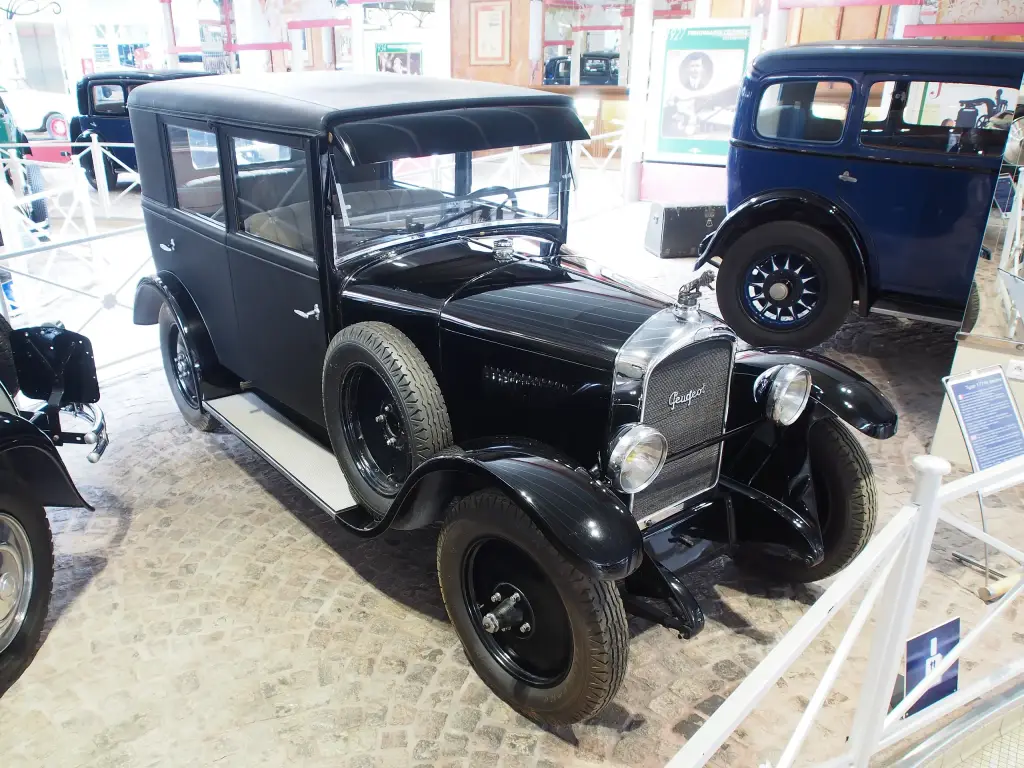
The Type 177 was derived from the Peugeot Type 173, from which it inherited its mechanical components and, at its launch in 1924, the same 1,525 cc overhead-valve in-line four-cylinder engine. Claimed maximum output was 29 hp at 1,900 rpm. The car was sold in three equipment levels, designated B, BH and BL. A year after the 177 arrived, in 1925, the Type 173 was dropped and the newer model took its place.
The family grows
Also in 1925 Peugeot launched the Type 181, broadly similar to the 177 but with a slightly larger 1,615 cc engine giving 30 hp and a maximum speed of 75 km/h. At the end of 1926 production of the three original 177 B versions ended with 16,039 cars made. A replacement 177 arrived at the start of 1927 in the shape of the 177 M, notable for its transparent roof, a feature that became widespread as an option on many cars only about fifty years later.
177 R and the end
The 177 M was replaced for the 1929 model year, at the 22nd Paris Motor Show in October 1928, by the 177 R. Its wheelbase grew slightly to 2,695 mm and shortly afterwards the engine was changed to a smaller 1,393 cc unit, which reduced the 177 to 25 hp and separated it from the more powerful Type 181; the listed top speed fell to 70 km/h. In its final year the 177 was again given the 1,615 cc engine previously reserved for the Type 181.
Production
The 177 and the more powerful 181 were commercial successes, with more than 40,000 177s produced over its life and a further 18,202 built in the last phase before production ended in 1929. The 100,000th Peugeot ever built was a Type 181, which was also one of the last cars made at the Audincourt plant; Type 181 production continued until 1928 with 9,259 built.
Design and features
- 10 CV class: a mid-range car competing with the Citroën B2 and Renault KZ.
- Transparent roof: offered on the 177 M of 1927, decades before the idea became common.
- Three trims: B, BH and BL equipment levels.
- Long production: 16,039 of the first versions and more than 40,000 cars in total.
- 177 R: longer wheelbase and a smaller 1,393 cc engine for 1929.
Peugeot Type 177 versions
- 177 B, BH and BL (1924): the original range on the 2,670 mm wheelbase.
- 177 M (1927): with a transparent roof.
- 177 R (1928): 2,695 mm wheelbase and the 1,393 cc engine.
- Type 181: the related, more powerful model with a 1,615 cc engine.
The 177 was derived from the Type 173 and sold alongside the Type 163 and the larger Type 176. More in the Peugeot collection.
Video: Peugeot Type 177
Video by on YouTube.
Sources
- Peugeot Type 177, English Wikipedia: derivation, trims, 177 M, 177 R, production figures