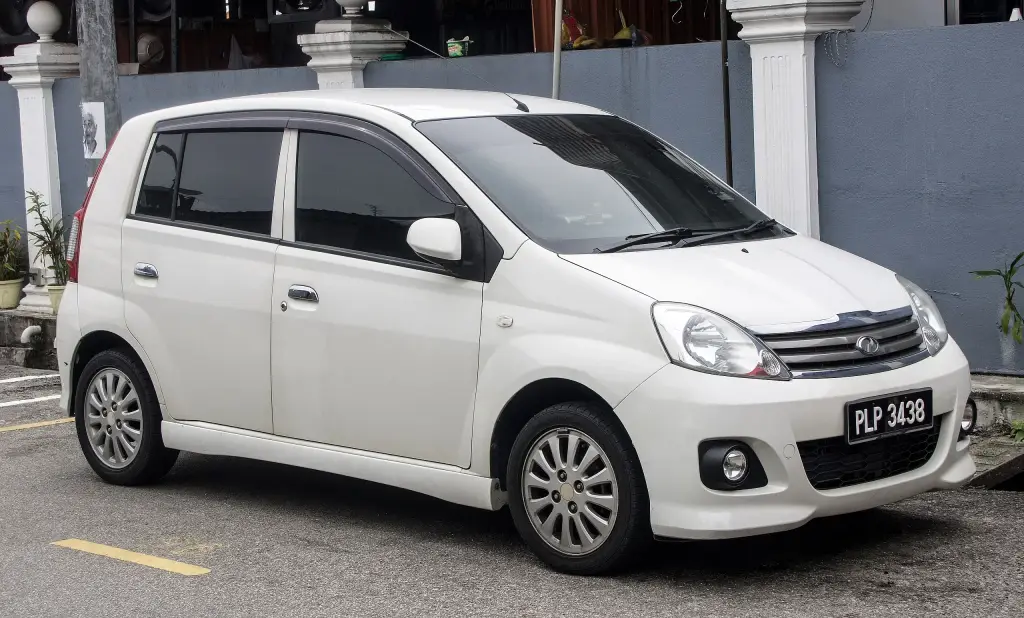
The Perodua Viva went on sale on 10 May 2007 as a replacement for the Perodua Kelisa, and later, with the base 660 BX, as the replacement for the Kancil as well. It was based on the sixth-generation Daihatsu Mira and took its name from the Italian word viva, meaning “long live”.
Perodua Viva at a glance
| Maker | Perodua, Malaysia |
|---|---|
| Production | May 2007–2015 |
| Based on | Daihatsu Mira L250, sixth generation |
| Body | five-door hatchback |
| Engines | 659 cc, 847 cc and 989 cc three-cylinders |
| Power | 35 kW (48 PS), 39 kW (53 PS), 45 kW (61 PS) |
| Gearbox | five-speed manual or automatic |
| Wheelbase | 2,390 mm |
| Height | 1,530 mm |
| Boot | 149 litres with the rear seats up, 449 litres folded |
| Airbags | standard on all models from July 2012 |
| Replaced by | Perodua Axia, 2014 |
Based on one source (English Wikipedia).
History of the Perodua Viva
The Viva was previewed by the XX06 concept car at the KL International Motor Show in 2006 and launched on 10 May 2007. Perodua first marketed it as a replacement for the Kelisa only; only later, when the base 660 BX joined the range, did the Viva also take over from the Kancil. The car is based on the sixth-generation Daihatsu Mira (L250), and its name comes from the Italian word viva, meaning “long live”.
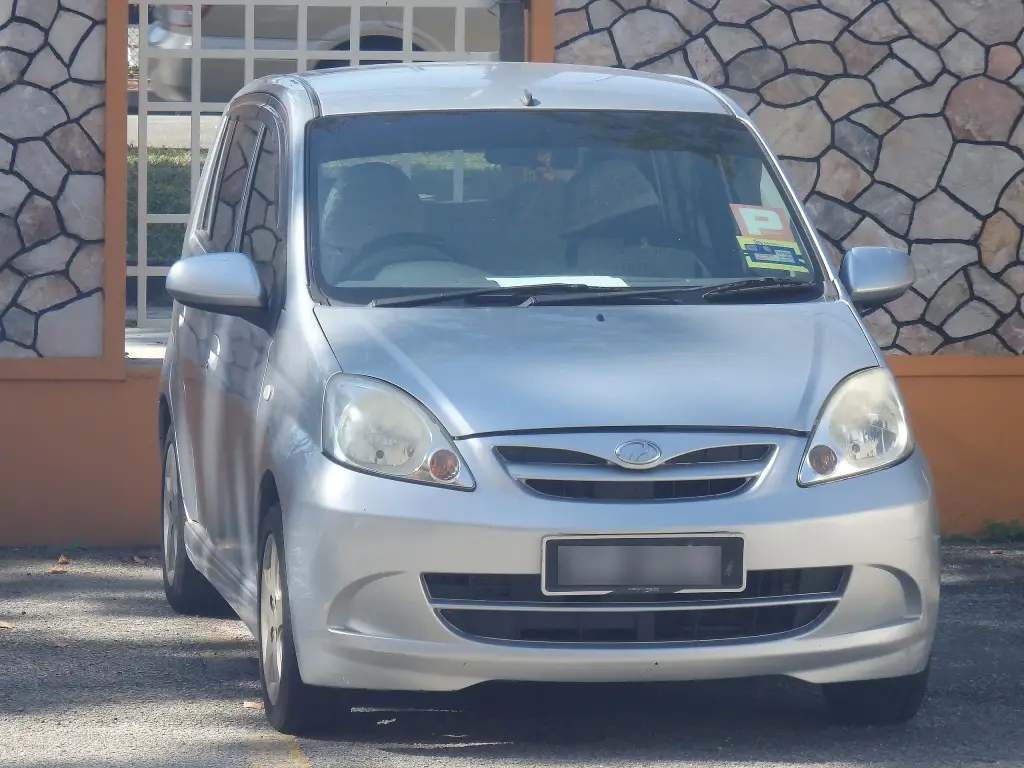
Six variants were offered at the launch: the 660 cc EX with a manual gearbox, the 850 cc EX manual, the 1.0 SX manual, the 1.0 EZ automatic, the 1.0 SXi manual and the 1.0 EZi automatic. The SX and EZ were marketed as Standard and the SXi and EZi as Premium, and five colours were available at first, with two more added in September 2007.
From BX to Elite
On 20 July 2009 a 660 BX manual joined the range as the new base model and the replacement for the Kancil; compared with the 660 EX it omitted the audio player, speakers and the alarm with central locking. Three days later the Elite variants arrived as the new range-toppers in place of the 1.0 Standard and Premium cars: the Elite MT, Elite AT and Elite EZi had redesigned front bumpers with fog lamps, chrome door handles, altered rear bumpers with a honeycomb grille, a bonnet with a central bulge and different 14-inch alloy wheels. A 1.0 automatic with the specification of the 850 EX was also added quietly, while the 660 EX gained body-coloured bumpers and a CD player.
In November 2010 the Elite Exclusive Edition was positioned between the Elite and Elite EZi, with leather upholstery, a unique exterior colour and wheels in a different shade. In July 2012 dual airbags became standard on every Viva, including the 660 BX, having previously been fitted only to EZi models. In March 2013 the 1.0 S automatic replaced the 1.0 automatic with a seat height adjuster, under-seat tray, seat-back pockets, a driver’s vanity mirror and an MP3/WMA stereo, and at the same time the 660 EX manual and Elite EZi were quietly dropped.
After the Perodua Axia was launched on 15 September 2014 the Viva stayed in production in a single 850 manual version, and it disappeared from Perodua’s website between March and April 2015.
Engineering
The suspension uses MacPherson struts at the front with an L-shaped lower arm and a torsion beam with trailing arms at the rear, tuned for steering response and ride comfort. The 1,000 cc models have power-assisted steering, an optional automatic gearbox and a front stabiliser bar, while the 660 and 850 cc cars are basic models without power steering or an automatic. The overall height is 1,530 mm and the wheelbase 2,390 mm, and the boot holds 149 litres with the rear seats up and 449 litres with them folded. Three three-cylinder engines were offered, all with twin overhead camshafts, DVVT and fuel injection: the 659 cc EF-VE with 35 kW (48 PS) at 7,200 rpm and 58 Nm, the 847 cc ED-VE with 39 kW (53 PS) at 6,000 rpm and 76 Nm, and the 989 cc EJ-VE with 45 kW (61 PS) at 6,000 rpm and 90 Nm.
Design and features
- Mira L250 basis: the sixth-generation Daihatsu Mira under a Perodua body.
- Three engines: 660, 850 and 1,000 cc three-cylinders with DVVT and fuel injection.
- Two roles: it replaced the Kelisa in 2007 and the Kancil in 2009.
- Elite equipment: fog lamps, chrome handles and 14-inch alloys from 2009.
- Safety update: dual airbags became standard across the range in July 2012.
Perodua Viva versions
- 660 EX and 850 EX (2007): the manual entry models.
- 1.0 SX, EZ, SXi and EZi (2007): Standard and Premium versions with the 989 cc engine.
- 660 BX (2009): the new base model that replaced the Kancil, without audio or central locking.
- Elite MT, AT and EZi (2009): range-topping cars with fog lamps and 14-inch alloys.
- Elite Exclusive Edition (2010): leather upholstery and a unique colour.
- 1.0 S automatic (2013): a better-equipped replacement for the 1.0 automatic.
The Viva replaced both the Perodua Kelisa and the Perodua Kancil and was later joined by the larger Perodua Myvi. More cars are in the Perodua collection.
Video: Th LowLifestyle – Perodua Viva
Video on YouTube.
Sources
- Perodua Viva, English Wikipedia: history, variants, engines, dimensions, safety