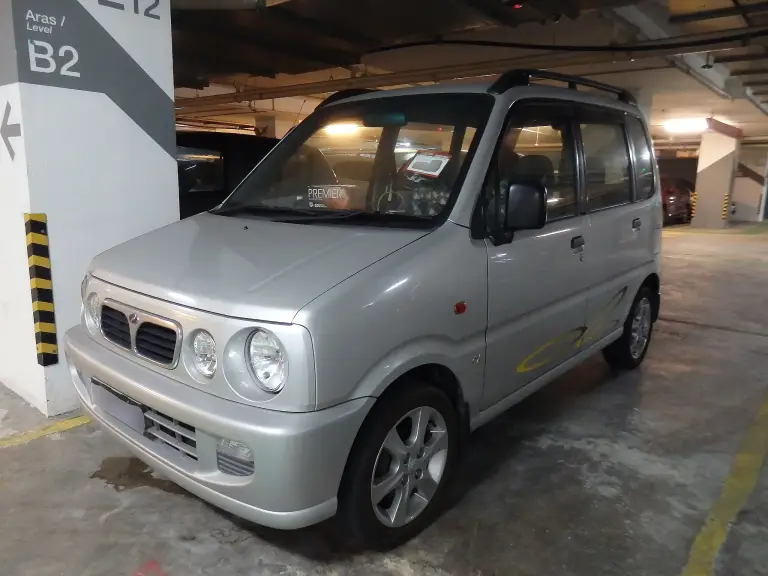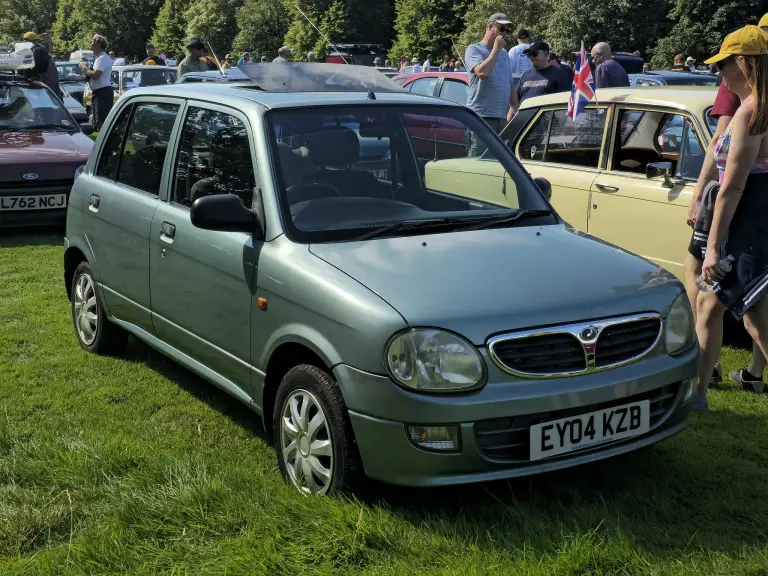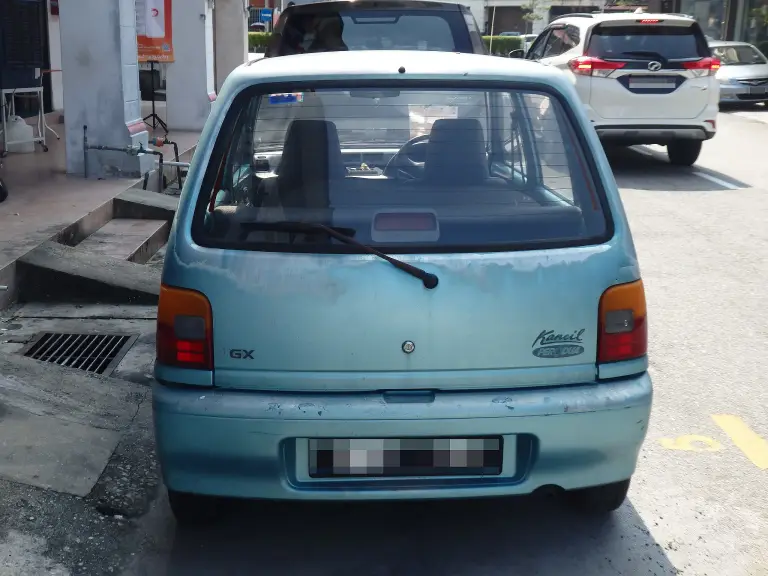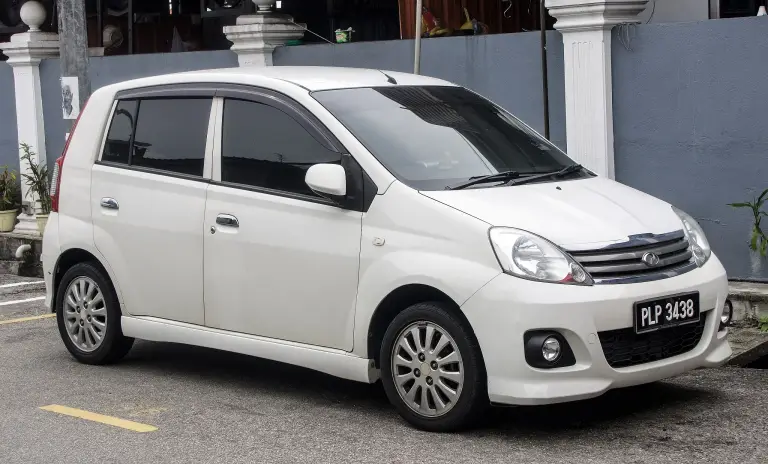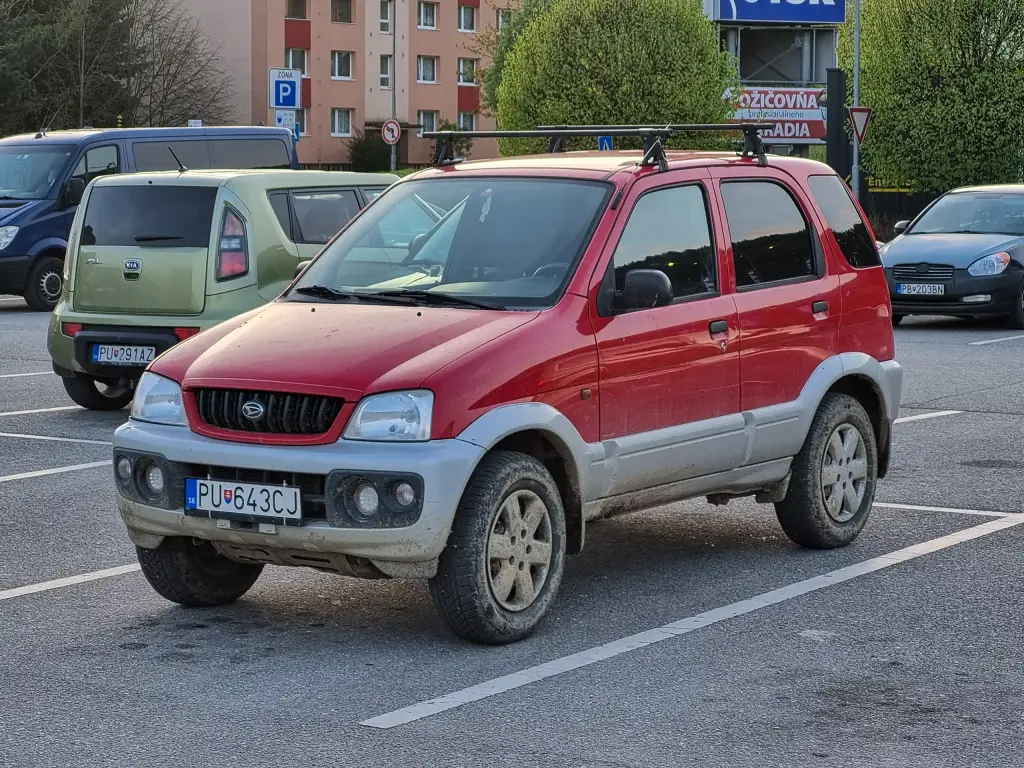
The Perodua Kembara was the Malaysian version of the first-generation Daihatsu Terios, a small five-door 4×4. It was unveiled in August 1998 and sold with full-time four-wheel drive, a 1.3-litre engine and the practicality of a taller body than Perodua’s city cars.
Perodua Kembara at a glance
| Maker | Perodua, Malaysia |
|---|---|
| Unveiled | August 1998 |
| Based on | Daihatsu Terios J100, first generation |
| Body | five-door mini SUV, unibody |
| Drive | full-time four-wheel drive |
| Engine | 1.3-litre four-cylinder; DVVT from June 2003 |
| Terios engines | 1,295 cc SOHC, then 1,297 cc DOHC |
| Power | 89 PS (65 kW) in the first Terios, 92 PS (68 kW) from 2000 |
| Update | June 2003, DVVT engines |
| Special edition | CT Elegance, July 2004, RM59,988 |
| Terios basis launched | 1997, as successor to the F300 Rocky |
The English Wikipedia page used covers the Daihatsu Terios, the model on which the Kembara is based; the Kembara section is the source for this article. Based on one source.
History of the Perodua Kembara
The Kembara was Perodua’s first SUV. In Malaysia the first-generation Daihatsu Terios, launched in Japan in 1997 as the successor to the F300 series Rocky, was locally assembled and sold under the Perodua name. It was unveiled in August 1998 and was available only with full-time four-wheel drive.
The Terios it was based on was a five-door wagon with a unibody monocoque chassis, independent MacPherson struts at the front and a multi-link coil-sprung rear axle. The first cars used a 1,295 cc SOHC four-cylinder, the HC-EJ, with 89 PS (65 kW); in 2000 the engine was replaced by the 1,297 cc DOHC K3-VE with 92 PS (68 kW), and the same update brought a chrome grille in place of the black plastic one, electric front windows, central locking, rear head restraints, alloy wheels, roof rails and a roof-mounted rear spoiler on the high-grade model. A turbocharged K3-VET with 140 PS (103 kW) was also produced for Japan.
DVVT and the CT Elegance
In June 2003 the Kembara was updated with DVVT engines. In July 2004 Perodua presented the Kembara CT Elegance, which added ABS, dual front airbags, leather seats, differently designed alloy wheels, a flat side step and a cubic-printed instrument cluster. It cost RM59,988 and was available in a single colour, Klasik Gold.
The Kembara shared its basic engineering with the Terios sold elsewhere under several names: in Japan the same car was the Toyota Cami from May 1999, and in Indonesia a longer, restyled version with three rows of seats was built as the Daihatsu Taruna from July 1999. The Perodua version remained the short five-door with two rows of seats.
Design and features
- Small 4×4: full-time four-wheel drive in a body only slightly larger than a supermini.
- Terios engineering: unibody construction, MacPherson struts and a coil-sprung rear axle.
- 1.3-litre engine: 89 PS at first, 92 PS after the 2000 update, and DVVT from 2003.
- CT Elegance: ABS, dual airbags and leather in the 2004 top model.
- Malaysian assembly: the local alternative to the imported Daihatsu Terios.
Perodua Kembara versions
- Kembara (1998): the original full-time 4WD model with the 1.3-litre SOHC engine.
- 2000 update: DOHC engine with 92 PS, chrome grille and more standard equipment.
- DVVT Kembara (2003): the updated engine range.
- Kembara CT Elegance (2004): ABS, dual airbags, leather seats and a flat side step, in Klasik Gold only.
The Kembara was Perodua’s only 4×4 alongside its city cars, the Perodua Myvi and Perodua Viva. More cars are in the Perodua collection.
Video: VIP kembara v2
Video on YouTube.
Sources
- Daihatsu Terios, English Wikipedia: Kembara history, engines, updates, CT Elegance