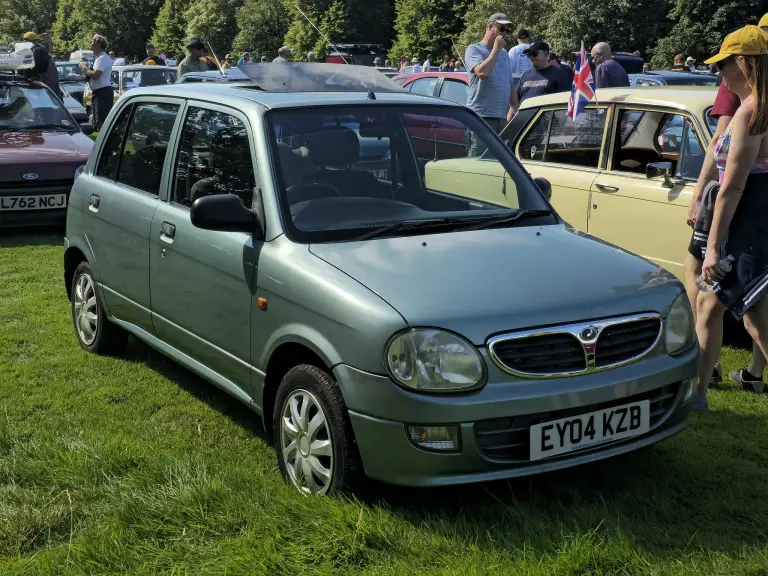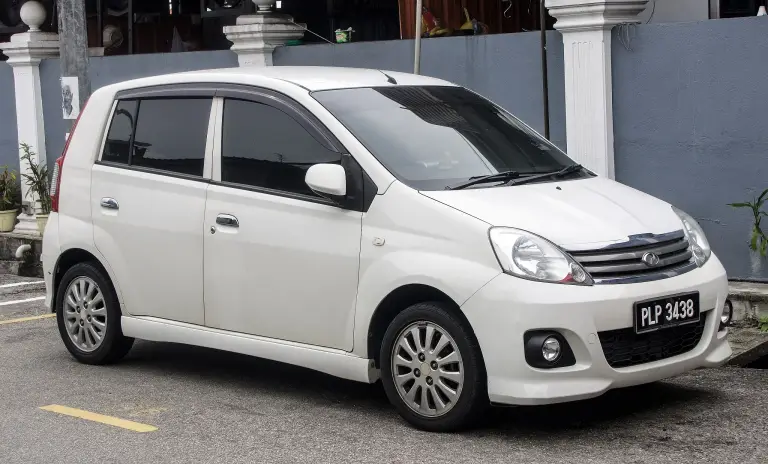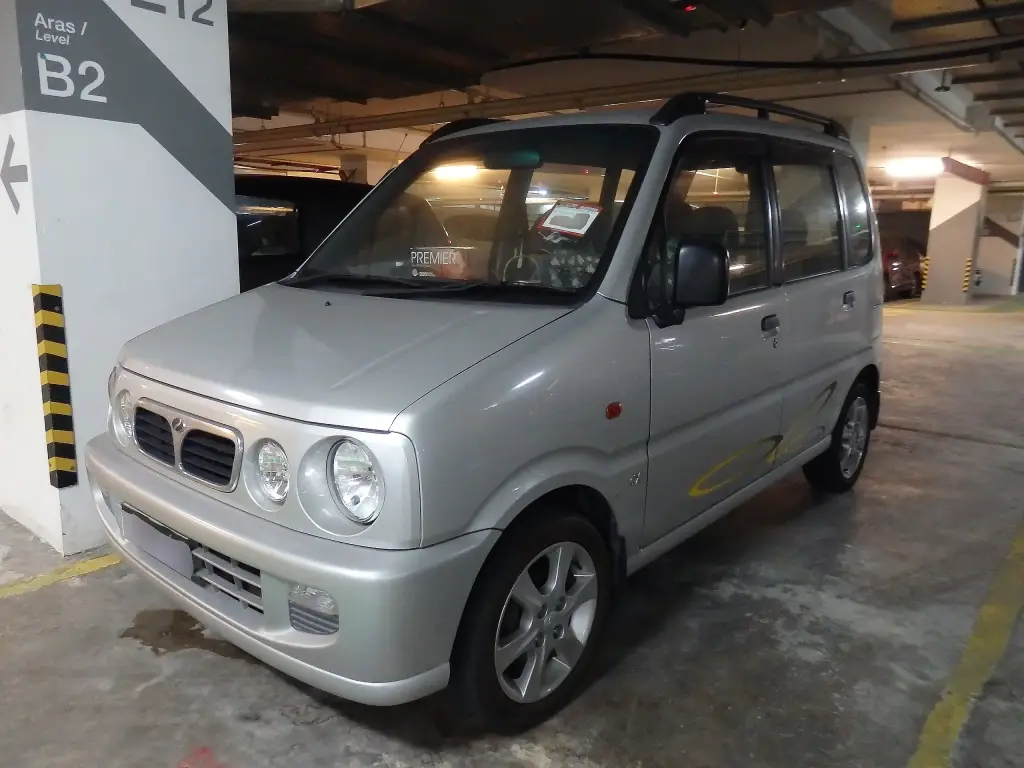
The Perodua Kenari was a tall five-door city car built by Perodua from 2000 to 2009. It was based on the second-generation Daihatsu Move kei car but used a larger 990 cc engine, and it was sold in the United Kingdom as well as Malaysia.
Perodua Kenari at a glance
| Maker | Perodua, Malaysia |
|---|---|
| Production | 2000–2009 |
| Based on | Daihatsu Move, second generation |
| Body | tall five-door city car |
| Engine | 990 cc DOHC |
| Variants at launch | EX, GX and EZ |
| Gearbox | five-speed manual or four-speed automatic |
| Facelift | April 2003, with 14-inch alloy wheels |
| Hybrid prototype | 2003, not produced |
| Final model | Kenari RS, November 2006 |
| Named after | kenari, the Malay word for canary |
Based on one source (English Wikipedia).
History of the Perodua Kenari
The Kenari was launched in 2000 with three variants: the EX Standard and GX Deluxe, both with a five-speed manual gearbox, and the EZ with a four-speed automatic. It is based on the second-generation Daihatsu Move kei car, but instead of the tiny Japanese engine it used a 990 cc DOHC unit. The name is the Malay word for canary, chosen to suggest joy and freedom.
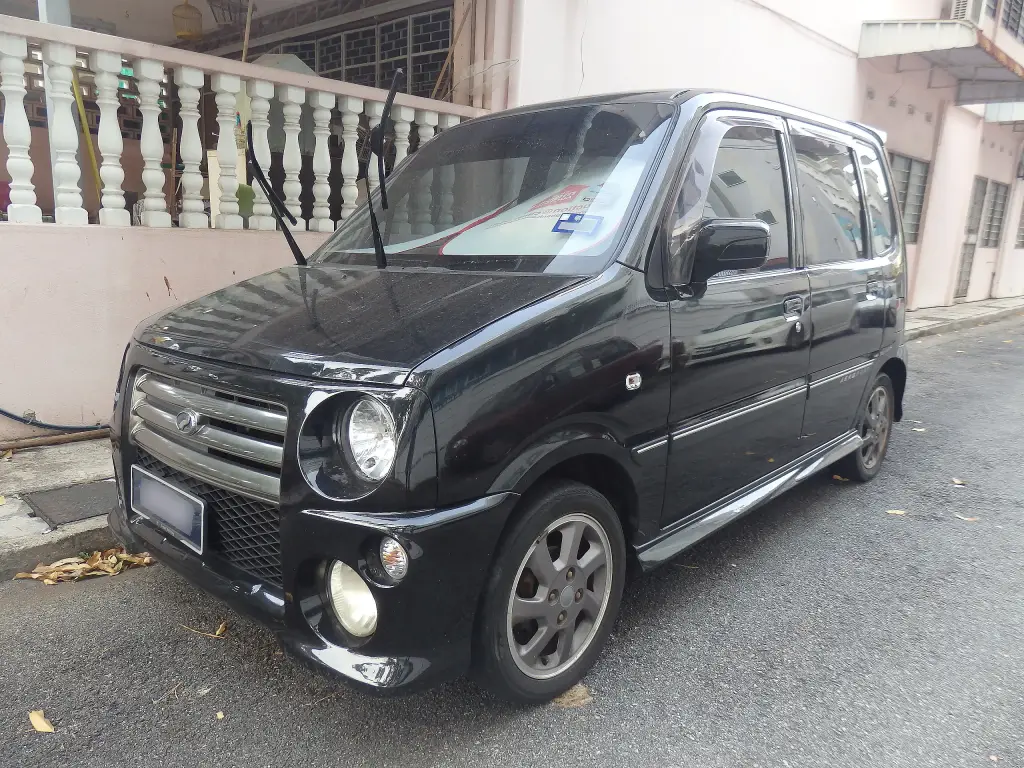
The 2003 facelift
In April 2003 Perodua introduced a facelifted Kenari with new headlights, a new front grille and a 14-inch alloy wheel design that became standard across a four-model range: GX, EZ, EZ Special (EZS) and GX Aero. The GX Aero came only with a manual gearbox and only in Mistik Red, and it had a body kit with side skirts, a different spoiler, different rear lights and cubic printing on the centre of the dashboard.
A hybrid that never was
In September 2003 Perodua showed a hybrid version of the Kenari that never reached production. The prototype combined a 659 cc petrol engine producing 30 kW (41 bhp) and 57 Nm with an electric motor of 18 kW (25 bhp) and 100 Nm. Three years later, in November 2006, the company added the Kenari RS to the range, and production and sales ended in 2009 without a direct replacement.
Perodua exported the Kenari to the United Kingdom in two variants, the GX and the EZ, where it joined the Kelisa in a range of small, low-priced Malaysian cars.
Design and features
- Tall body: the upright Move shape gives more headroom than the Kancil and Kelisa.
- 990 cc engine: a larger four-cylinder than the kei-car unit of the Daihatsu Move.
- Three trim levels: EX, GX and EZ, with manual or automatic gearboxes.
- 2003 facelift: new lights and grille, plus 14-inch alloys across the range.
- No replacement: production ended in 2009 without a successor.
Perodua Kenari versions
- EX Standard (2000): the base car with a five-speed manual gearbox.
- GX Deluxe (2000): the better-equipped manual model.
- EZ (2000): the automatic version with a four-speed gearbox.
- GX Aero (2003): manual only, in Mistik Red, with a body kit and cubic-printed dashboard.
- EZ Special (2003): a special edition added with the facelift.
- Kenari RS (2006): the final model, introduced a few years before production ended.
The Kenari sat above the smaller Perodua Kelisa and Perodua Kancil in the range. More cars from the maker are in the Perodua collection.
Sources
- Perodua Kenari, English Wikipedia: history, variants, facelift, hybrid prototype, UK sales