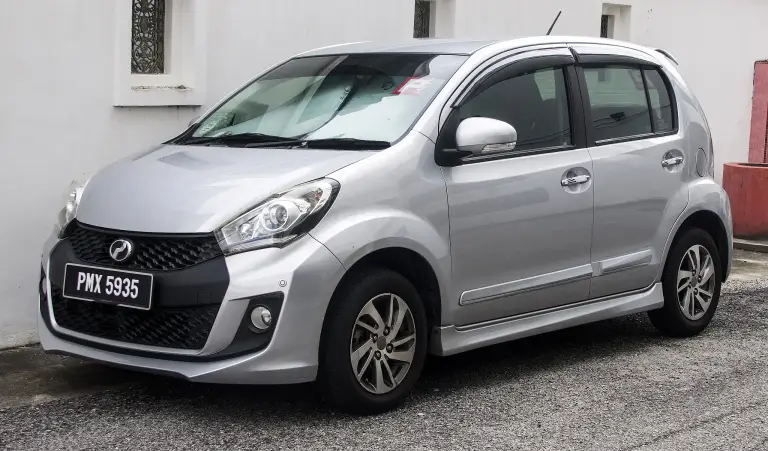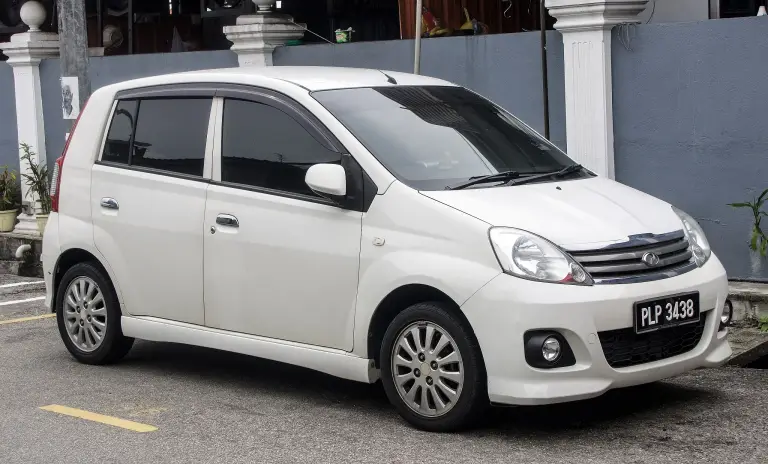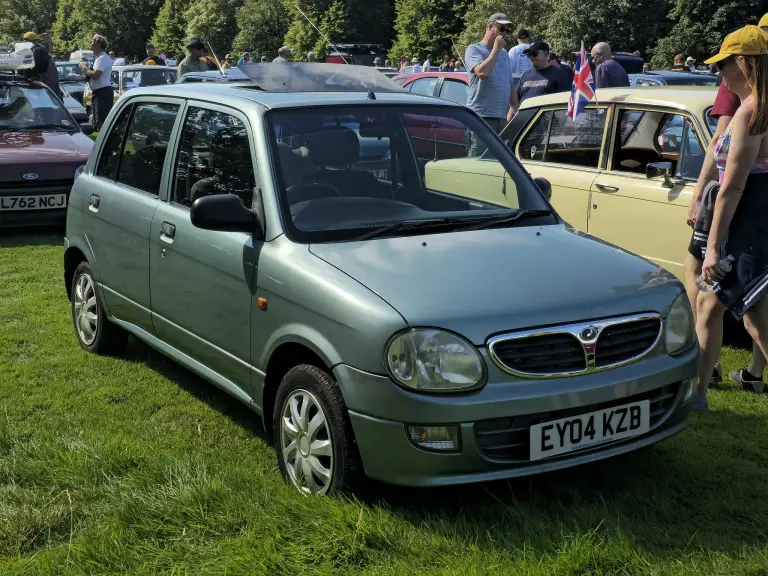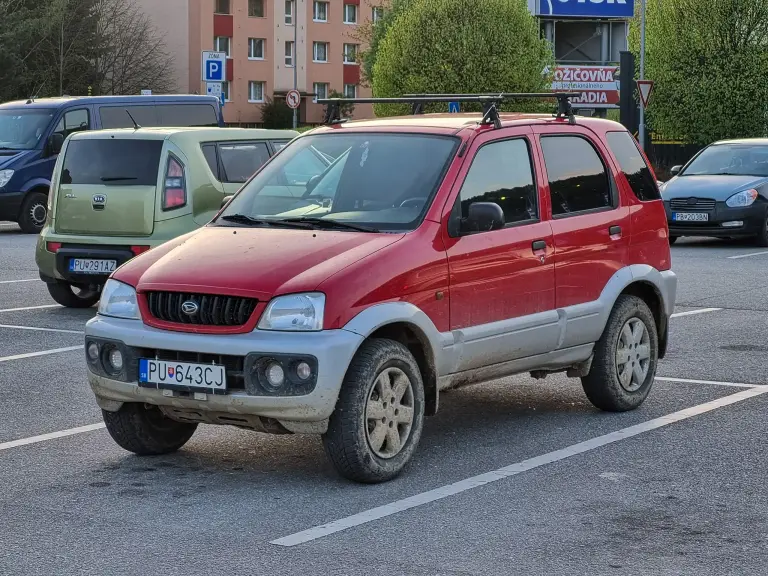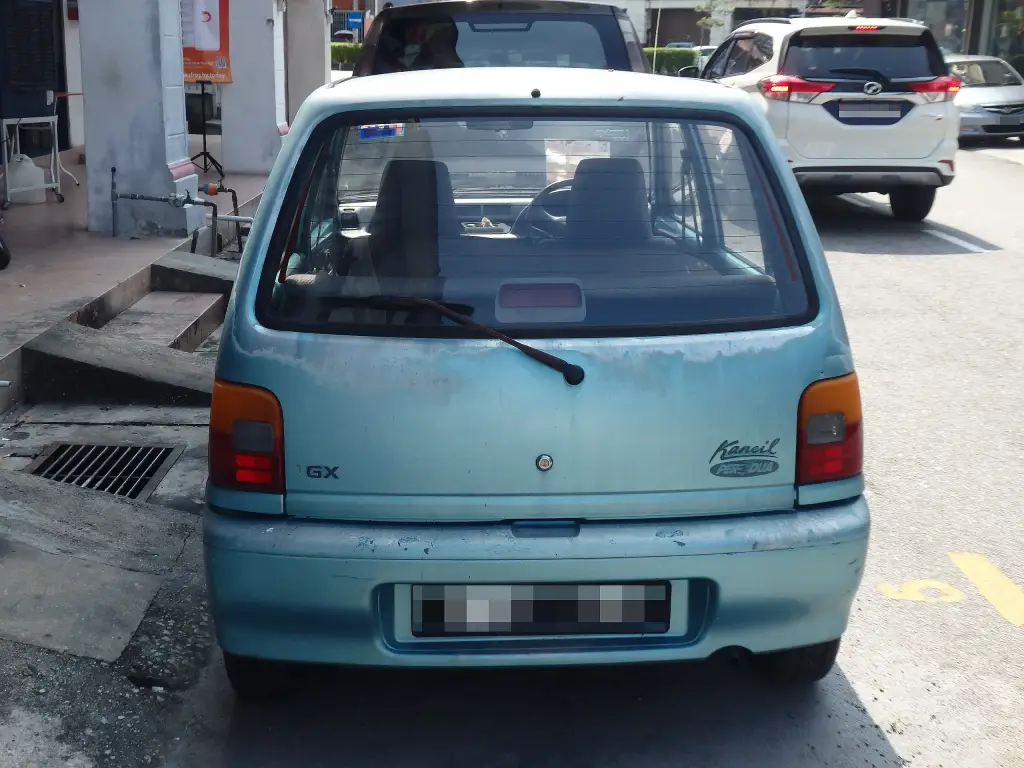
The Perodua Kancil was the first car built by Perodua, a five-door city hatchback based on the third-generation Daihatsu Mira. It went on sale in Malaysia on 29 August 1994, was sold in Britain as the Perodua Nippa, and remained in production until July 2009, outliving the newer Kelisa.
Perodua Kancil at a glance
| Maker | Perodua, Malaysia |
|---|---|
| Production | August 1994–July 2009 |
| Also sold as | Perodua Nippa (United Kingdom), Daihatsu Ceria (Indonesia) |
| Based on | Daihatsu Mira L200, third generation |
| Body | five-door hatchback, monocoque |
| Engines | 660 cc, 31 PS (23 kW); 850 cc, 37 PS (27 kW) |
| Gearbox | four- or five-speed manual, three-speed automatic |
| Seats | five |
| Launch date | 29 August 1994 |
| Facelifts | 1997, 1999, 2000 and 2002 |
| Named after | the mouse deer (kancil) of Malay fable |
Based on one source (English Wikipedia).
History of the Perodua Kancil
The Kancil was Perodua’s first car after the company was founded in 1993. It is a small five-door hatchback on a monocoque framework that seats five people, and like the cars of Proton before it, it is a lightly modified Japanese design: the Kancil is a rebadged third-generation Daihatsu Mira L200. Rebadging had been common in Malaysia since 1985, when Proton based its first cars on retired Mitsubishi models, and Perodua followed the same route with a car it named after the mouse deer of Malay fable.
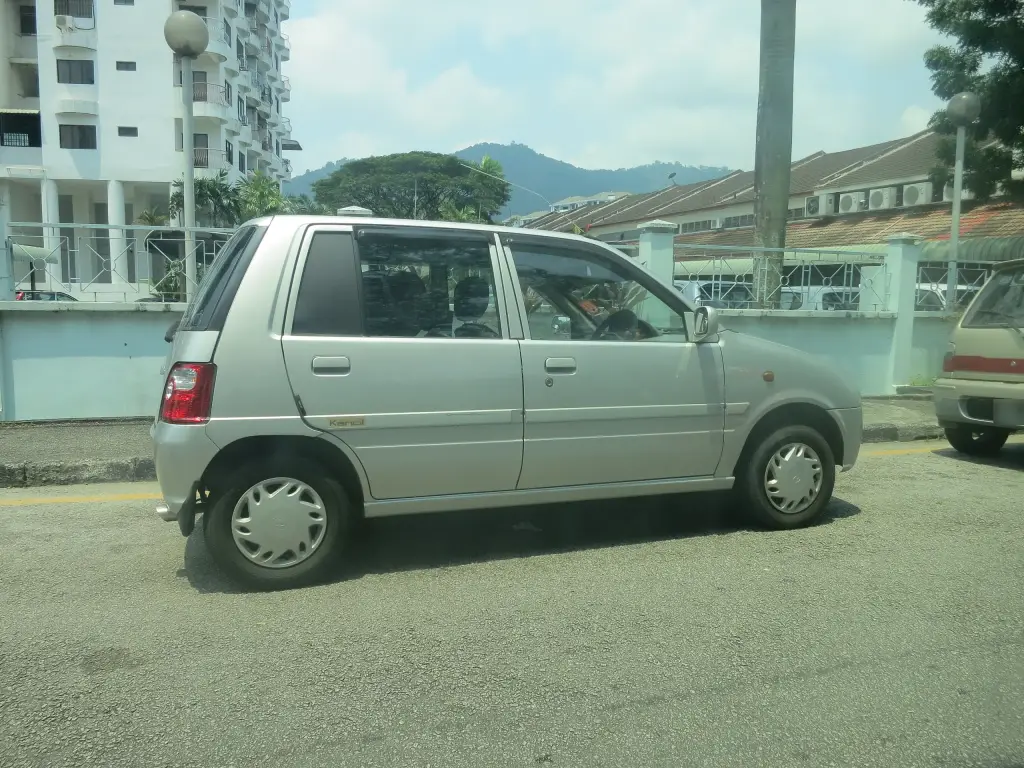
Two engines were offered: a 660 cc unit with 31 PS (23 kW) and an 850 cc unit with 37 PS (27 kW). Buyers could choose a four- or five-speed manual gearbox — the four-speed was not available on the 850 — or a three-speed automatic. At the launch on 29 August 1994 there were two variants, the EX with the four-speed manual and the GX with the five-speed, both with the 660 cc engine.
Automatic and 850 cc versions
In January 1995 Perodua added the Kancil EZ with an automatic transmission. On top of the GX equipment it brought coloured bumpers, a gear lock, side protector mouldings, a hazard sign and a first-aid kit, and it cost RM28,931.14 in solid colours, RM29,838.14 in metallic and RM30,214.00 in mica in Peninsular Malaysia. In August 1996 the 850 cc version arrived with GX and EZ variants alongside the existing 660 cc cars, adding front power windows, and with it came the 850 cc GX-based Kancil Era.
Four facelifts
The first facelift came on 27 August 1997, with a larger front grille, a new rear garnish, rounded indicator lights, clear instead of amber rear signal lenses, new wheel-cap designs and a revised interior; the 850 cc cars gained white-faced instruments and adjustable head restraints. Prices then ran from RM24,833.74 to RM33,465.84. On 3 May 1998 the Kancil EX extra added a five-speed manual to the 660 cc engine, and in October 1999 the second facelift was presented by Prime Minister Mahathir Mohamad at the KL Motorsport Show.
A further update in 2000 brought body-coloured side mouldings, a new grille, a reprofiled front bumper with larger indicators and electrically adjustable mirrors on 850 cc cars. The most extensive restyling followed in September 2002, with rounder headlights, tail lights and bumpers, the rear number plate moved from the bumper onto the hatch, and a flushed dashboard with the instruments placed in the centre. The mechanics stayed the same, except that the EZi automatic eventually received a fuel-injected engine in February 2003. The 660 EXb basic model appeared in 2004 and the 850 EXS special edition in 2005.
Outside Malaysia the car was sold in the United Kingdom as the Perodua Nippa and in Indonesia as the Daihatsu Ceria. Production ended in July 2009, after the Viva had taken over both the Kancil’s and the Kelisa’s place in the range.
Design and features
- Perodua’s first car: the model that established the company in 1994.
- Kei-car basis: a rebadged Daihatsu Mira L200, with a monocoque body and room for five.
- Two small engines: 660 cc with 31 PS or 850 cc with 37 PS, with manual or automatic gearboxes.
- Long production life: fifteen years and four facelifts before it gave way to the Viva.
- Sold abroad: as the Perodua Nippa in Britain and the Daihatsu Ceria in Indonesia.
Perodua Kancil versions
- EX and GX (1994): 660 cc engine with a four-speed manual in the EX and a five-speed in the GX.
- EZ (1995): the first automatic Kancil, with coloured bumpers and extra equipment.
- 850 GX and 850 EZ (1996): the larger engine, front power windows and the Era special based on the 850 GX.
- EX extra (1998): a 660 cc car with the five-speed manual gearbox.
- 660 EXb (2004): a stripped base model in Ivory White only.
- 850 EXS (2005): a special edition with alloy wheels, body kit and a CD player.
The Kancil was replaced in stages by the Perodua Viva, which took over from the Kelisa first and from the Kancil later. More small Malaysian cars are in the Perodua collection.
Video: 1997 Perodua Kancil 850EZ Auto Start-Up and Full Vehicle Tour
Video on YouTube.
Sources
- Perodua Kancil, English Wikipedia: history, engines, variants, facelifts, prices