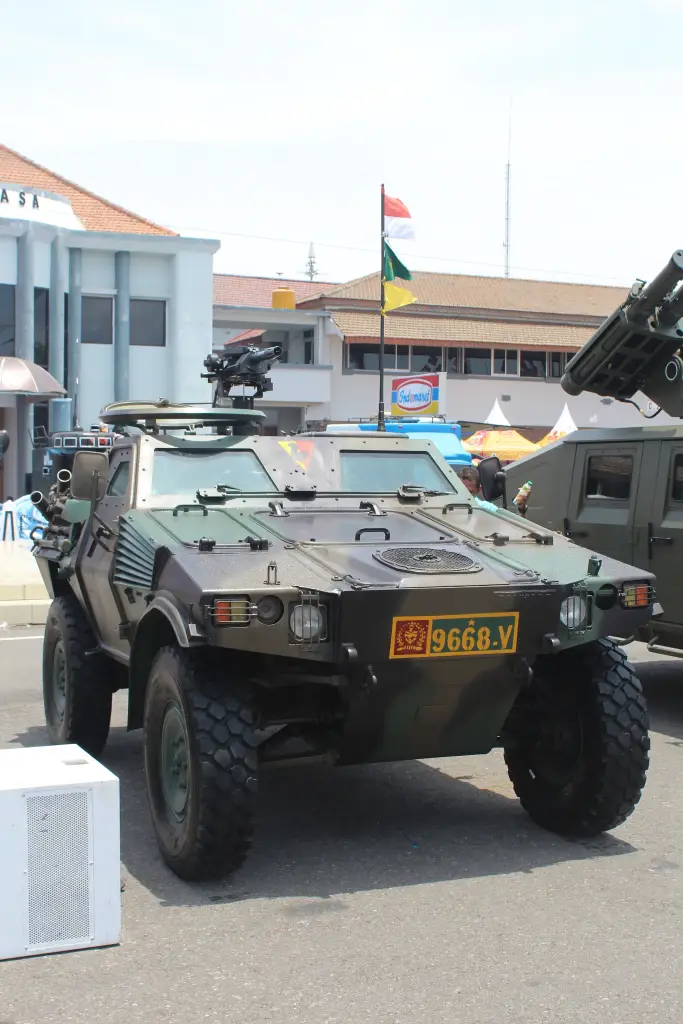
The Panhard Véhicule Blindé Léger, better known as the Panhard VBL, is a French four-wheel-drive all-terrain armoured vehicle built by Panhard. It was designed to combine the agility of the Peugeot P4 liaison vehicle with protection against small arms fire, artillery fragments, mines and NBC weapons. Produced between 1985 and 2010, it was used by the French Army and other European, African and Central American armies in conflicts from the 1980s onwards.
Panhard VBL at a glance
| Maker | Panhard, built at Marolles-en-Hurepoix |
|---|---|
| Programme start | 1978 |
| Selected | 1985 |
| Production | 1985–2010 |
| Total built | 2,600 |
| Weight | about 4 tonnes |
| Engine | Peugeot XD3T turbodiesel, 95 hp |
| Top speed | 95 km/h |
| Range | 600 km, 800 km with two external tanks |
| Amphibious speed | 5.4 km/h |
| Crew | two in recce versions, three in anti-tank versions |
History of the Panhard VBL
The French VBL programme began in 1978, when the Army was looking for a light reconnaissance vehicle to work with the AMX-10 RC wheeled tank, the Hotchkiss M201 jeep being obsolete beside the Soviet BRDM-2. The new vehicle had to carry a single machine gun for reconnaissance or a MILAN missile for anti-tank work, while being protected against NBC hazards and small arms fire. Renault and Panhard both proposed prototypes, tested from 1982. Before the French selection in 1985 the Panhard model had already been ordered by the Mexican Army in 1984, and in 1985 a preproduction batch of fifteen was launched; the VBL entered active service with the French Army in 1990. The Army ordered 569 in 1990, another 330 between 1994 and 1997 and 700 of the lengthened VB2L before 2004. The 1,500th VBL was built in 2001 and the last of 2,600 left the plant in 2010.
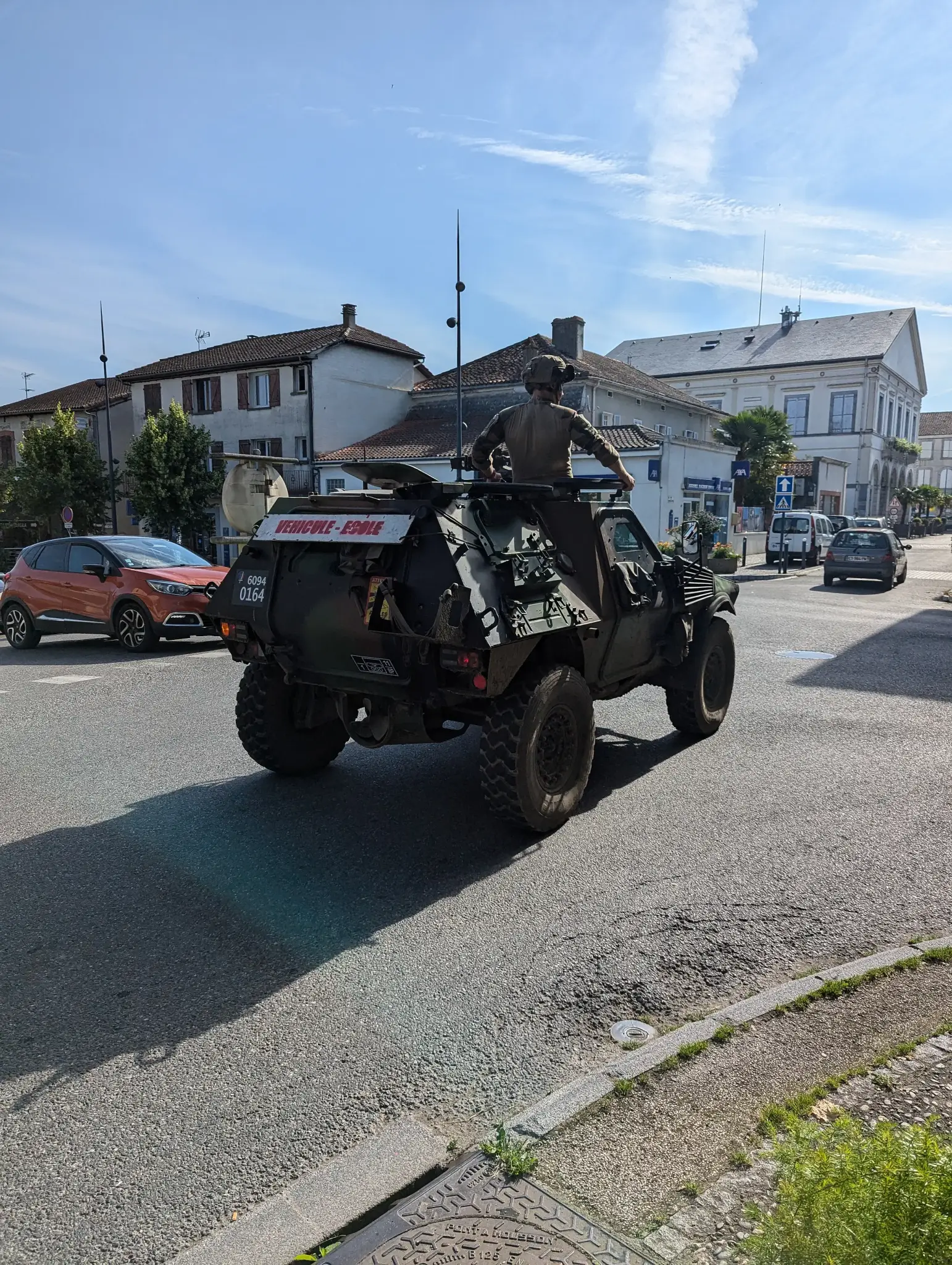
The VBL has two compartments: a motor bay placed forward to protect the crew compartment behind it. Its compact interior led to a lengthened version, and the crew is protected against NBC weapons. The French Army version uses the Peugeot XD3T turbo-diesel also fitted to civilian cars such as the Peugeot 505 and Talbot Tagora, along with many other standard civilian components. Its 95 hp and 29.5 hp per tonne allow 95 km/h with a consumption of 16 litres per 100 km. Designed to weigh less than 3.5 tonnes, the vehicle grew to about 4 tonnes as weapons, armour and systems were added. It is fully amphibious at 5.4 km/h in water, can be carried by C-130, C-160, Il-76 and A400M transports, slung under large helicopters such as the Super Puma, and may be para-dropped.
The VBL has been used in many French peacekeeping operations, notably in Lebanon, Bosnia, Rwanda and Kosovo. On 13 March 1985 the French contingent of UNIFIL in Beirut received three VBLs, one on a static post, one as a liaison vehicle and one in reserve. The type was often seen during the siege of Sarajevo, where it served as transport for senior UN commanders including General Lewis MacKenzie and earned the nickname “Sarajevo Taxi”; some were captured by the Army of Republika Srpska. French VBLs have since served in Ivory Coast and Mali, where several were damaged or destroyed by improvised explosive devices.
Design and features
- Compact and protected: a light 4×4 combining the agility of a liaison vehicle with armour against small arms, fragments and mines.
- NBC-proof: the crew compartment is protected against nuclear, biological and chemical hazards.
- Amphibious: swims at 5.4 km/h and can be carried by C-130, C-160, Il-76 or A400M, slung under a helicopter or para-dropped.
- Civilian engine: the Peugeot XD3T turbodiesel of 95 hp, shared with cars such as the Peugeot 505.
- Long range: 600 km, extendable to 800 km with two external fuel tanks.
Panhard VBL versions
- VBL standard: reconnaissance version with a 7.62 mm machine gun.
- VBL MILAN: anti-tank version with a MILAN launcher and six missiles, crew of three.
- VBL RECO 12.7: reconnaissance and fire support with a 12.7 mm M2 machine gun.
- VB2L: lengthened command post version with VHF and HF radios.
- Export versions: VBL TOW, VBL ALBI-MISTRAL for air defence and the VBL Mark 2 with a Steyr engine.
- VBL Ultima: rebuilt version with a 130 hp diesel, new communications and no amphibious capability.
The VBL served alongside the Panhard ERC and the Panhard AML, and it shares its Peugeot engine with the ERC-90 Sagaie 2. More vehicles are in the Panhard collection.
Video: The armored LAV VBL Panhard in action
Video on YouTube.
Sources
- Véhicule Blindé Léger, English Wikipedia: design, production, variants, service
- Véhicule blindé léger, French Wikipedia: development, French versions, operations