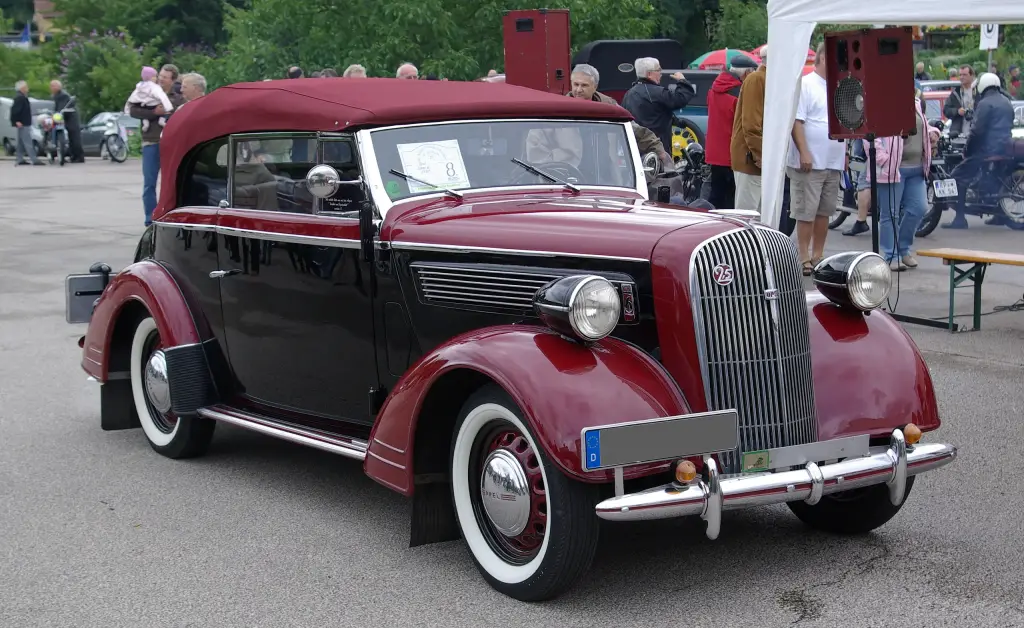
The Opel Super 6 was an executive car built by Opel from 1937 to late 1938. It had a 2.5-litre straight-six and a top speed of 115 km/h, and Opel built 46,453 of them in under two years.
Opel Super 6 at a glance
| Maker | Adam Opel AG, Rüsselsheim |
|---|---|
| Production | 1937 – late 1938 |
| Engine | 2,473 cc straight-six |
| Power | 55 PS at 3,500 rpm |
| Top speed | 115 km/h |
| Bodies | four-door sedan, two-door coupé, two-door cabriolet |
| Coachbuilders | Otto Kühn, Gläser and others |
| Windscreen wipers | driven mechanically from the camshaft |
| Built | 46,453 |
Based on one source, the English Wikipedia article on the Opel Super 6. The article is short, so this page is shorter than usual.
History of the Opel Super 6
Opel’s big six
The Super 6 appeared in 1937 as Opel’s six-cylinder executive car, sitting above the four-cylinder Olympia and Kadett in a range that was growing quickly at the end of the 1930s. Its 2,473 cc straight-six produced 55 PS at 3,500 rpm and gave a top speed of 115 km/h, figures that put it among the faster German cars of its class. The engine’s architecture was shared with the Olympia’s four-cylinder unit, which had gained overhead valves that year and stayed in production until 1960.
Bodies and coachbuilders
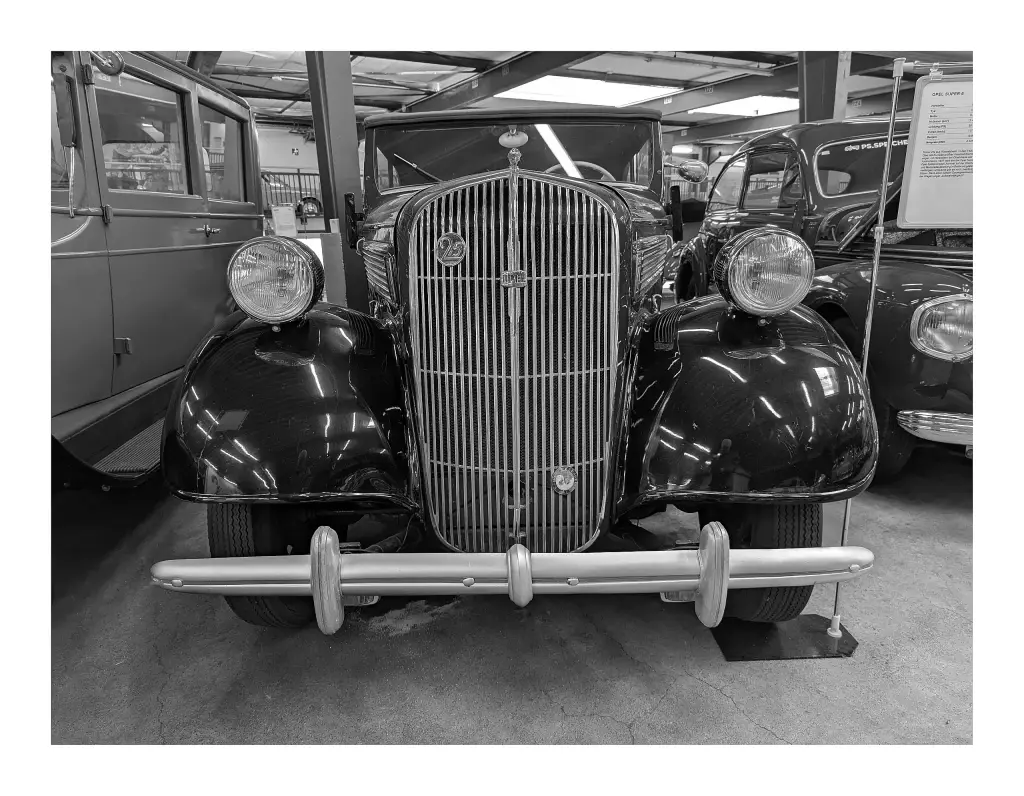
The Super 6 was available in three factory versions: a four-door sedan, a two-door coupé and a two-door cabriolet. On top of these, a small number of custom-bodied cars were made by coachbuilders such as Karosseriewerke Otto Kühn and Gläser of Dresden, a practice that was still common in Germany in the 1930s for buyers who wanted something more individual than the factory could offer.
The end and the detail
Production ended late in 1938, after only about two years, by which time 46,453 Super 6s had been built. One detail of the car outlived it: the windscreen wipers were driven mechanically from the camshaft, a solution Opel kept in its post-war Rekord models until 1957. The Super 6 gave way to the larger Kapitän, which used a 2.5-litre six of the same family and became Opel’s luxury car on the eve of the war.
Design and features
- 2.5-litre six: 55 PS and 115 km/h in a mid-1930s executive car.
- Three bodies: sedan, coupé and cabriolet from the factory.
- Coachbuilt versions: Kühn and Gläser built a few cars to individual order.
- Camshaft-driven wipers: a system Opel used in the Rekord until 1957.
Opel Super 6 versions
- Super 6 sedan: the four-door factory body.
- Super 6 coupé: the two-door closed version.
- Super 6 cabriolet: the two-door open car.
- Coachbuilt cars: bodies by Otto Kühn, Gläser and others.
The Super 6’s six-cylinder engine family led to the Kapitän, and the same engine was used in the light Blitz truck. More cars are in the Opel collection.
Sources
- Opel Super 6, English Wikipedia: engine, bodies, production, wiper drive