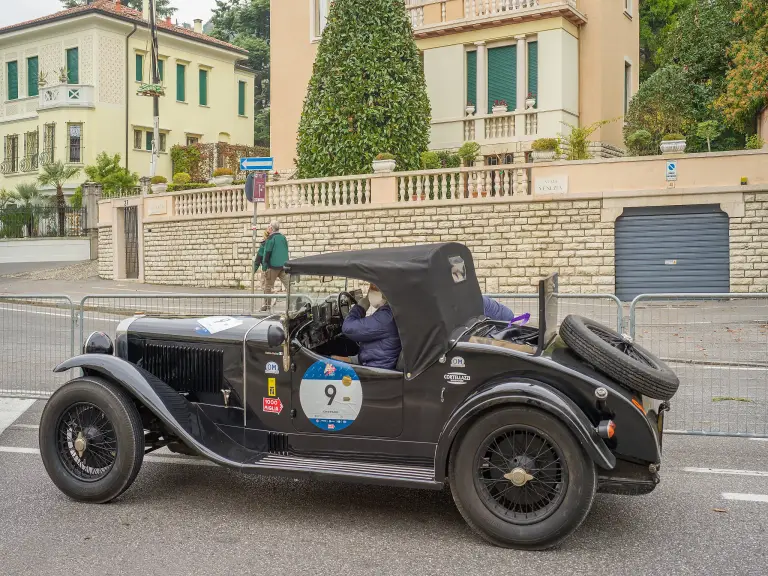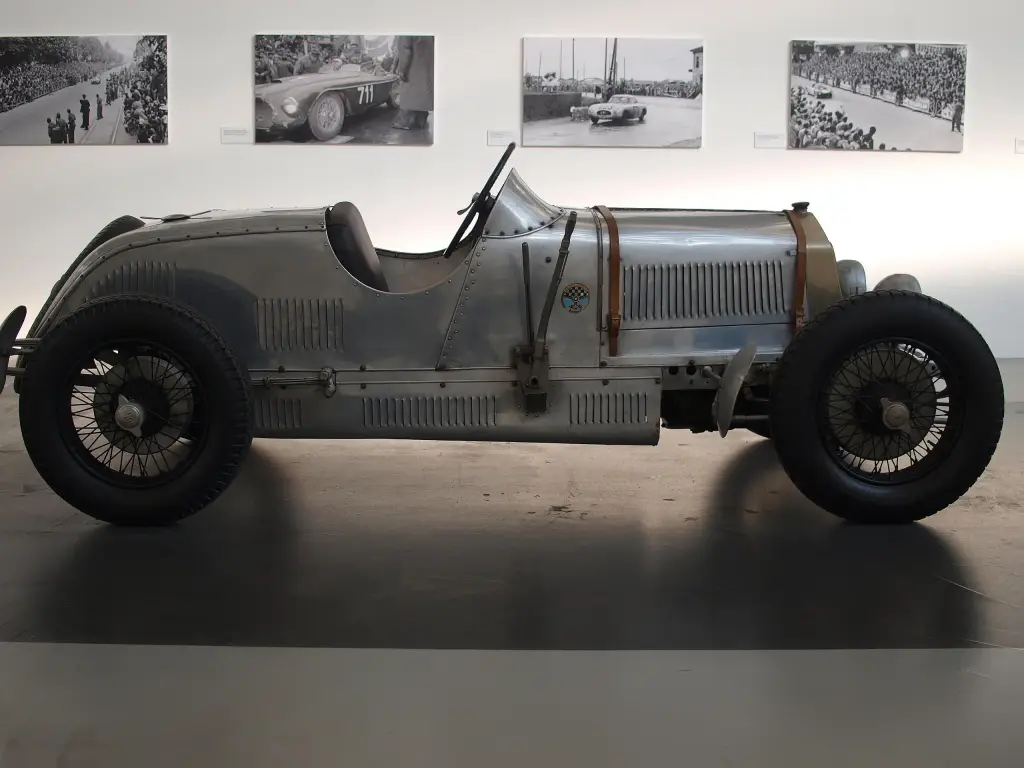
The OM 469 was the smaller of the two cars that Officine Meccaniche of Brescia sold in the 1920s, and it outlived the company’s car programme. Its name encodes the engine: four cylinders and a 69 mm bore.
OM 469 at a glance
| Maker | Officine Meccaniche (OM), Brescia |
|---|---|
| Production | 1923–1934 |
| Also known as | OM 469 12/15 HP |
| Engine | 1,496 cc four-cylinder in line, side valves |
| Power | 25 CV at 3,600 rpm |
| 1928 second series | 1,680 cc, 40 CV, coil ignition |
| Gearbox | four speeds and reverse |
| Body | torpedo with six seats, right-hand drive |
| Brakes | front brakes on the S version |
| Record | 70.5 km/h average over 48 hours at Monza, March 1924 |
The English Wikipedia has no article on the 469; this page is based on the Italian article, with the note on the 665 taken from the Italian article on that car.
History of the OM 469
OM began building cars in 1918, after buying the Brescia car factory Brixia-Züst the year before. The 469 was presented in 1922 in two forms, N and S; the S was notable for having brakes on the front wheels as well, at a time when most cars still used transmission brakes or rear drum brakes only. The engine was a 1,496 cc monobloc four designed by Ottavio Fuscaldo, with magneto ignition, a detachable cylinder head and an aluminium sump and clutch housing. It produced 25 CV at 3,600 rpm and drove through a four-speed gearbox and a cardan shaft to the rear wheels.
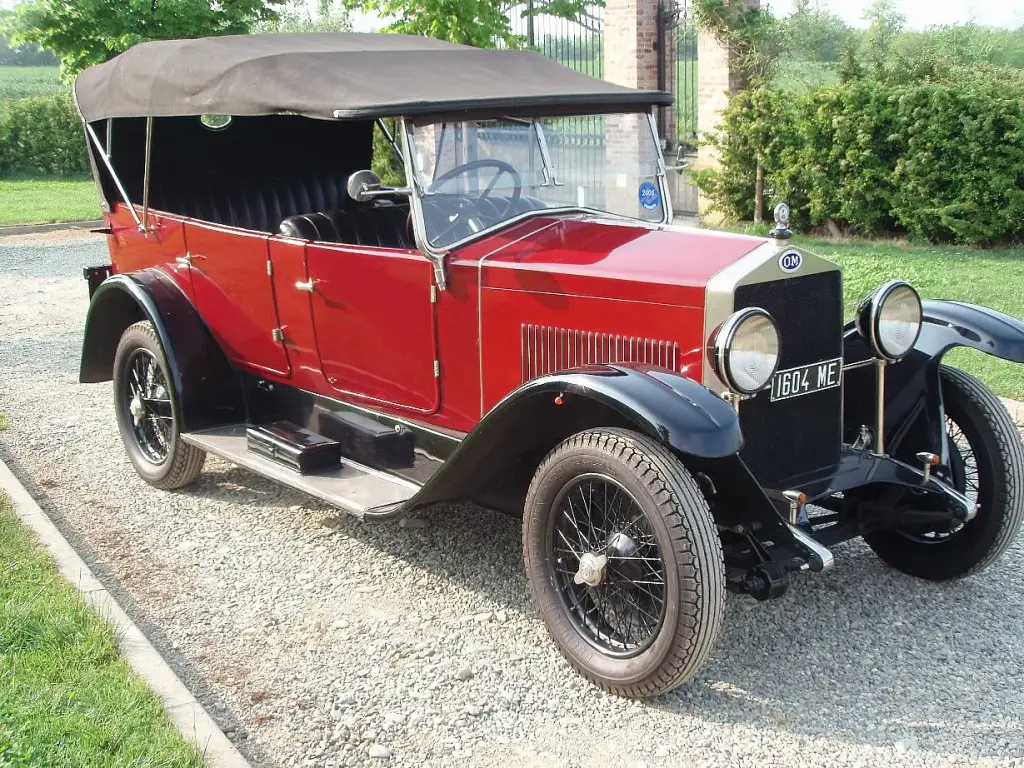
The chassis was a pressed-steel structure with rigid axles, leaf springs and friction dampers. The standard torpedo body from the factory carried six people on two rows of leather benches, with the driver on the right and a dashboard holding a speedometer, an oil pressure gauge and a fuel gauge. Wire wheels were standard, with disc or Sankey-type wheels available to order.
In March 1924 a 469 averaged 70.5 km/h over 48 hours at Monza, a world record in the 1.5-litre class. At the 1928 Milan show a second series appeared with coil ignition instead of a magneto, the engine enlarged from 1,496 to 1,680 cc and power raised from 30 to 40 CV. The crisis of 1929 pushed OM out of car production, and the 469 stayed in the catalogue only as a commercial chassis until 1934.
A two-seat road-racing body was offered, and with the engine tuned to 30 CV the 469 won the 1,500 cc class in the 1922 Coppa delle Alpi and at Mugello and Garda. The 469’s chassis and engine also formed the basis of the larger six-cylinder 665 Superba.
Design and features
- Monobloc four: a 1,496 cc engine with a detachable head and three main bearings, designed by Ottavio Fuscaldo.
- Front brakes on the S: an unusual feature in a car of 1922, when most rivals braked on the rear wheels only.
- Light and simple: rigid axles and leaf springs kept the car reliable and cheap to run.
- Commercial afterlife: the 469 remained available as a working chassis until 1934, five years after OM stopped selling cars.
OM 469 versions
- 469 N: the standard chassis with rear-wheel brakes only.
- 469 S: front brakes and a more sporting specification.
- Second series (1928): 1,680 cc, 40 CV and coil ignition.
- Sport two-seater: a competition body with a 30 CV engine.
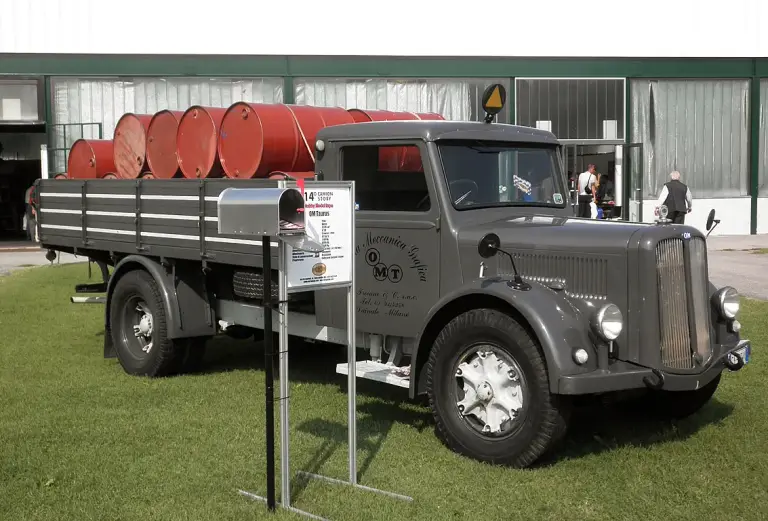
The 469 gave its chassis and engine layout to the six-cylinder OM 665 Superba, and the OM Autocarretta shows what the company did when it turned to military vehicles. More OM vehicles are in the OM collection.
Sources
- OM 469 12/15 HP, Italian Wikipedia: engine, chassis, record, second series, racing
- OM 665 Superba, Italian Wikipedia: the 665’s chassis and engine derived from the 469