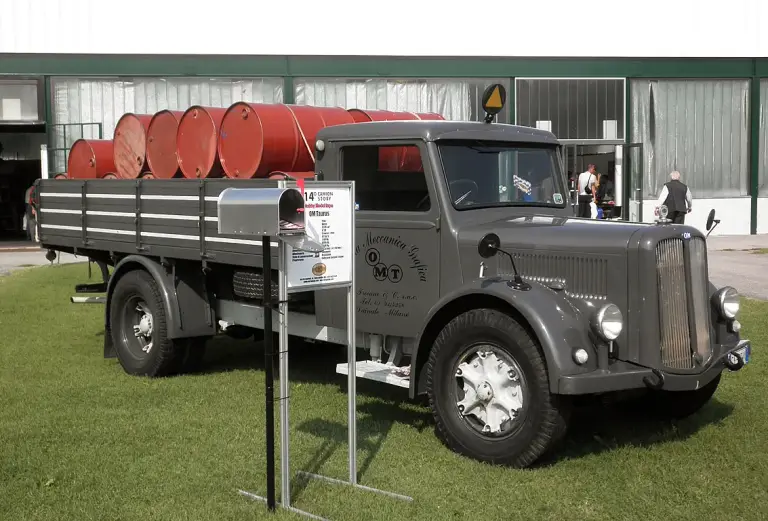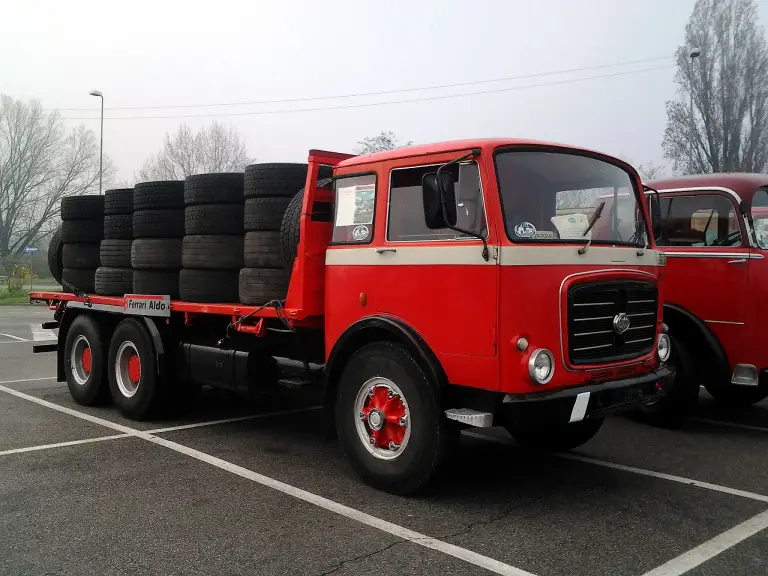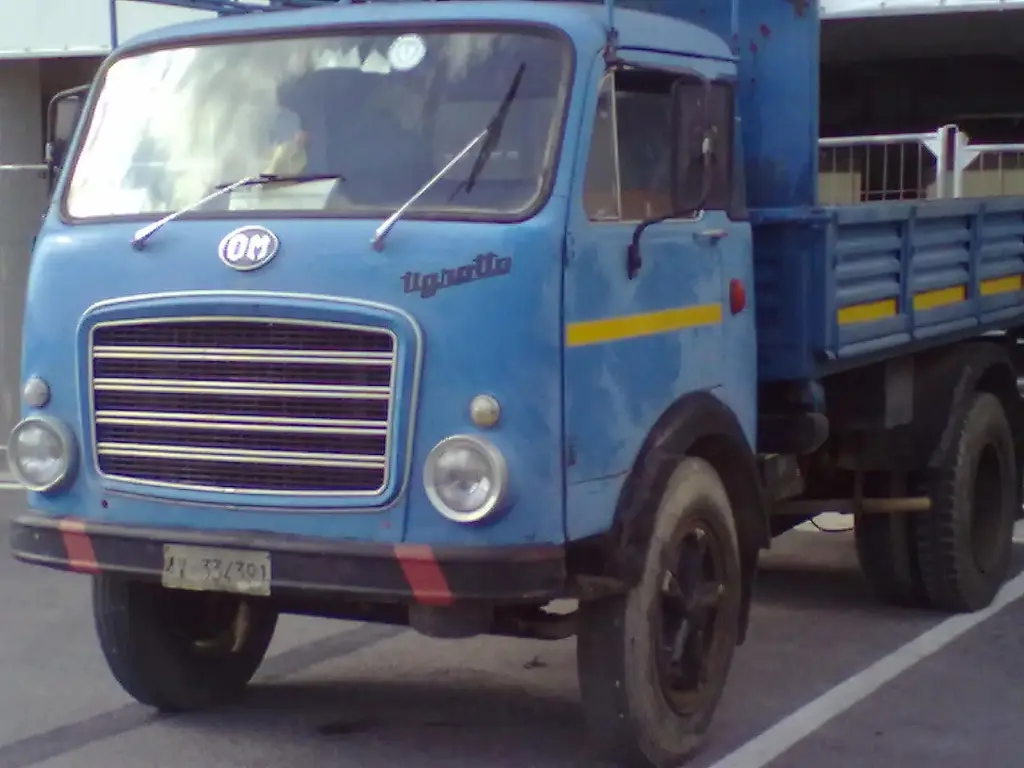
The OM Tigrotto was created to fill the gap between the successful Leoncino and the medium-weight Tigre. Longer and stronger than the Leoncino, it was built from 1957 to 1972 in four series.
OM Tigrotto at a glance
| Maker | Officine Meccaniche (OM), Brescia |
|---|---|
| Production | 1957–1972 |
| Class | medium-light truck |
| Gross weight | 7.5–10 tonnes |
| Payload | 5–6.5 tonnes |
| Series | four |
| Bodies | truck, fire engine, camper, chassis |
| Position in range | above the Leoncino, below the Tigre |
| Replaced by | OM 80, 90 and 100 |
The English Wikipedia has no article on the Tigrotto; this page is based on the Italian article, the only source used.
History of the OM Tigrotto
In 1957 OM broadened its range of trucks with animal names by adding the Tigrotto. The truck was very similar to the Leoncino but longer and more strongly built, since it was intended for heavier work. It was produced in four series and could be supplied as a fire engine, a camper or a bare chassis.
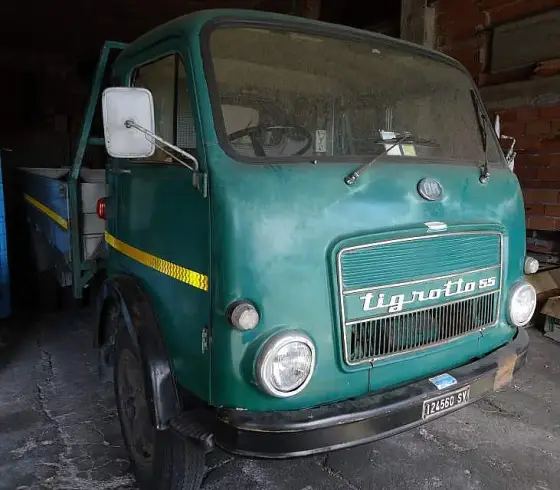
In the zoological family, whose trucks ranged from three to eight tonnes gross, the Tigrotto sat at the top with a gross weight of 7.5 to 10 tonnes and a payload of five to 6.5 tonnes. Production lasted until 1972, when the Tigrotto was replaced by the OM 80, 90 and 100 of the numeric series.
Design and features
- Stronger Leoncino: a longer chassis and heavier components for harder work.
- Top of the family: 7.5 to 10 tonnes gross and up to 6.5 tonnes of payload.
- Four series: continuous development from 1957 to 1972.
- Many bodies: fire engine, camper and chassis-cab conversions.
OM Tigrotto versions
- Tigrotto truck: the standard goods chassis.
- Fire engine: a pump body on the Tigrotto chassis.
- Camper: a motor-caravan conversion.
- OM 80, 90 and 100: the numeric-series successors.
The Tigrotto was a bigger brother of the OM Leoncino and sat below the OM Tigre; its successors are in the numeric series.
Sources
- OM Tigrotto, Italian Wikipedia: history, weights, series, successors