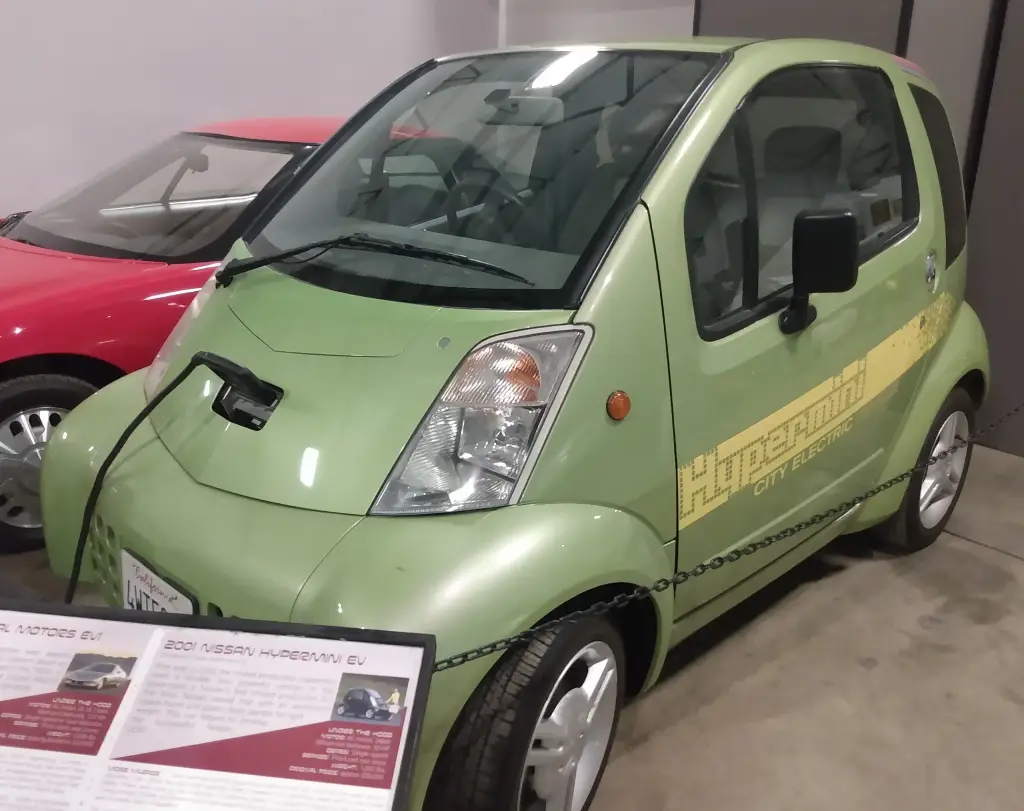
The Nissan Hypermini is a two-seater electric microcar built by Nissan in 1999–2001 for the Japanese market. Nissan produced 219 of them. The car reaches 100 km/h and travels about 115 km on a charge by Nissan’s own measurement under Japan’s 10-15 test mode, and won the fourth annual New Energy Grand Prize from the New Energy Foundation.
Nissan Hypermini at a glance
| Production | 1999–2001 |
|---|---|
| Built | 219 |
| Seats | two |
| Top speed | 100 km/h |
| Range | about 115 km (10-15 mode) |
| Chassis | aluminium space frame, plastic panels |
| Suspension | independent struts front and rear |
| Brakes | ventilated discs with anti-lock |
| Tyres | 145/65 R14 front, 165/60 R14 rear, run-flat |
| Turning circle | 7.8 m |
| Drag coefficient | 0.30 |
| Price | 4,000,000 yen with a fixed charger |
based on one source: the English Wikipedia article on the Nissan Hypermini.
History of the Nissan Hypermini
Launch
The Hypermini was introduced in limited numbers in Japan in 1999 and went on retail sale through Nissan dealers in the Tokyo, Osaka and Kyoto areas in February 2000, priced at 4,000,000 yen with a 200-volt mount-type battery charger or 4,015,000 yen with a non-fixed charger. Sales were aimed mainly at government offices, local authorities and companies. Nissan claimed the car used a quarter of the energy of a typical car.
Engineering
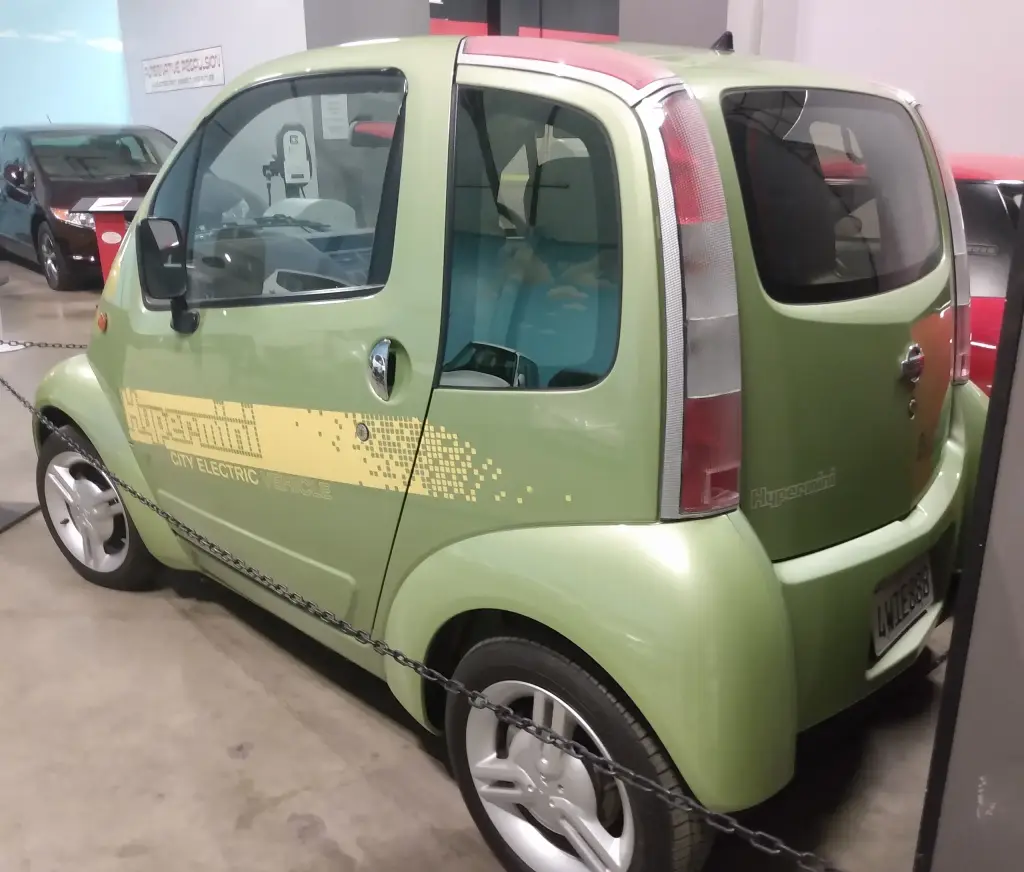
The body sits on an aluminium space frame of extruded pipe, stampings and castings, with plastic panels. Suspension is by independent struts at both ends, brakes are ventilated discs with anti-lock, and the run-flat tyres are 145/65 R14 at the front and 165/60 R14 at the rear. The turning circle is 7.8 metres and the drag coefficient 0.30. The lithium-ion batteries sit under the floor and are recharged inductively: a plastic paddle with a built-in coil creates a high-frequency magnetic field, and a portable charger can be carried on board. The electric air conditioning has pre-cool and pre-heat so the cabin can be brought to temperature before the driver gets in.
In service
Nissan says about 300 were made in total. Trials ran in Kyoto (138 cars), Yokohama (20), Ebina (15), Tokyo (20), at the University of California, Davis (15) and with the Pasadena city council (11). Fifteen entered service on 7 November 2001 in a research programme at UC Davis, and Nissan ran three car-sharing schemes in Japan with about 120 cars. In August 2006 Nissan took 11 cars back from Pasadena when their leases expired, saying it no longer made the Hypermini and could not maintain them.
Design and features
- Aluminium space frame: extruded aluminium with plastic body panels.
- Inductive charging: a paddle with a coil, no plug.
- Pre-conditioning: the air conditioning could cool or heat before use.
- City trials: used in Japanese and Californian car-sharing schemes.
Nissan Hypermini versions
- Hypermini (1999–2001): the only production version.
- Fixed-charger car: 4,000,000 yen with a 200-volt mount-type charger.
- Portable-charger car: 4,015,000 yen with a non-fixed charger.
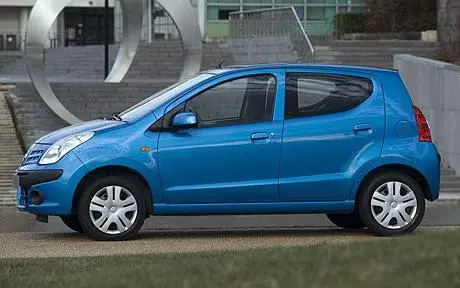
The Hypermini was an early step towards the Leaf, and Nissan’s other small city car of the period was the Pixo. More cars are in the Nissan collection.
Video: 2001 Nissan HyperMini Details and Review
Video by YouTube on YouTube.
Sources
- Nissan Hypermini, English Wikipedia: production, range, engineering, trials and prices