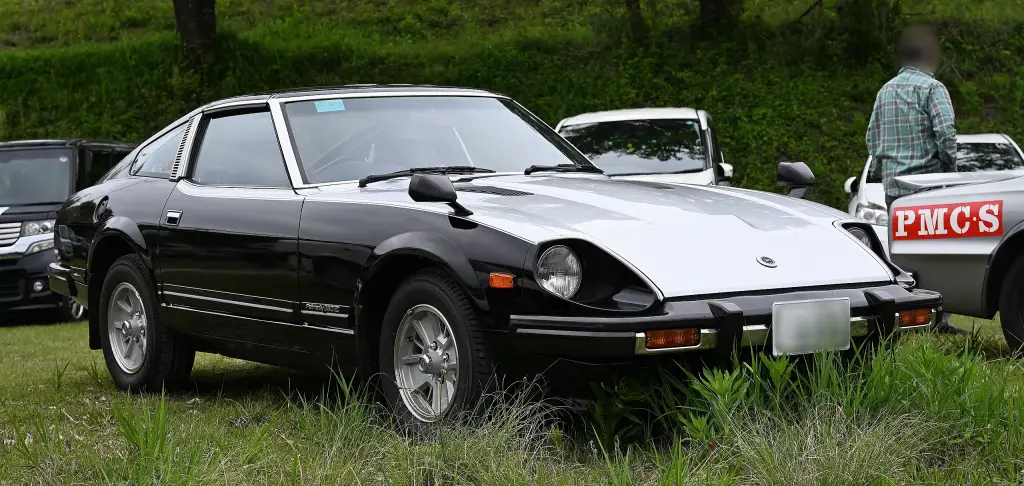
The Nissan S130, sold as the Datsun 280ZX, Nissan Fairlady Z or Nissan Fairlady 280Z depending on the market, was built from 1978 to 1983. It was the second-generation Z-car and replaced the Fairlady Z of the S30 generation in late 1978. It was replaced by the 300ZX in 1984.
Nissan 280ZX at a glance
| Also called | Datsun 280ZX, Nissan Fairlady Z, Nissan Fairlady 280Z |
|---|---|
| Production | 1978–1983 |
| Engine | L28 2.8-litre inline six |
| Japanese addition | 2.0-litre L20 in the Fairlady 200Z |
| Bodies | two-seater and 2+2 |
| Wheelbase | 2,319 mm (two-seater) |
| Drag coefficient | 0.385, down from 0.467 |
| Fuel tank | 80 litres |
| Suspension | MacPherson struts front, semi-trailing arms rear |
| Award | Motor Trend Import Car of the Year 1979 |
| Successor | Nissan 300ZX |
based on one source: the English Wikipedia article on the Fairlady Z of the S130 generation.
History of the Nissan 280ZX
A softer Z
The 280ZX was a complete redesign that kept only the L28 inline-six and driveline components from the 280Z. Both two-seat and 2+2 designs were offered. Compared with earlier Z-cars it was much softer and heavier, with softer suspension, better sound insulation, more comfortable seats and high-end audio, made to be a grand tourer rather than a sports car, especially in the plush Grand Luxury versions.
Engineering
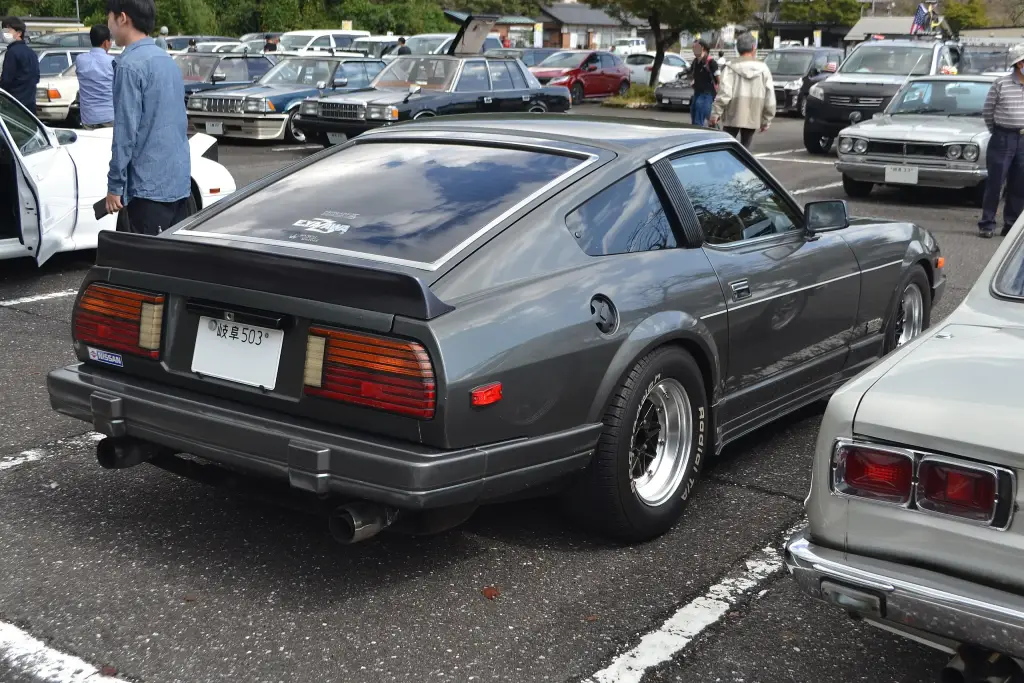
The body was shaped in a wind tunnel: by closing the open grille of the first-generation car the drag coefficient fell from 0.467 to 0.385 and the lift coefficient from 0.41 to 0.14. The rear was stretched around an 80-litre fuel tank, and the car had a lower centre of gravity and close to 50/50 weight distribution. Suspension followed the Bluebird 910, with MacPherson struts at the front and semi-trailing arms at the rear. Early cars were rated at 135 hp, slower to accelerate than the 240Z because of added weight, taller gearing and emission controls; the 280ZX Turbo of 1981 addressed that. Power-assisted rack-and-pinion steering replaced the recirculating-ball system on the 1981 turbo and reached the other cars in 1982.
Markets and trims
In North America and Australia the car was the Datsun 280ZX, co-branded “Datsun by Nissan” through 1983, and in Japan it was the Fairlady Z. Japan also received the 2.0-litre Fairlady 200Z with the L20 engine, offered so the car complied with Japanese dimension regulations. North America had a no-frills two-seater and a fully equipped 2+2 GL, with leather seats optional, a digital instrument cluster from 1982, a T-bar roof with the GL package and a chrome-free “Blackout” package. South Africa built the car from 1982 to 1988 with an L28-E engine still badged Datsun.
Design and features
- Aerodynamic body: a drag coefficient of 0.385 and much reduced lift.
- Inline six: the L28 carried over, with a turbo from 1981.
- 2+2 option: a longer body with two occasional rear seats.
- Comfort equipment: high-end audio, digital instruments from 1982 and a T-bar roof.
Nissan 280ZX versions
- 280ZX two-seater (1978–1983): the standard car.
- 280ZX 2+2 (1978–1983): longer body with rear seats.
- 280ZX Turbo (1981–1983): the fastest version, with power rack-and-pinion steering.
- Fairlady 200Z (Japan): 2.0-litre L20 engine for the home market.
- South African 280ZX (1982–1988): locally built with the L28-E.
The 280ZX followed the 240Z and 280Z and was replaced by the 300ZX. More cars are in the Nissan collection.
Video: Nissan / Datsun 280zx first start after ten years
Video by YouTube on YouTube.
Sources
- Nissan Fairlady Z (S130), English Wikipedia: design, engineering, trims, markets