Morris Oxford was the name given to Morris cars over nearly sixty years, from the first Bullnose of 1913 to the Farina Oxfords of the late 1960s. William Morris named the car after the city where he grew up, and building it turned Oxford into an industrial town.
Morris Oxford at a glance
| Name used | 1913–1971 |
|---|---|
| First model | 1018 cc Bullnose, production from March 1913 |
| Engine supplier | White & Poppe |
| Bodies at launch | two-seat open tourer, plus a van |
| 1919 car | 1548 cc, 11.9 hp, from Hotchkiss-licensed parts |
| 14/28 | 1802 cc from 1923, four-wheel brakes from 1925 |
| Oxford Six F-type | 2320 cc, about 50 built |
| Flatnose | from 1926 |
| Post-war revival | 1948–1971, 1476–1622 cc |
| Named after | the city of Oxford |
History of the Morris Oxford
William Morris’s first car was called the Oxford in honour of its home city. It was announced in The Autocar in October 1912 and production began in March 1913, with virtually every component bought in and assembled by Morris. The car had a 1018 cc four-cylinder side-valve engine with a fixed cylinder head from White & Poppe, and it took its popular name, Bullnose, from its round-topped radiator. Most bodies were two-seat open tourers, and there was a van version too, but the chassis was too short and weak for a four-seat body. A de luxe model with a longer wheelbase and wider track followed, first shown at the Olympia Motor Show in November 1913, and its front axle and steering were redesigned to reduce bump steer.
The Oxford grew quickly. In 1923 Oxford and Cowley cars together accounted for 28.1 per cent of British private car production, and in 1925 Morris sold nearly double that number, 41 per cent of the total. The 1919 Oxford was assembled from British components and became large enough for five passengers while keeping the Bullnose radiator in a larger form; its 1548 cc, 11.9 hp engine was made in Coventry under licence from the French Hotchkiss company. In 1923 the engine grew to 1802 cc, the 14/28, and in 1925 the car received a longer wheelbase and four-wheel brakes. This Oxford was the basis of the first MG, the 14/28 Super Sports. A short-lived six-cylinder F-type Oxford Six with a 2320 cc engine was shown in 1922; only about 50 were made, and its engine proved unreliable.
Flatnose and the 1930s
The Bullnose radiator was dropped in 1926, when the Oxford received a new range of bodies including all-steel saloons, a chassis frame firmly fixed to the scuttle and a radiator with 60 per cent more cooling surface. The 2½-litre Oxford 15.9 Empire model of 1926 was built for colonial use, able to wade through 20 inches of water with 10¼ inches of ground clearance. It was replaced by the Oxford 16/40 in 1928, little more than the 15.9 under a new name. The six-cylinder LA series Oxford Six of 1929 to 1933 used an all-steel body from the Pressed Steel Company, had striking similarities to a contemporary Dodge, and in September 1932 gained a fourth gearbox speed and a 2062 cc Q-series engine.
After the war
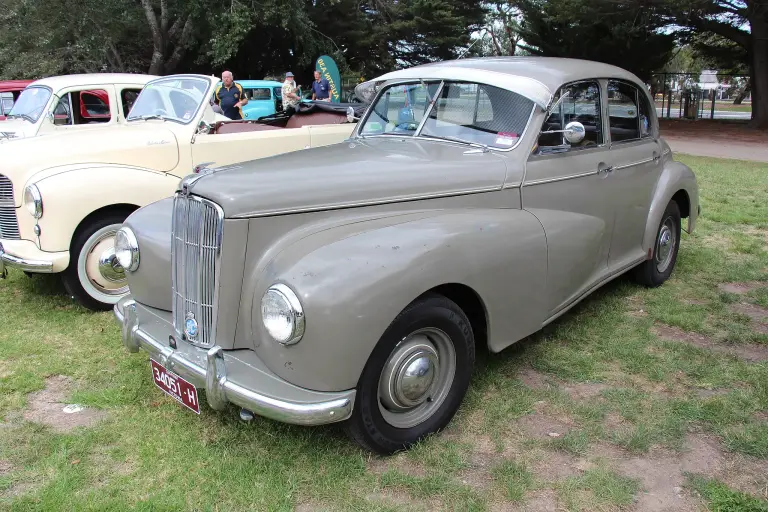
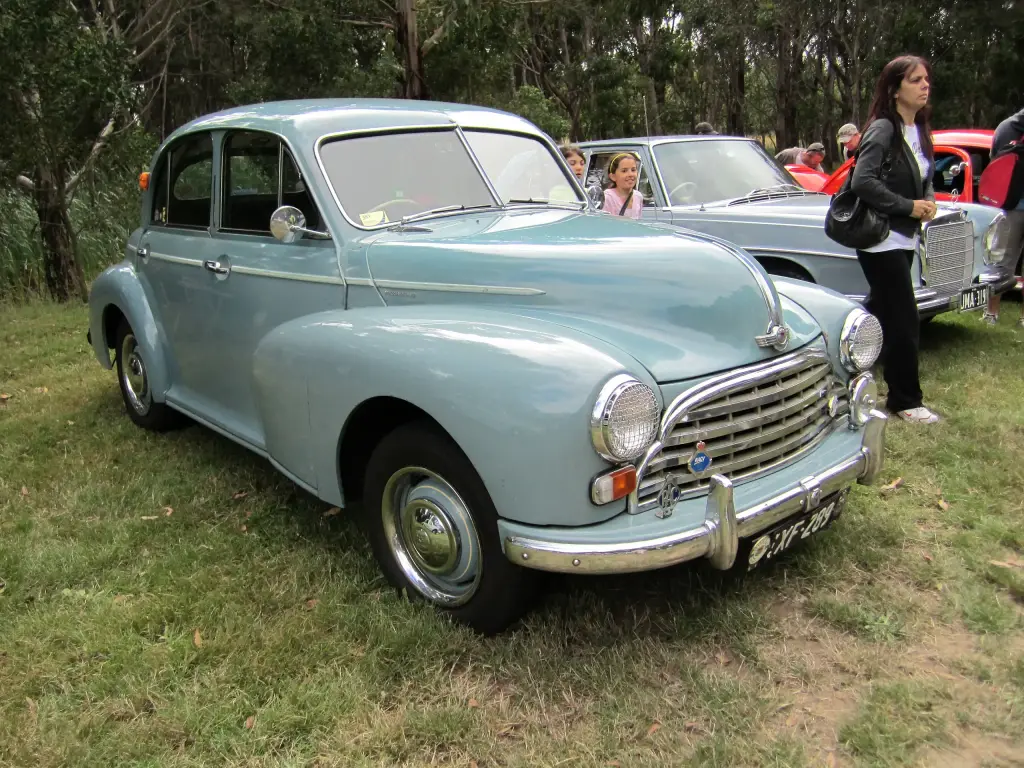
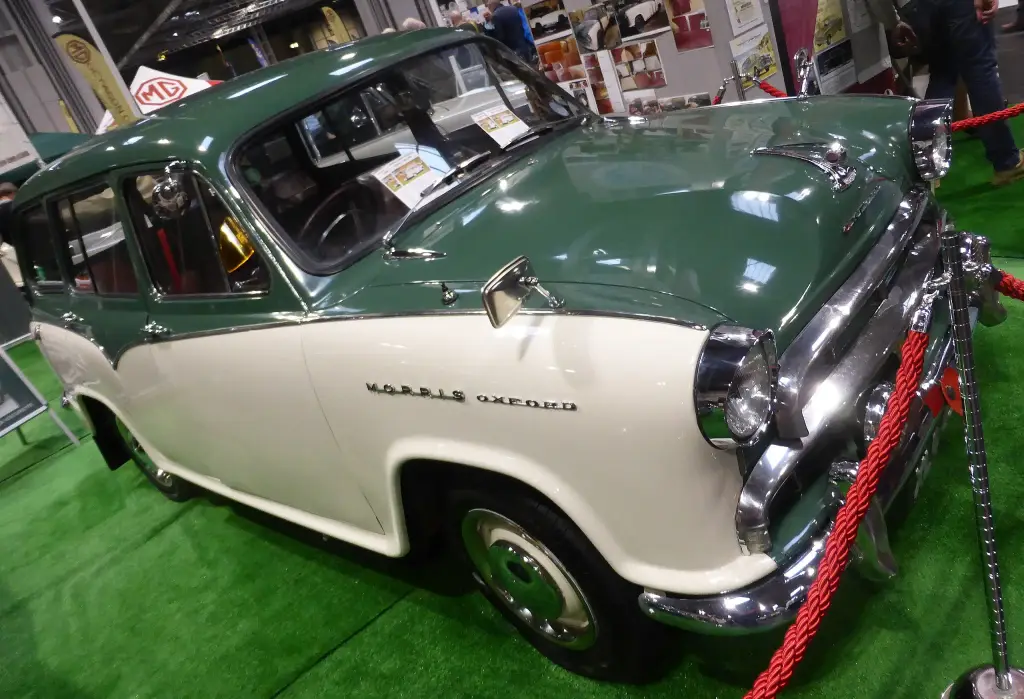
The name was recycled in 1948 and lasted almost another 23 years, until 1971, with engine sizes staying close to 1476–1622 cc. In that time the Oxford grew from the rounded MO of 1948 into the Farina Oxford V and VI, the last cars to carry the name.
Design and features
- Sixty years of the name: from a 1913 two-seater to the Farina saloons of the late 1960s.
- Bought-in engineering: the first Oxford was assembled almost entirely from bought-in parts.
- Bullnose radiator: the round-topped radiator that gave the early car its nickname.
- Scale: Oxford and Cowley cars were 41 per cent of British production in 1925.
- Colonial version: the 15.9 Empire could wade through 20 inches of water.
Morris Oxford versions
- Bullnose (1913–1919): 1018 cc White & Poppe engine, two-seat tourer and van.
- Bullnose (1919–1926): 1548 cc, later 1802 cc 14/28, four-wheel brakes from 1925.
- Oxford Six F-type: short-lived 2320 cc six of 1922–1926.
- Flatnose (1926–1930): conventional radiator and new bodies.
- Oxford 15.9 Empire and 16/40: colonial and revised four-cylinder models.
- Oxford Six (1929–1934): 1938 cc, later 2062 cc six with a Pressed Steel body.
- Post-war Oxford (1948–1971): MO and Farina saloons of 1476–1622 cc.
The Oxford was the more expensive partner of the Morris Cowley in the 1920s, and after the war it shared its body with the Morris Isis and was replaced by the Morris Marina. More cars are in the Morris collection.
Sources
- Morris Oxford, English Wikipedia: all series, engines, production share