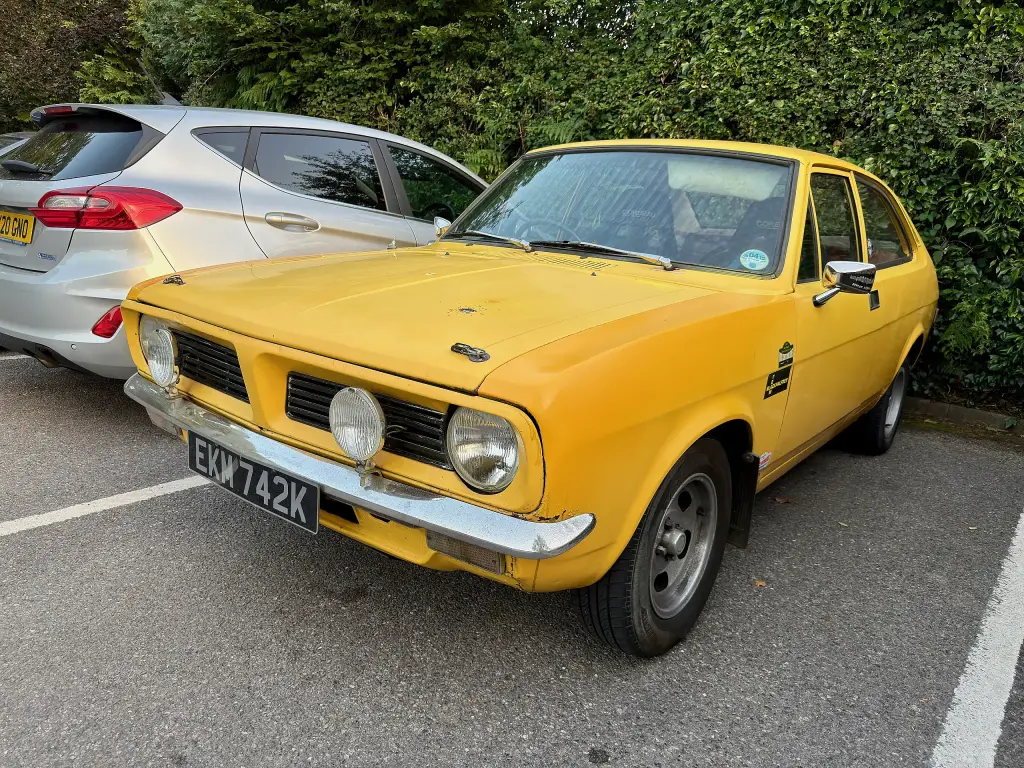
The Morris Marina was British Leyland’s quick answer to the gap left by the Morris Minor and the Morris Oxford. Launched in 1971, it was deliberately conventional, with rear-wheel drive and existing parts, and it sold in large numbers without ever troubling the Ford Cortina. About 1.2 million were made before the Ital replaced it in 1980.
Morris Marina at a glance
| Production | 1971–1980 |
|---|---|
| Design code | ADO28 |
| Designer | Roy Haynes |
| Layout | front engine, rear-wheel drive, live axle |
| Bodies | saloon, coupé, estate, pickup, van |
| Other names | Austin Marina, Leyland Marina, Morris 1700 |
| Built at | Cowley, Oxford |
| Also assembled | Australia, New Zealand, South Africa, Malaysia |
| Built | about 1.2 million |
| Replaced by | Morris Ital, 1980 |
History of the Morris Marina
The Marina was developed under the ADO28 code after Leyland Motors merged with British Motor Holdings in 1968 to form British Leyland. The new management, largely ex-Leyland, found that apart from the Austin Maxi and an early design for a Mini replacement, BMH had no new cars under development: its mass-market range was the 1948 Morris Minor, the 1959 Farina Oxford and the decade-old 1100/1300. BL drew up a plan for a replacement for the Minor and the Farina that could be produced quickly and sold for no more than five years until a genuinely new car arrived.
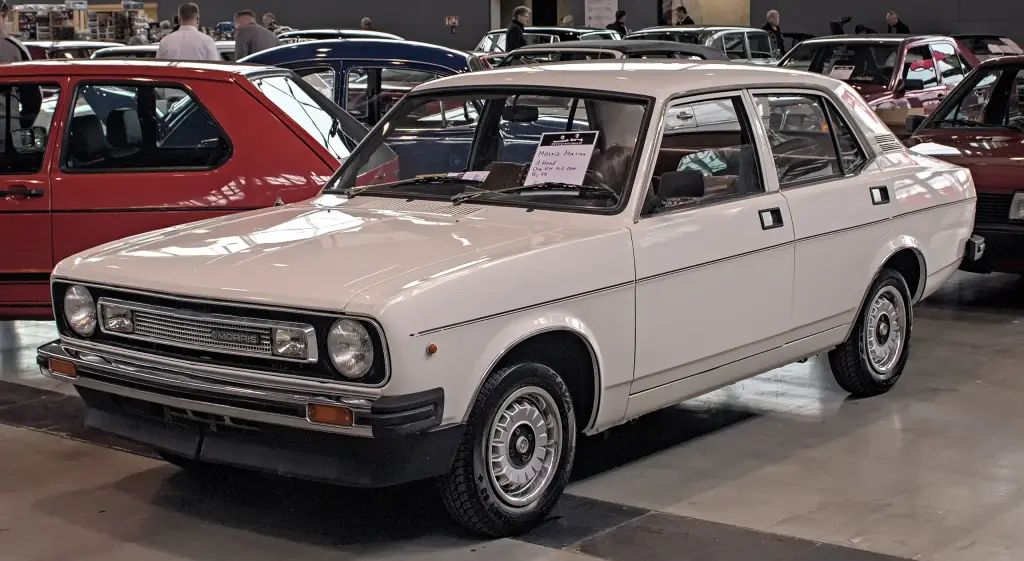
To separate its brands, BL decided that Austins would be the adventurous, front-wheel-drive cars and Morrises the conservative ones, so the ADO28 became a Morris. It used a conventional front-engine, rear-wheel-drive layout with a live rear axle, like the Ford Escort, Ford Cortina and Vauxhall Viva, which BL also expected to help sales in Commonwealth markets where the advanced BMC cars were thought too fragile and complex. The car was designed by Roy Haynes, who had drawn the Ford Cortina Mark II, and it was sized to compete with both the Escort and the Cortina, ending up only slightly smaller than the Cortina. Haynes also proposed a common floor pan shared between models, an idea BL management thought too radical.
The Marina was built at the old Morris plant at Cowley, which was largely unchanged since the 1920s and lacked capacity, so Leyland had to rebuild it at considerable cost. It was meant to use the E-Series overhead-cam engine, but the tall, siamesed design caused problems, and the production cars used existing BMC and Triumph units. The Marina went on sale in 1971 as a saloon and coupé, the coupé being pitched as the sportier version in the mould of the Ford Capri, and estates, pickups and vans followed. It was a popular car in Britain throughout its life, although it rarely came close to the Cortina, and it was exported around the world and assembled in Australia, New Zealand, South Africa and Malaysia. Many later writers rank it among the worst cars ever built.
The end of the line
The Marina was replaced in 1980 by the Ital, which was the same car with mild styling changes, and that in turn lasted until the Austin Montego arrived in 1984. BL sold the Marina alongside the front-wheel-drive Austin Maxi and Allegro, cars that shared its market segment but offered a hatchback and more adventurous styling.
Design and features
- Conventional engineering: front engine, rear-wheel drive and a live axle, chosen for simplicity and export markets.
- Parts-bin car: existing BMC and Triumph components kept development cheap and quick.
- Five body styles: saloon, coupé, estate, pickup and van.
- Cortina-sized: designed to fight both the Ford Escort and Cortina at once.
- Long export life: assembled in Australia, New Zealand, South Africa and Malaysia.
Morris Marina versions
- Marina saloon (1971–1980): the mainstay of the range.
- Marina coupé (1971–1980): two-door with a more sporting image.
- Marina estate, pickup and van: commercial and load-carrying versions.
- Morris 1700, Austin Marina, Leyland Marina: names used in some export markets.
- Marina Series 2 (1976): the revised car that the Ital was based on.
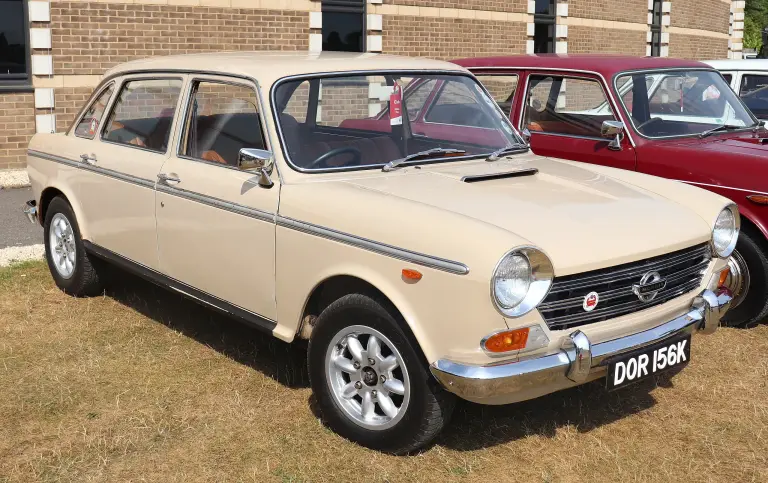
The Marina replaced the Morris Minor and the Morris Oxford and was succeeded by the Morris Ital. More cars are in the Morris collection.
Sources
- Morris Marina, English Wikipedia: development, design, production, reputation