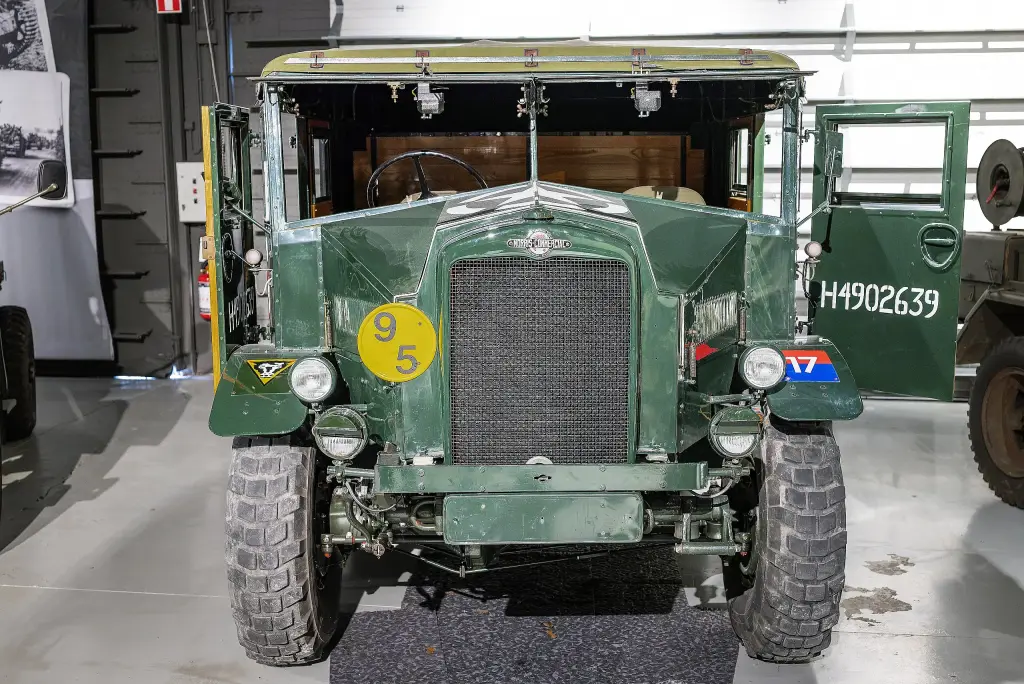
The Morris Commercial C8 FAT, usually called the Quad, was the field artillery tractor that towed British and Commonwealth guns through the Second World War. Built from October 1939 to 1945, it was a four-wheel-drive vehicle with a distinctive sloped, all-metal beetle-back body. Although it looked armoured, it was not.
Morris C8 at a glance
| Type | Field Artillery Tractor (FAT) |
|---|---|
| Maker | Morris Commercial Cars |
| Production | October 1939–1945 |
| Layout | four wheels, four-wheel drive, winch |
| Engine | four-cylinder, about 70 bhp |
| Developed from | Morris CS8 15-cwt truck |
| Main gun towed | 25-pounder gun-howitzer |
| Crew and load | 6 men, 24 boxed 25-pounder rounds, 8 boxed anti-tank shells |
| Marks | Mark I, Mark II, Mark III |
| Built | about 10,200 across the three marks |
| Nickname | Quad |
History of the Morris C8
In 1937 the War Department decided that the Light Dragon and the Morris CDSW then in service needed a replacement artillery tractor. The specification called for a four-wheeled, four-wheel-drive vehicle with a winch on a short chassis. Guy Motors answered quickly with a design built from existing parts, and Morris followed with a conventional but entirely new machine developed from its CS8 15-cwt general service truck.
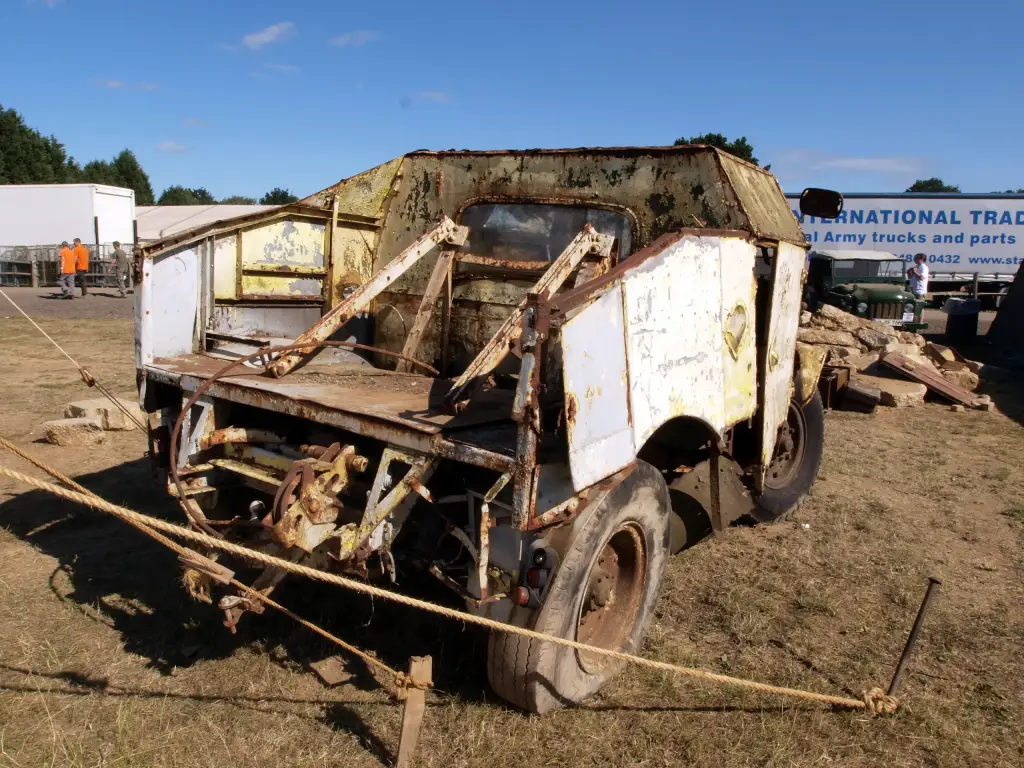
The C8 carried its new four-cylinder engine on a subframe rather than directly on the chassis. The sloped beetle-back body was all-metal and was designed so that it could be decontaminated after a chemical attack, and so that a gun traversing platform could be carried on the rear roof. Besides its six-man crew the Quad could take 24 complete boxed rounds for the 25-pounder and at least eight boxed anti-tank shells, together with the detachment’s equipment.
At war
The first Quad was delivered in October 1939 and the type went into action in France in 1940, towing 18-pounder, 18/25-pounder and 4.5-inch howitzers. Many were lost with the British Expeditionary Force, and some of those were taken into German service. From June 1940 the Quad also towed American 75 mm guns, and it served from Iceland to Malaya, most often with the new 25-pounder. Crews found it too small for everything it had to carry and underpowered when fully loaded and towing, since it moved a nine-ton load with a 70 bhp engine, and the winch was used often on hills and in mud. Later in the war Quads towed 6-pounder and 17-pounder anti-tank guns.
After the war
The Quad stayed in British service after 1945 and saw extensive use in Korea and Malaya. The Royal Netherlands Army used its Quads widely in the East Indies, and many Commonwealth units took theirs home. Britain rebuilt large numbers in the early 1950s, and the last were sold off in 1959, replaced by three-ton tractors derived from the Bedford RL and Fordson Thames E4.
Design and features
- Four-wheel drive: permanent on the Mark I and Mark II, switchable on the Mark III.
- Beetle-back body: all-metal, sloped sides, designed for decontamination and for carrying a gun platform.
- Winch: part of the original specification and much used on hills and in mud.
- Big load for its size: six men, 24 boxed 25-pounder rounds and eight anti-tank shells.
Morris C8 versions
- Mark I (1939–early 1940): about 200 built; locking front differential, front axle above the springs, centrally mounted accelerator.
- Mark II (1940–early 1941): about 4,000 built; new front axle without the locking differential.
- Mark III (1941–1945): about 6,000 built; front axle below the springs, switchable four-wheel drive, conventional accelerator.
- Body types: early beetle back, later beetle back with a canvas roof, and the square Number 5 body on the last 2,000 Mark IIIs.
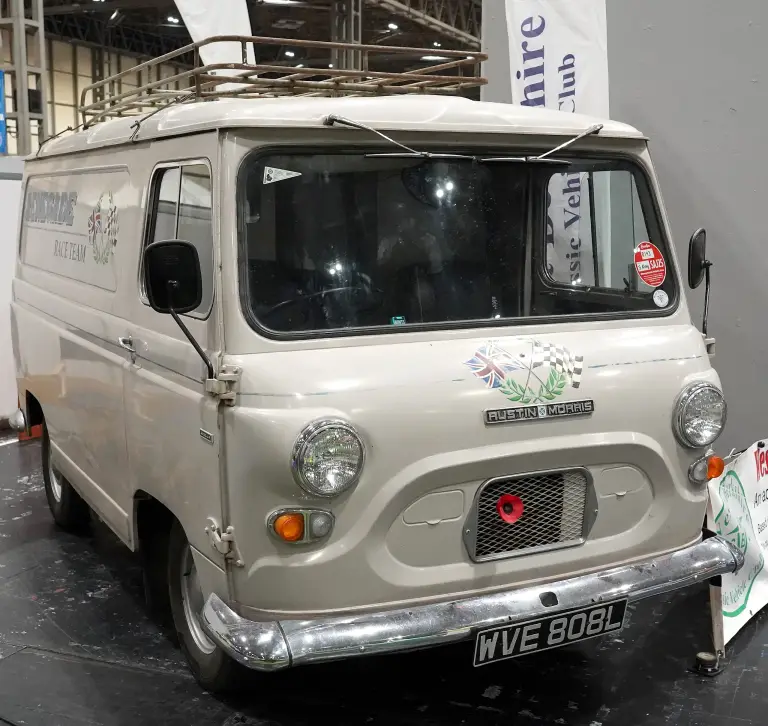
The C8 was one of the wartime products of Morris Commercial, which also built the J-type van after the war. More vehicles are in the Morris collection.
Sources
- Morris C8, English Wikipedia: development, service, marks, bodies