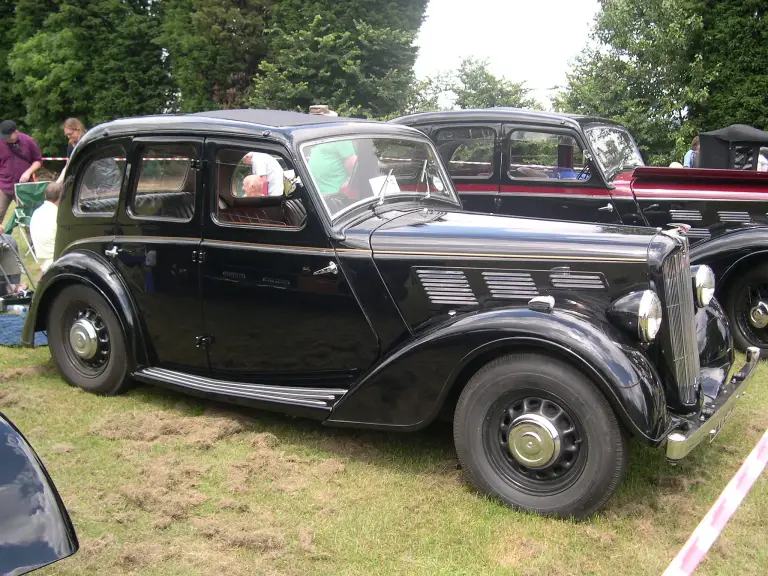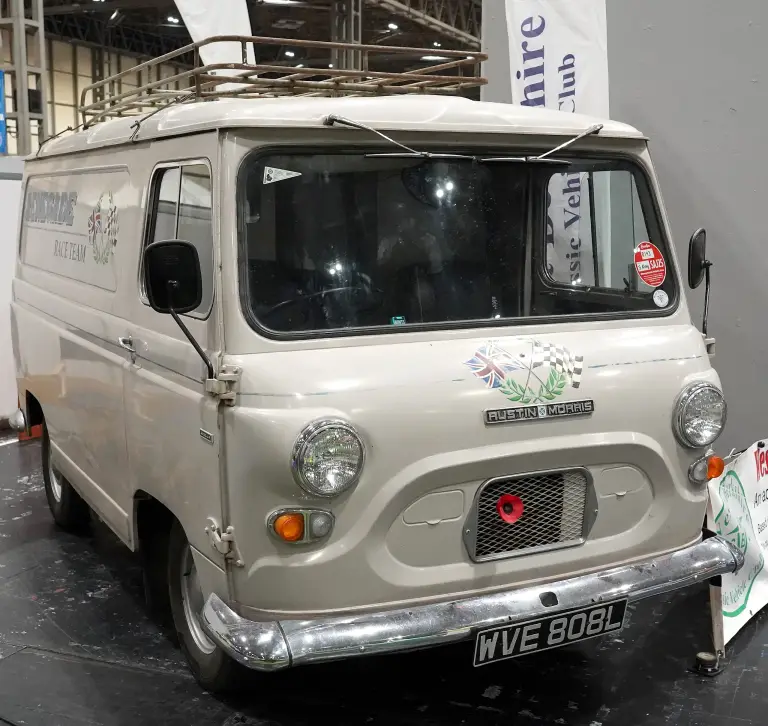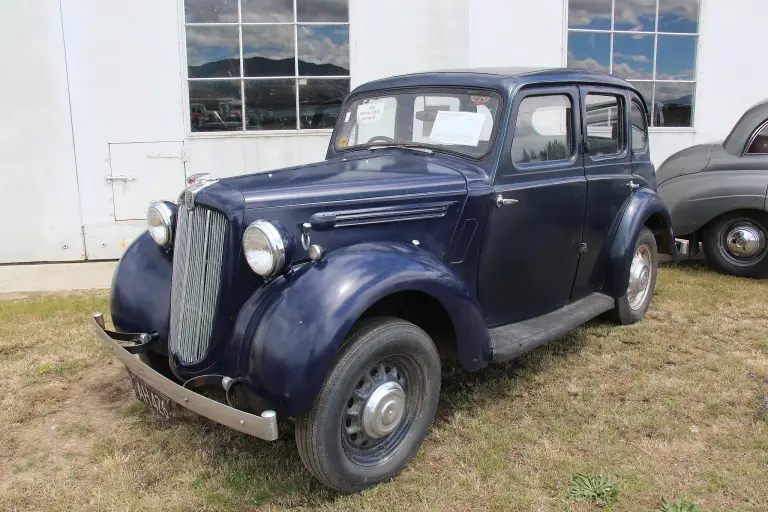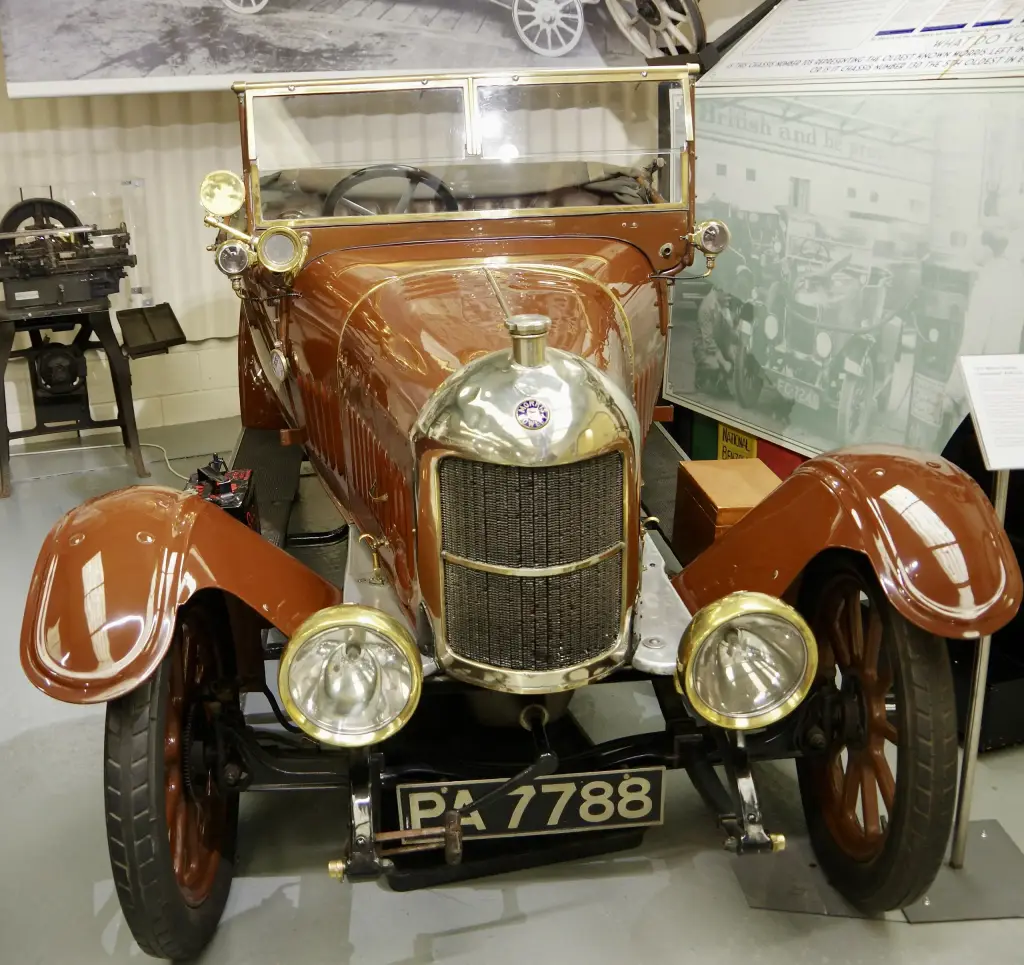
Morris Cowley was the name given to several different cars made by Morris between 1915 and 1958. The first was a larger, better-equipped version of the Morris Oxford, assembled largely from American components. Later Cowleys became the cheaper half of the Morris range, and the name was revived on a small post-war saloon.
Morris Cowley at a glance
| Name used | 1915–1958 |
|---|---|
| First model | Continental Cowley, shown April 1915 |
| Engine | 1495 cc side-valve four, made by Continental of Detroit |
| Gearbox | three-speed, by Detroit Gear & Machine |
| Body | four-seat tourer or saloon |
| Second series | 1919–1926, Hotchkiss-derived engine |
| Flatnose | 1926–1931 |
| Flatnose chassis | new frame, semi-elliptic springs all round |
| 1931–1935 car | lower body, Lockheed hydraulic brakes, wire wheels |
| Engine options | 11.9 or 14/32, same price |
| Factory | Cowley, Oxford |
History of the Morris Cowley
The Continental Cowley was shown to the press in April 1915. It was larger, longer, wider and better equipped than the first Morris Oxford, with a 1495 cc engine instead of a 1018 cc one, and it kept the same bullnose radiator. To keep the price down Morris bought much of the car from American suppliers: the side-valve engine came from Continental of Detroit, the clutch and three-speed gearbox from Detroit Gear & Machine, and the axles and steering gear also came from the United States. The American back axle was the first helically cut final drive on a quantity-produced British car, and the Cowley was the first Morris to have electric lighting as standard. Its handbrake and ball-change gear lever were mounted centrally, a sign of the gearbox’s American origin.
The Cowley was at first slightly cheaper than the Oxford but was not a stripped-down version until 1919, when the car received an engine made by the British branch of the French Hotchkiss company, essentially a copy of the Continental unit. From then until 1923 the Oxford used the same 1.5-litre, 26 bhp engine but added leather upholstery and better lighting as the de-luxe model, so that the Cowley became the basic car of the two-model Morris range. Morris bought the British interests of Hotchkiss in 1923 and renamed them Morris Engines Branch.
Flatnose, 1926–1931
On 11 September 1926 Morris announced a conventional flat radiator to replace the bullnose, now with doors on both sides and a longer list of standard accessories. The engines were unchanged, but the chassis was new, with semi-elliptic leaf springs all round and Smiths friction scissor shock absorbers. The Cowley kept rear-wheel brakes only as standard, with front brakes available at extra cost, and the rear drums contained two sets of shoes, one of them worked directly by the handbrake. In 1931 the chassis was revised again to match the Morris Major, and wire wheels became an option in place of the solid artillery type.
The 1931–1935 car
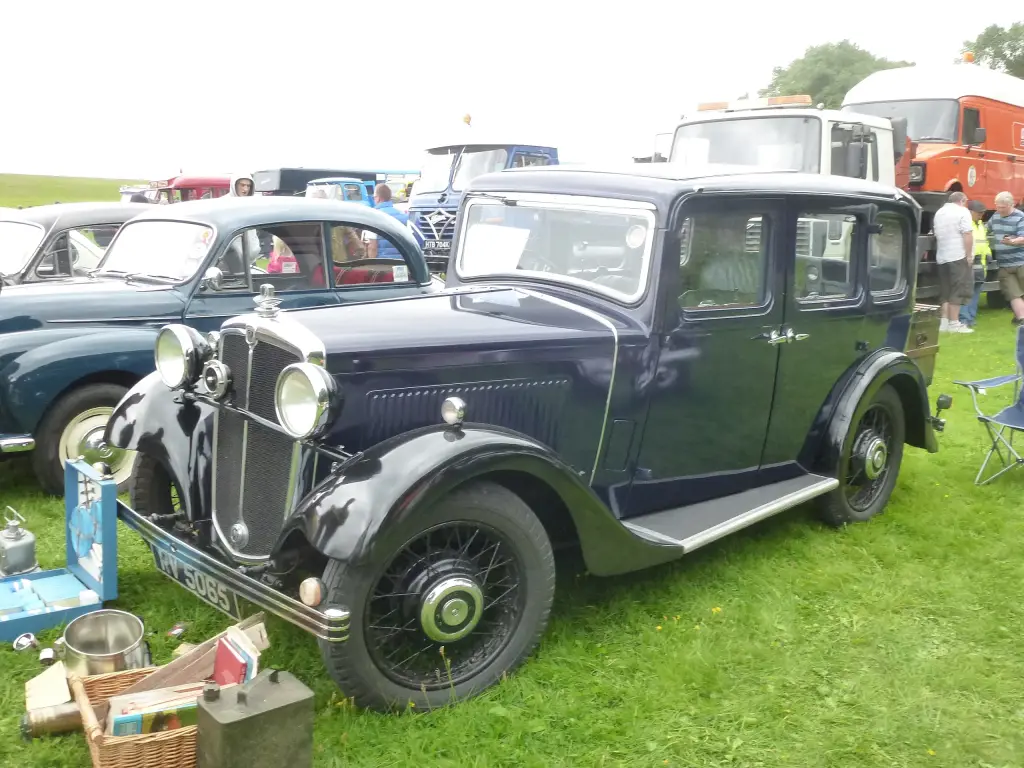
A considerably changed Cowley was announced on 29 August 1931. The coachwork of all six models was restyled with an ‘eddy-free’ roof leading edge, the petrol tank moved to the rear of the chassis, all bright parts were chromed and Magna-type wire wheels became standard. A new frame gave a lower body, springs were longer, brake drums larger and the brakes now Lockheed hydraulic, while the connecting rods were made of Duralumin. A sports coupé joined the range, and buyers could choose the 11.9 or 14/32 engine at the same price. A revised, lower body with a new 11.9 hp engine behind a sloping radiator followed on 28 August 1933, together with a four-speed Twin-Top synchromesh gearbox, a shorter cruciform chassis and leather upholstery.
Design and features
- American engineering: the 1915 car used a Continental engine, Detroit gearbox and US axles.
- Electric lighting: standard on the Cowley from 1915, a first for Morris.
- Helical final drive: the first on a British car built in quantity.
- Hydraulic brakes: Lockheed brakes arrived with the 1931 model.
- Two engines, one price: the 1931 car could be ordered with 11.9 or 14/32 power for the same money.
Morris Cowley versions
- Continental Cowley (1915–1920): American-engined bullnose car.
- Bullnose (1919–1926): Hotchkiss-derived engine, the basic Morris of its day.
- Flatnose (1926–1931): flat radiator, new chassis, rear brakes only as standard.
- Cowley (1931–1935): lower body, hydraulic brakes, wire wheels, sports coupé.
- Revised Cowley (1933–1935): sloping radiator, 11.9 hp engine, four-speed gearbox.
The Cowley was the cheaper companion of the Morris Oxford, and the later Morris Eight took over its role as the small Morris. More cars are in the Morris collection.
Sources
- Morris Cowley, English Wikipedia: series, engineering, prices, changes