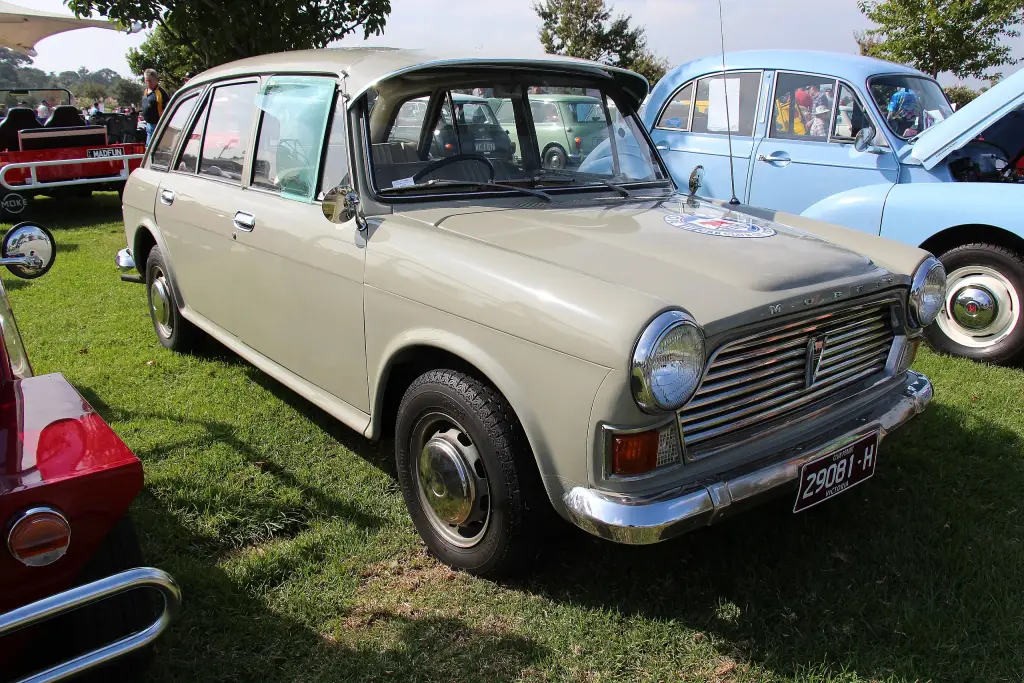
The Morris Nomad was the Australian answer to the hatchback question British Leyland had not yet answered at home. Built from 1969 to 1972 on the Morris 1500, itself a local version of the ADO16 with a bigger engine, it combined front-wheel drive and Hydrolastic suspension with a hatchback body styled in the company’s corporate look.
Morris Nomad at a glance
| Production | 1969–1972 |
|---|---|
| Maker | British Leyland Motor Corporation of Australia |
| Design code | YDO9 (sedans YDO15) |
| Basis | Morris 1500, Australian ADO16 |
| Engine | BMC E-Series 1500 cc, single overhead camshaft |
| Gearbox | four- or five-speed manual |
| Automatic | 1,275 cc A-Series with four-speed AP automatic |
| Suspension | Hydrolastic, interconnected fluid chambers |
| Layout | front-wheel drive |
| Built | about 29,000 |
| Replaced by | Morris Marina, 1972 |
Based on one source: the English Wikipedia article on the Nomad, which is short and gives no sales figures by year.
History of the Morris Nomad
The Nomad was a hatchback version of the Morris 1500 saloon, a car built in Australia as a local variant of the British BMC ADO16 design but with a larger 1500 cc engine. It was a small to medium-sized car, sitting above the Morris Mini in size and price, and its hatchback styling resembled that of the Austin Maxi, which was never sold in Australia. The cars were given the YDO9 code for the Nomad and YDO15 for the sedans, rather than the British ADO16 designation.
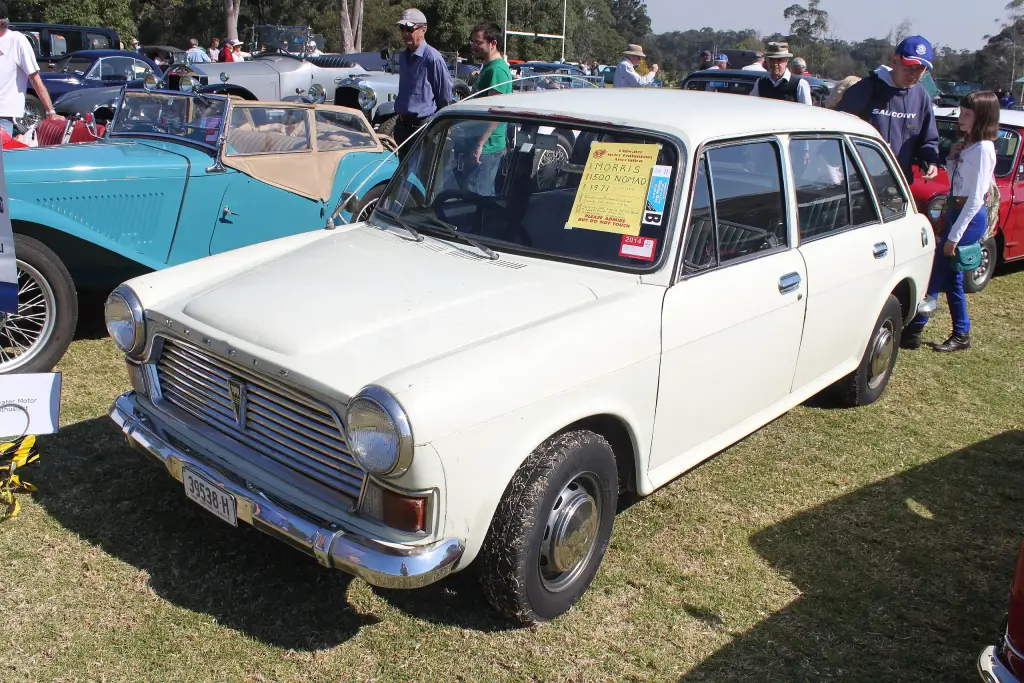
Power came from the BMC E-Series engine with a single overhead camshaft, which gave better performance and economy than the original Morris 1100, and four- and five-speed manual gearboxes were available. Automatic versions of the 1500 sedan and Nomad used the 1275 cc BMC A-Series engine with the four-speed Automotive Products automatic transmission also used in Mini-Matic models, sold as the Morris 1300 Automatic. The body was largely unchanged apart from new front and rear pressings to fit the British Leyland corporate look and to shed the tailfins of the original, and a new bonnet pressing with a bulge to clear the taller E-Series engine.
Hydrolastic ride
The Nomad was front-wheel drive with all-independent suspension linked by fluid-filled chambers, which the company called Hydrolastic. The system gave a comfortable ride, suffering only a little ‘droop’ if the boot was overloaded, and could sometimes go into oversteer if the body rolled too much in hard cornering. Austin Nomad, Austin 1500 and Austin 1300 names were used in some export markets where the cars were sold through Austin dealers. The Morris 1300, 1500 and Nomad were replaced in Australia in 1972 by the Morris Marina, after about 29,000 Nomads had been built.
Design and features
- Hatchback body: a layout the British ADO16 range never had.
- E-Series engine: 1500 cc overhead-cam unit, more powerful than the 1100’s A-Series.
- Hydrolastic suspension: interconnected fluid chambers for a soft ride.
- Corporate look: new front and rear pressings without the original tailfins.
- Automatic option: 1,275 cc A-Series with the AP four-speed automatic.
Morris Nomad versions
- Morris Nomad (1969–1972): the hatchback with the 1500 cc E-Series engine.
- Nomad Automatic: 1,275 cc A-Series with a four-speed automatic, sold as the Morris 1300 Automatic.
- Morris 1500 sedan: the saloon on which the Nomad was based.
- Austin Nomad, Austin 1500 and Austin 1300: names used in export markets.
The Nomad was an Australian descendant of the Morris 1100, and its saloon sister was the Morris 1500; Australia also built the Morris Major. More cars are in the Morris collection.
Sources
- Morris Nomad, English Wikipedia: engines, suspension, body, production