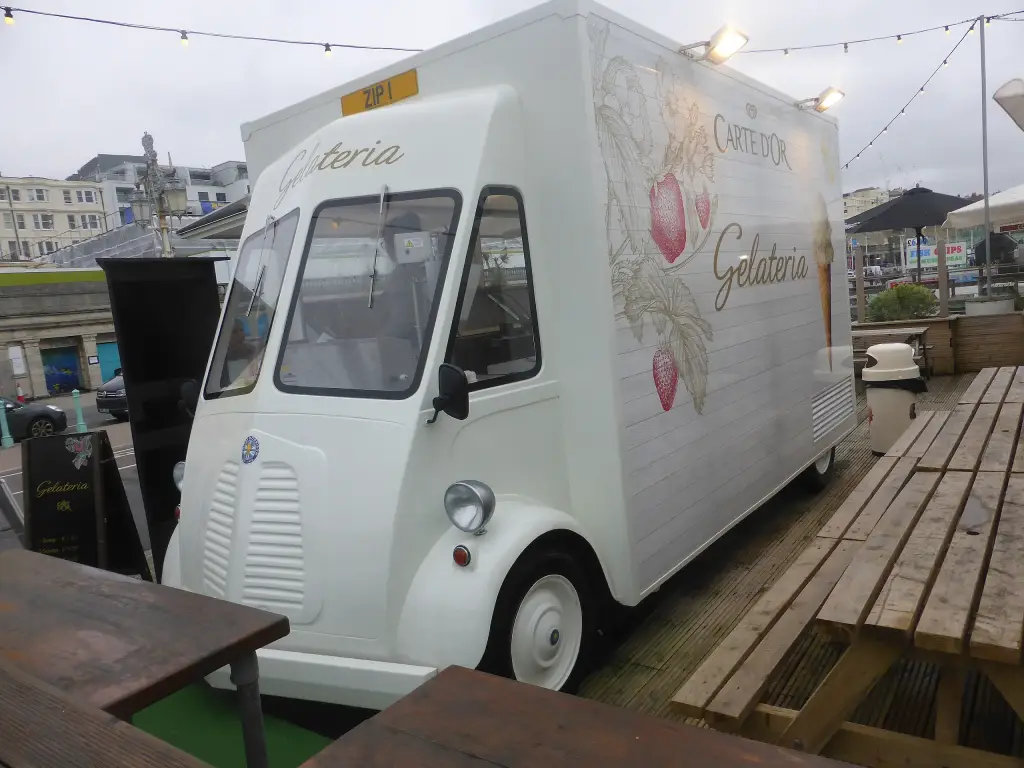
The Morris-Commercial J-type was a 10 cwt van launched in 1949 with forward controls and sliding doors on both sides. Morris sold thousands to the British Post Office, and the van stayed in production until 1961, by then as the JB with a modern B-Series engine. Over 48,600 were made.
Morris J-type at a glance
| Also known as | Morris-Commercial J-type, Morris J-type, Austin 101 |
|---|---|
| Production | 1949–1961 |
| Capacity | 10 cwt (0.5 ton) |
| Layout | forward control, rear-wheel drive |
| Doors | sliding, on both sides |
| Engine | 1476 cc side-valve four, based on the Morris Oxford MO unit |
| Gearbox | three-speed |
| JB from 1957 | 1489 cc overhead-valve B-Series, four-speed |
| Built | over 48,600 |
| Replaced by | Morris J4 |
History of the Morris J-type
The J-type appeared in 1949 and followed the fashion for forward-control vans with sliding doors on both sides; it was made in left- and right-hand drive. Beneath the rounded body sat a 1476 cc four-cylinder side-valve engine based on the unit used in the contemporary Morris Oxford MO, driving the rear wheels through a three-speed gearbox and initially a spiral bevel rear axle, later replaced by a hypoid type. The van was supplied as a complete vehicle or as a chassis for outside body builders, who turned it into pickups, tippers, ice cream vans and milk floats. Many went to the British Post Office, whose vans had rubber front and rear wings instead of steel ones.
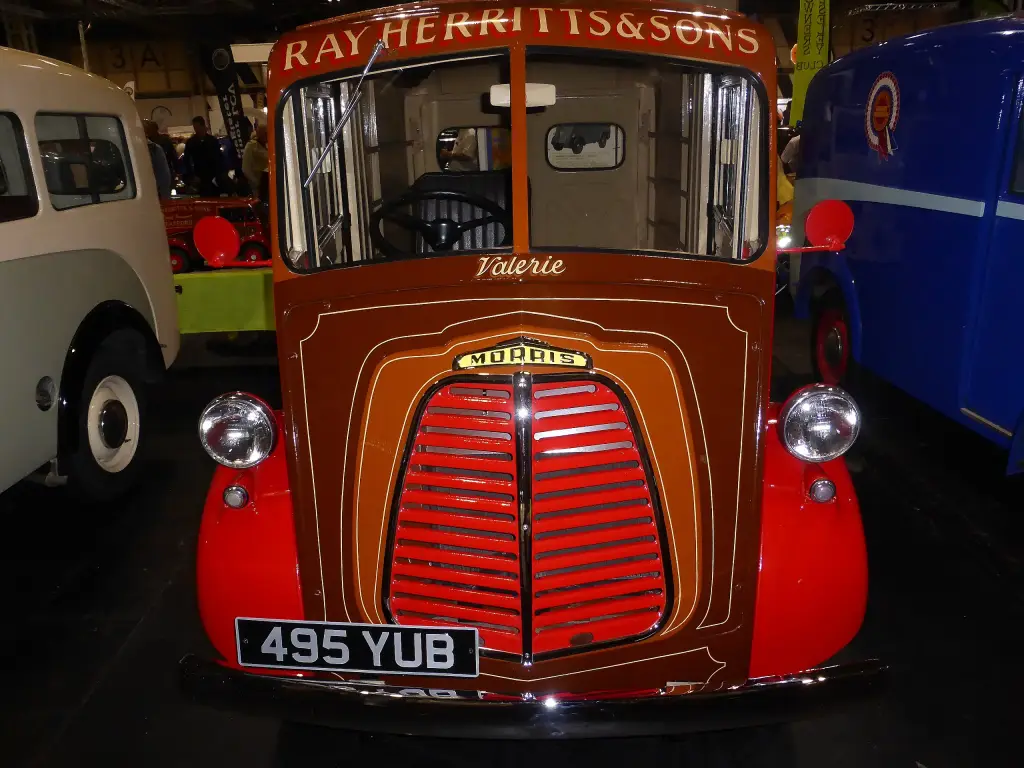
In 1952 the Nuffield Organization merged with Austin to form the British Motor Corporation, and from 1954 the word Commercial was dropped, so the van was sold simply as the Morris J-type. The big change came in 1957, when the JB replaced it with a 1489 cc overhead-valve BMC B-Series engine and a four-speed gearbox. In the same year an Austin version appeared as the Austin 101, differing from the Morris only in badging and the radiator grille. Production ended early in 1961 after more than 48,600 vans; the Morris J4 took over, while the slightly larger J2 had been on offer since 1956.
J-types in public life
The van’s shape made it a familiar sight in Britain and it later became a favourite of advertisers: a J-type appeared on television as the Reactine van, and in February 2013 a restored example was repainted in Cadbury purple for the ‘Joymobile’ promotion in Australia and New Zealand. At least one circa-1960 Australian J-type was given a custom brass body so that it could work in the salt water of an oyster lease on the George’s River in Sydney.
Design and features
- Forward control: the driver sits over the front axle, which shortens the van and maximises load space.
- Sliding doors: one on each side, useful in narrow streets and loading bays.
- Oxford-derived engine: the 1476 cc side-valve four came from the Morris Oxford MO.
- Chassis-cab option: sold to coachbuilders for pickups, tippers, ice cream vans and milk floats.
- Post Office spec: rubber wings front and rear on the vans bought by the GPO.
Morris J-type versions
- J-type (1949–1957): 1476 cc side-valve engine, three-speed gearbox.
- JB (1957–1961): 1489 cc B-Series overhead-valve engine, four-speed gearbox.
- Austin 101 (1957–1961): Austin-badged version with its own grille.
- Coachbuilt bodies: pickup, tipper, ice cream van and milk float.
The J-type was replaced by the Morris J4 and sold alongside the larger J2; its maker is described on the Morris Commercial page. More vehicles are in the Morris collection.
Sources
- Morris Commercial J-type, English Wikipedia: specification, JB, production, notable vans