The Mitsubishi RVR is a range of cars built from 1991 to 2002 and again from 2010. The first two generations were compact multi-purpose vehicles and the car introduced in 2010 is a subcompact SUV. RVR stands for Recreation Vehicle Runner, and the original logo used an inverted Cyrillic Я so that it read ЯVR.
Mitsubishi RVR at a glance
| Maker | Mitsubishi Motors, sold through Car Plaza |
|---|---|
| Production | 1991–2002 and 2010–present |
| First generation | N10, N20, from February 1991 |
| Other names | Space Runner in Europe, Expo LRV in America, Colt and Summit Wagon |
| Basis | second-generation Chariot shortened by 20 cm |
| Body | tall wagon, two rows, one sliding door on the passenger side |
| Engines | 1.8 and 2.0 petrol, turbodiesel, 2.4 for North America |
| Sports versions | Sports Gear, X3, Super Sport Gear, Hyper Sports Gear |
| Most powerful | Hyper Sports Gear R, 231–250 PS |
| Relaunch | 17 February 2010 as a subcompact SUV |
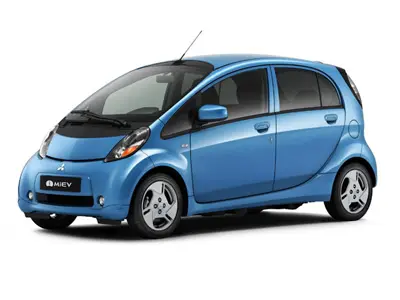
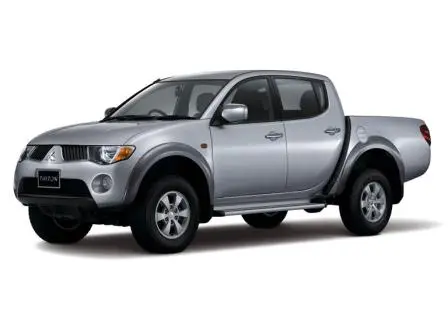
Based on one source: the English Wikipedia article on the Mitsubishi RVR. No free photos of the model were found in the material, so the article keeps the earlier picture.
History of the Mitsubishi RVR
A tall wagon for the bubble years
The RVR was Mitsubishi’s recreational vehicle debut during the Japanese economic boom, sold through the Car Plaza chain. It had a convenient cabin for four or five people and a youth-oriented approach, and its television commercials in Japan featured Bugs Bunny and Daffy Duck. It was a tall wagon with some off-road character aimed at the sports gear and outdoor market, an approach similar to Honda’s with the CR-V, and it sold well at first even as the RV boom faded.
The first RVR was essentially a second-generation Chariot with its chassis shortened by 20 cm and most components shared with the longer car. The tall body had two rows of seats, a single rear door and, in all markets, a single sliding door on the passenger side that latched to the B pillar, unlike the Toyota and Nissan systems. The rear windows were forward-hinged rather than retracting as on the Chariot. In left-hand-drive cars, with the sliding door on the right, an interlock stopped the door opening too far when the fuel filler was open.
The standard rear bench took three people with a 50:50 split; its backs folded flat onto the seats and the cushion could then be detached and folded forward to leave a flat floor. An optional sliding bench gave rear passengers more legroom. In Europe the car was the Space Runner, in the United States the Expo LRV, and Chrysler sold it in North America as the Dodge and Plymouth Colt Wagon and the Eagle Summit Wagon. Its tall-wagon layout traced back to Italdesign’s 1978 Lancia Megagamma concept.
Sports Gear and turbo power
The car started with naturally aspirated 1.8 and 2.0-litre petrol engines, later joined by a turbodiesel. A mid-life sports model used a detuned 4G63 turbo from the Lancer Evolution and was sold as the X3 and Super Sport Gear with an optional sliding metal sunroof. In North America a 2.4-litre engine of 135 hp was available on front-wheel-drive versions and standard on all-wheel drive from at least 1993. The final and most powerful model, the Hyper Sports Gear, arrived in January 1997: its R trim used the drivetrain of the first Galant VR-4, the turbocharged 2.0-litre 16-valve 4G63T with a four-speed automatic or five-speed manual and open differentials on four-wheel-drive cars, rated at 231 to 250 PS.
Automatic cars used a mechanical shift lock with a wire from the brake pedal rather than an electrical control, a design that had the advantage of not being affected by the battery. The original RVR was discontinued in August 2002.
The 2010 return
The Sports Gear RVR name came back on 17 February 2010 in an attempt to inherit the popularity of the first generation, but as a subcompact SUV rather than an MPV. It has conventional rear doors instead of a sliding one, since sliding doors are now associated with family vehicles, and the logo no longer uses the inverted Cyrillic letter.
Design and features
- Shortened Chariot: a 20 cm shorter floorpan with most parts shared.
- Sliding door: one on the passenger side, latched to the B pillar.
- Sports Gear: turbocharged versions using Lancer Evolution engines.
- Hyper Sports Gear R: the Galant VR-4 drivetrain with up to 250 PS.
- Two lives: an MPV until 2002, a crossover from 2010.
Mitsubishi RVR versions
- RVR (1991): 1.8 and 2.0 petrol, front- or four-wheel drive.
- Space Runner and Expo LRV: European and American names.
- Sports Gear and X3: turbocharged sports models.
- Hyper Sports Gear R (1997): 231–250 PS with VR-4 running gear.
- RVR (2010): subcompact SUV with conventional doors.
The RVR was a shortened Chariot, and its modern namesake shares its platform with the ASX. More cars are in the Mitsubishi collection.
Sources
- Mitsubishi RVR, English Wikipedia: first generation, engines, sports versions, 2010 return