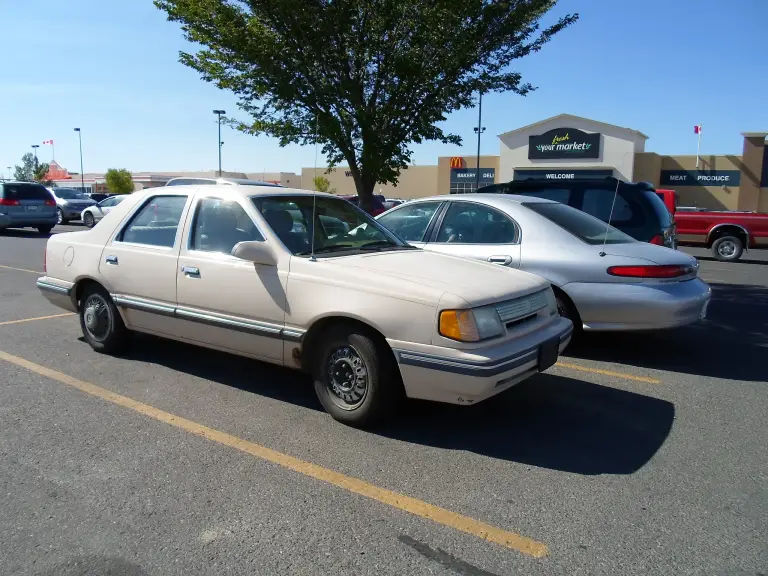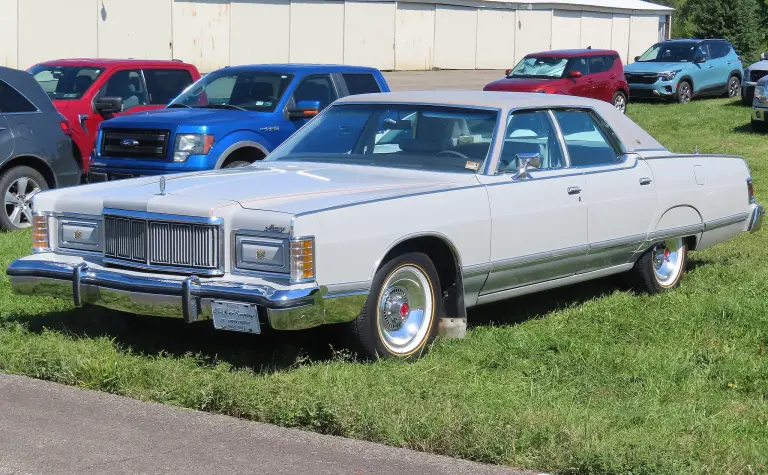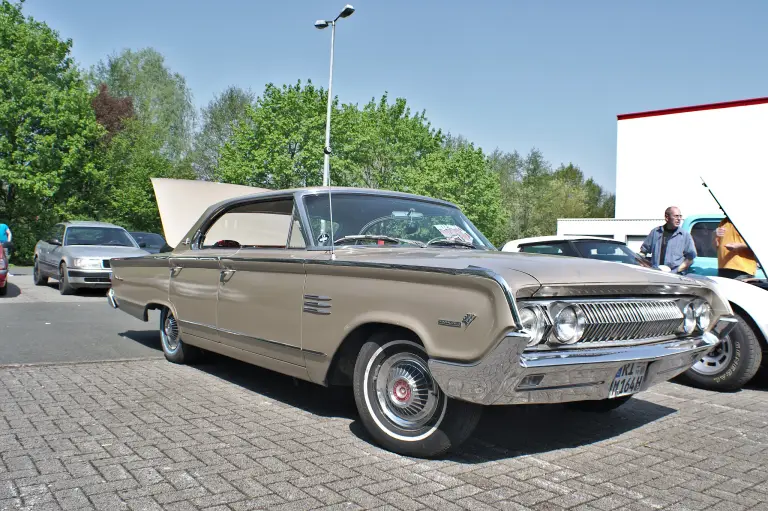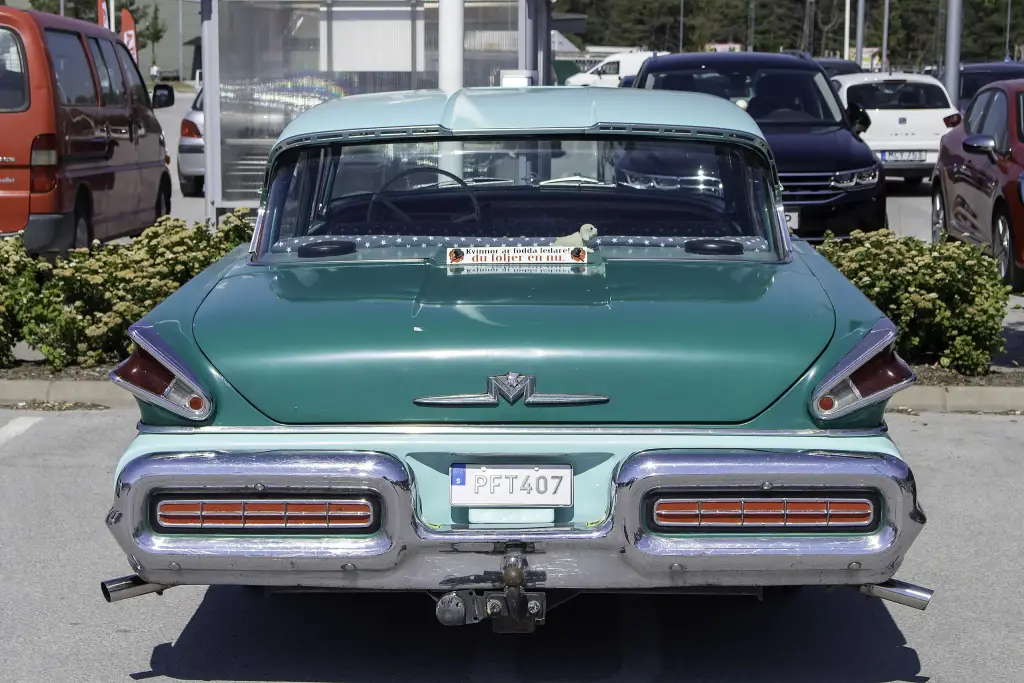
The Mercury Monterey was a full-size car built from 1950 to 1974, and over those 22 years it served as the division’s flagship, mid-range and entry-level model at different times. It was the only Mercury nameplate in continuous production throughout the 1960s.
Mercury Monterey at a glance
| Production | 1950–1974, plus a 2004–2007 minivan |
|---|---|
| Name origin | Monterey Bay, California |
| Body styles | coupe, convertible, sedan, hardtop and station wagon |
| First car | 1950 two-door coupe, model 72C, price US$2,146–2,157 |
| 1952 | separate series and Mercury’s top model over the Custom |
| 1954 engine | 161 hp overhead-valve Ford Y-block V8 |
| 1955 engine | 292 cu in Y-block, 188 or 198 hp |
| 1956 engine | 312 cu in V8, 235 hp |
| Production span | 22 years in the full-size range |
| Position | variously flagship, mid-range and entry-level |
The article is based on one source, the English Wikipedia page on the Monterey; its material covers the 1950s in most detail, so the later full-size cars are only summarised.
History of the Mercury Monterey
A high-end coupe
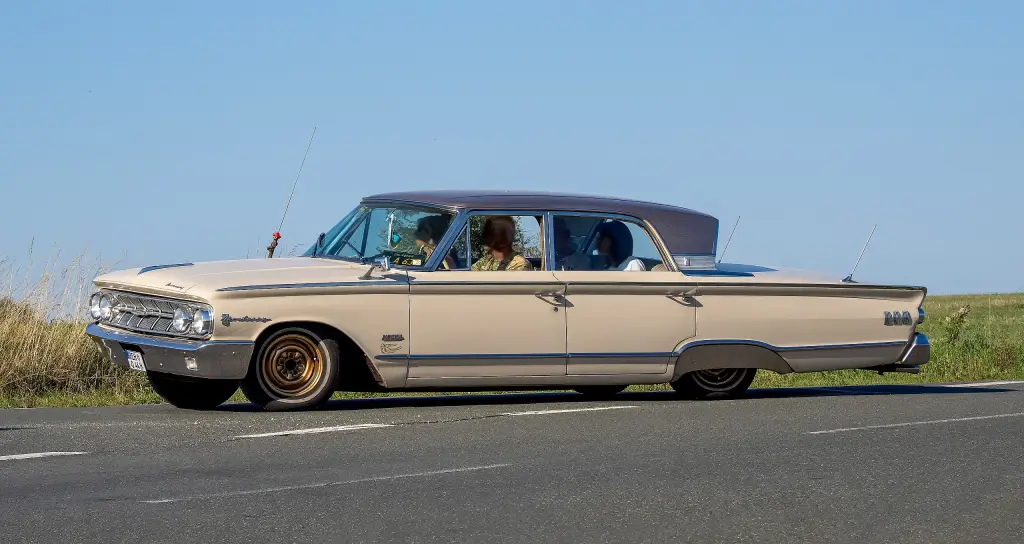
The Monterey, model 72C, was introduced in 1950 as a high-end two-door coupe within the Mercury Eight series, in the same spirit as the Ford Crestliner, the Lincoln Lido and the Lincoln Cosmopolitan Capri coupe. Mercury wanted a rival to the hardtop coupes General Motors and Chrysler had launched the year before. Montereys came with a canvas-covered convertible roof for US$2,146 or a vinyl one for US$2,157, and standard equipment included leather-faced seats, a simulated leather headliner, wool carpets, chrome interior garnish mouldings, a two-tone dashboard, a special black steering wheel, fender skirts, dual outside mirrors, full wheel covers and a gold winged bonnet ornament. All-leather seats cost US$10 extra. Only two special colour schemes were offered, turquoise blue with a dark blue roof and Cortaro red metallic with a black roof, plus black with a yellow roof, and few Montereys were sold.
From flagship to middle of the range
For 1952 all Mercurys were restyled and the Monterey became a separate series and the division’s top model above the Custom, with a convertible and a four-door sedan added. Heater and vent controls were moved to levers mounted behind the steering wheel, inspired by aircraft flight controls. The convertible listed at US$2,370, eleven exterior colours and seventeen two-tone combinations were offered, and standard equipment included broadcloth upholstery, full carpeting, an electric clock, a boot light and chrome window surrounds. A station wagon joined the range for 1953, with an optional woodie appearance, and that year a Siren Red Monterey convertible became Ford’s forty-millionth car. For 1954 came the new 161 hp overhead-valve Ford Y-block V8 and the bubble-top Monterey Sun Valley with a Plexiglas front roof panel; colour choice expanded to fifteen single and thirty-nine two-tone options. The Mercury XM-800 concept car of 1954 also debuted as the Mercury Monterey XM-800.
For 1955 the Monterey lost its top-model status to the new Montclair but gained the 292 cu in Y-block from the Thunderbird, producing 188 hp with the standard transmission or 198 hp with the Merc-O-Matic automatic, along with independent ball-joint front suspension and bigger brakes. It sat above the base Custom. A dual four-barrel carburettor option offered 260 hp from 1956. For 1956 the engine was a 235 hp 312 cu in V8, all Mercury sedans were facelifted with a “Big M” emblem in place of the crest badge, and the two-tone and Flo-tone paint choices matched those of the Montclair. The pillared low-roof four-door Sport Sedan was replaced during the year by the Monterey Phaeton four-door hardtop.
Twenty-two years
Over its long life the Monterey was positioned above the Medalist, Custom and Meteor and later below the Turnpike Cruiser, Montclair, Park Lane and finally the Marquis. It was discontinued after 1974, when Mercury consolidated its full-size range down to the Marquis and the Colony Park station wagon. The name returned for 2004 on a minivan, the counterpart of the Ford Freestar, and was produced through the 2007 model year.
Design and features
- First as a coupe: the 1950 Monterey was a high-end two-door in the Mercury Eight range.
- Top model, then middle: flagship in 1952–1954, mid-range and entry model later.
- Y-block V8s: the 161 hp engine of 1954 grew to 292 and 312 cu in.
- Sun Valley: the 1954 bubble-top with a Plexiglas roof panel.
- Long service: 22 years in the full-size range and the only Mercury of the whole 1960s.
Mercury Monterey versions
- Monterey (1950–1951): the original high-end two-door coupe.
- Monterey (1952–1954): the top Mercury series, with convertible, sedan, wagon and Sun Valley.
- Monterey (1955–1960): the mid-range car below the Montclair and Park Lane.
- Monterey (1961–1974): the entry and mid-range full-size Mercury.
- Monterey minivan (2004–2007): the Ford Freestar-based revival.
The Monterey was joined by the Montclair and Park Lane above it, and was replaced in the range by the Grand Marquis. More cars are in the Mercury collection.
Sources
- Mercury Monterey, English Wikipedia: the 1950 car, the 1952–1956 range, engines, equipment and the 2004 revival