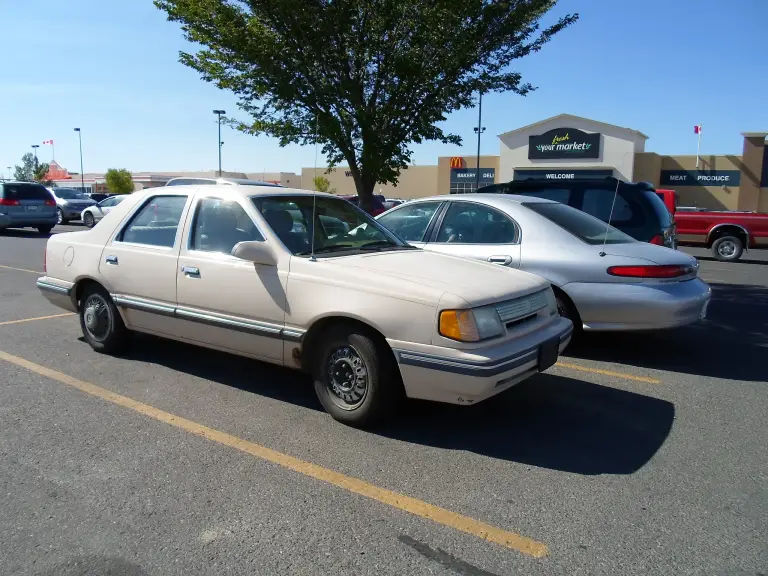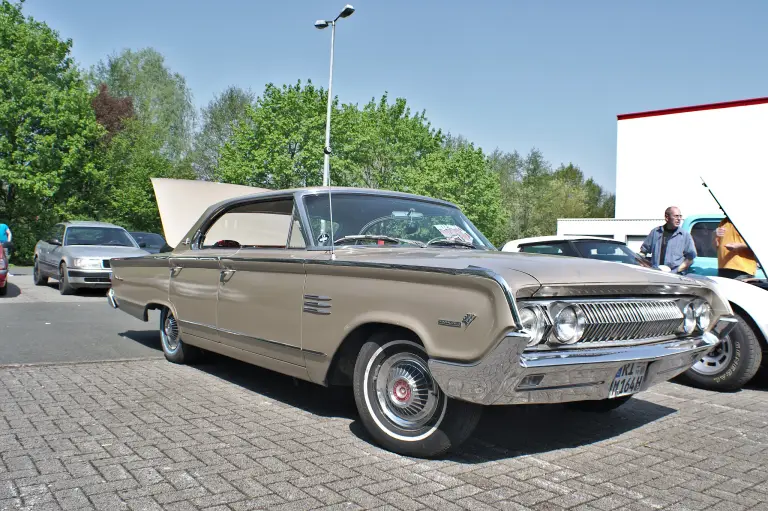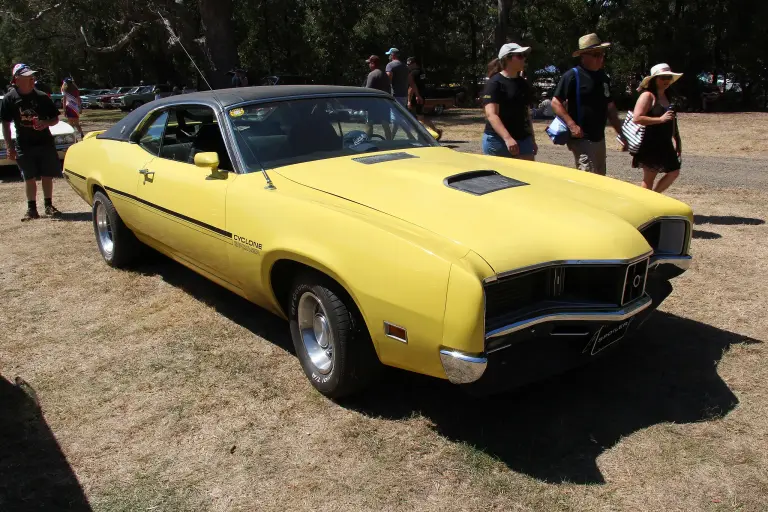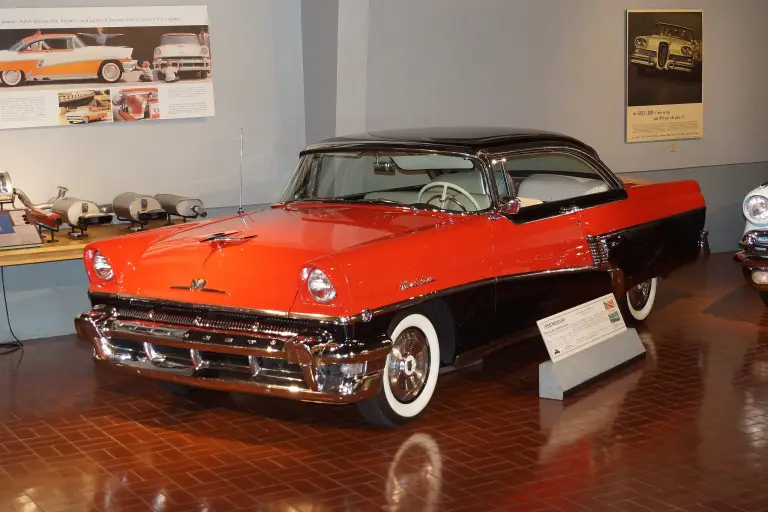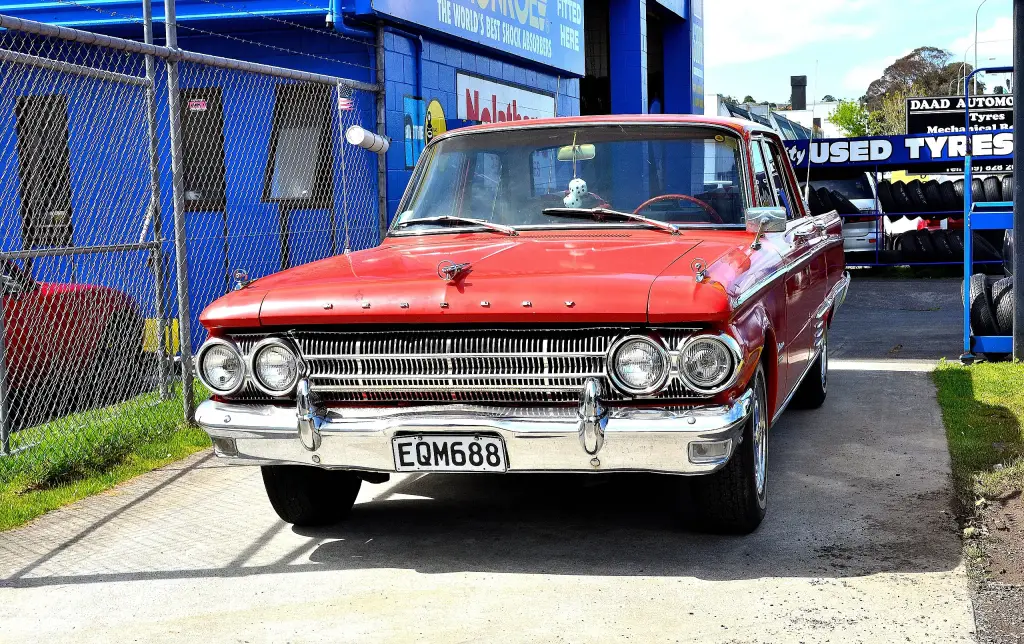
The Mercury Meteor was produced for the 1961 to 1963 model years. It arrived as the base full-size Mercury sedan, developed from the cancelled 1961 Edsel, and for 1962 became the division’s first intermediate. After 1963 the model was withdrawn.
Mercury Meteor at a glance
| Model years | 1961–1963 |
|---|---|
| Origin | developed as the 1961 Edsel Ranger |
| 1961 class | full-size, below the Monterey |
| Wheelbase 1961 | 120 inches, down from 126 |
| 1962–1963 class | intermediate, Ford Fairlane counterpart |
| Name origin | the Meteor brand of Ford of Canada, from 1949 |
| Positions | base full-size in 1961, intermediate in 1962–1963 |
| Hardtops | two- and four-door hardtop offered in 1961 |
| Withdrawn | after the 1963 model year |
| Replaced in role | by the Comet as it grew into the intermediate class |
The article is based on one source, the English Wikipedia page on the Meteor.
History of the Mercury Meteor
From the Meteor brand to a Mercury
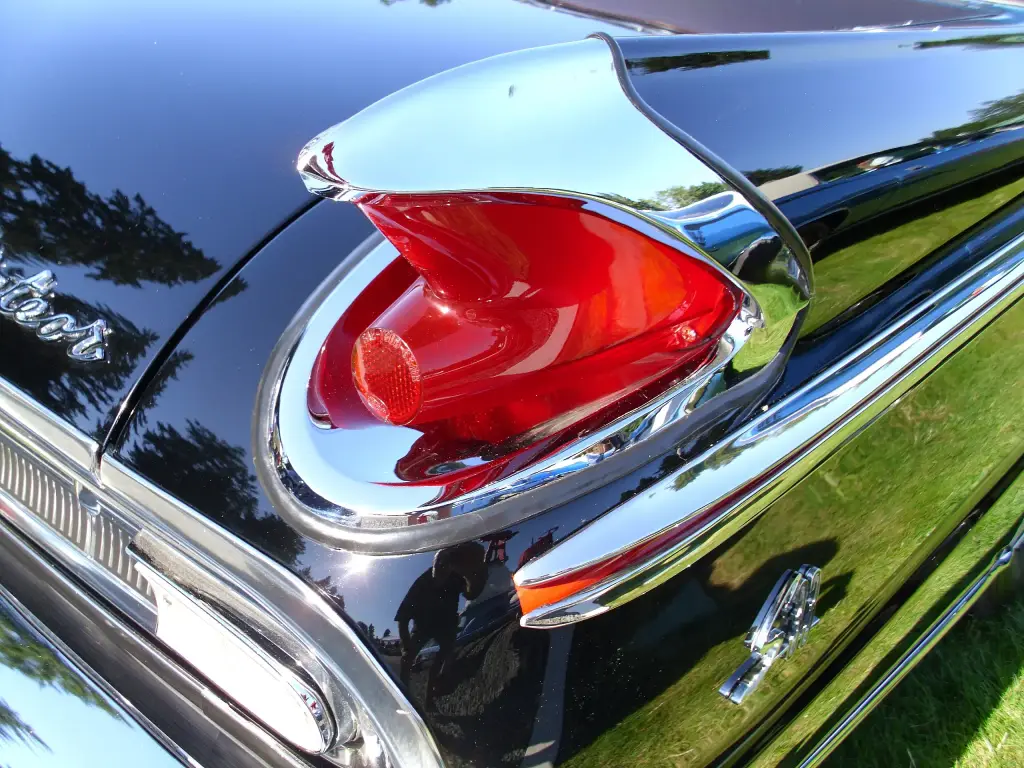
The Meteor name first appeared on a regional line Ford of Canada introduced in 1949. To give Canadian Lincoln-Mercury dealers a car below the Mercury and to compete with Pontiac, Meteor was a Ford body with its own grille, tail lamps and marginal exterior and interior upgrades. It followed the 1946 Monarch, a Mercury-based car sold by Ford dealers against Oldsmobile. Ford of Canada created both marques because its dealer network differed from the American one: smaller Canadian communities often had either a Ford or a Lincoln-Mercury dealer, but not both. After 1961 the Meteor brand was discontinued by Ford of Canada, coinciding with the failure of Edsel, and the Mercury division adopted the name for its base full-size car.
The Edsel that never was
In the mid-1950s Ford executives were convinced that the company had to meet every market segment with a separate product. The plan gave Mercury a distinct chassis and body for 1957, moved the brand upmarket and created Edsel for the lower-medium-price role Mercury had held. The 1958 recession undermined the plan: Edsel sales collapsed, and although Mercury was more established, its own sales fell sharply. Ford president Robert S. McNamara recommended eliminating Lincoln, Mercury and Edsel altogether. In the compromise, Edsel was withdrawn early in the 1960 model year while Mercury and Lincoln survived. For 1961 Lincoln was cut back to a single Continental line and Mercury returned to its former market position, selling only the Monterey sedan and the Commuter and Colony Park station wagons.
To build a business case for Mercury, the division was again developed as a longer-wheelbase version of a Ford body and chassis, differentiated mainly by trim. As part of the Edsel cancellation, the Mercury line was revised further: to recoup the cost of the 1961 Edsel range, those cars entered production as Mercurys. Intended as the redesigned 1961 full-size Edsel, the Mercury Meteor was joined by the Comet, which was not badged as a Mercury until 1962 and served as the counterpart of the compact Ford Falcon.
The 1961 full-size car
For 1961 Mercury moved from its own body and chassis to a variant of the 1960 Ford shell, downsizing the wheelbase from 126 inches to 120. Originally developed as the 1961 Edsel Ranger, the Meteor was slotted below the Monterey, while the higher-priced Montclair and Park Lane nameplates retired. It was the corporate counterpart of the demoted Ford Fairlane once the new Galaxie took the top billing at Ford. The Fairlane, also sold as the Fairlane 500, was very similar in price to the Meteor but sold much better, while the Meteor offered a hardtop roof as both a two-door and a four-door, which the Fairlane and Fairlane 500 did not. Optional equipment included air conditioning, a heater, an electric clock, courtesy lights, reversing lights, a windscreen defroster, a padded instrument panel, power brakes, a four-way power front seat, power steering, a push-button AM radio, tinted glass, two-speed wipers, a washer and two-tone paint. Some cars were ordered with options by dealers and sold new with the equipment listed on the window sticker.
The intermediate years
For 1962 the Meteor became the first intermediate-size Mercury sedan, again as a counterpart of the Ford Fairlane, and it stayed in that role for 1963. Following the 1963 model year Mercury withdrew the model range. The Meteor was one of the shortest-lived Mercury nameplates, but its role was revived for 1966 as the Comet grew into the intermediate segment and later became the Montego. In Canada the Meteor brand itself carried on: after 1964 Ford of Canada revived it, first as a Mercury-bodied car with a Ford dashboard and from 1965 with the Ford Galaxie body and Mercury trim. After 1968 the brand was phased into the Mercury line, and from 1977 to 1981 the Meteor name lived on in Canada as the base-trim Marquis.
Design and features
- Edsel origins: the 1961 car was designed to be the 1961 Edsel Ranger.
- Downsized full-size: the wheelbase fell from 126 to 120 inches for 1961.
- Hardtop choice: two- and four-door hardtops that the Fairlane did not offer.
- First Mercury intermediate: from 1962 on the Ford Fairlane platform.
- Short life: three model years, then the name moved back to Canada.
Mercury Meteor versions
- Meteor (1961): the full-size base Mercury, below the Monterey.
- Meteor (1962–1963): the intermediate sedan and hardtop on the Fairlane platform.
- Canadian Meteor brand (1949–1961, 1964–1976): Ford-based cars sold by Lincoln-Mercury dealers in Canada.
- Canadian Meteor Marquis (1977–1981): the base-trim Marquis that carried the name to the end.
The Meteor was the base full-size Mercury below the Monterey, and its intermediate role passed to the Comet and later the Montego. More cars are in the Mercury collection.
Video: 1962 Mercury Meteor
Video by TrackEmDownKennels on YouTube.
Sources
- Mercury Meteor, English Wikipedia: Edsel origins, 1961 car, intermediate years and the Canadian Meteor brand