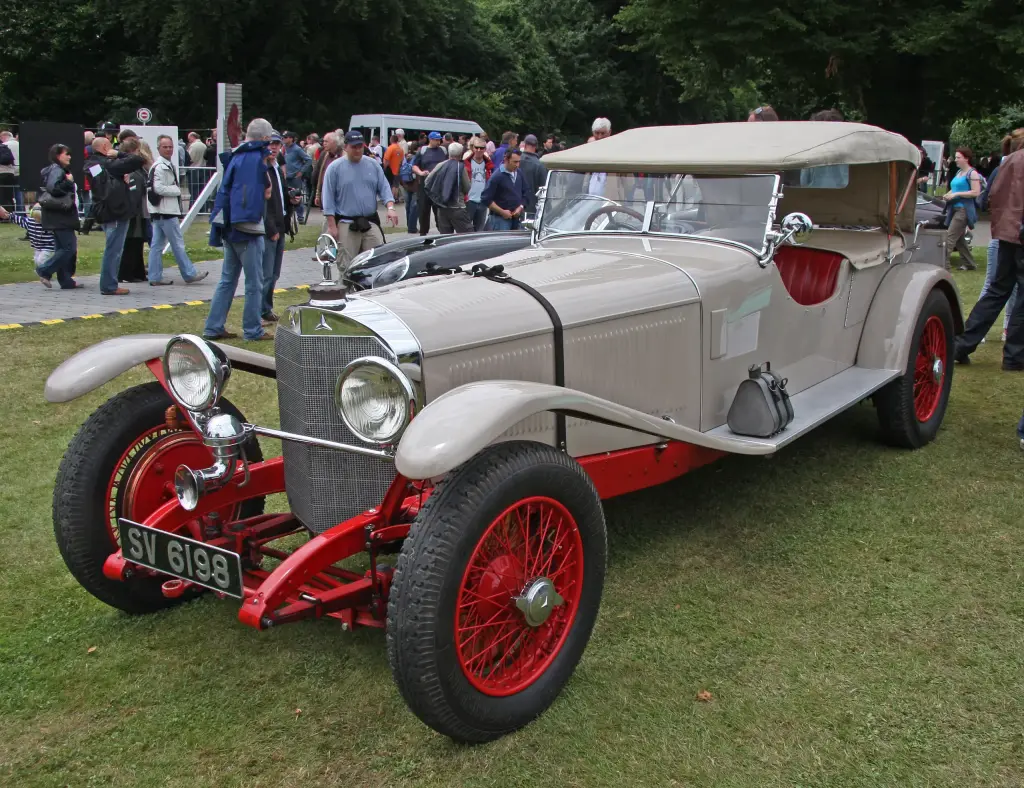
The Mercedes-Benz S-Series, type W06 and nicknamed the white elephant, was a line of sports cars produced from 1926 to 1933. It began with the Model S and grew into the SS, SSK and SSKL.
Mercedes-Benz S-Series at a glance
| Production | 1926–1933 |
|---|---|
| Design code | W06 |
| First model | S, based on the Model K |
| Engine | M06 six-cylinder, supercharged |
| Model S power | 180 hp with the supercharger |
| Model SS (1928) | 7.1 litres, 200 hp, top speed 190 km/h |
| Model SSK (1928) | short wheelbase of 2,950 mm, 192 km/h |
| Model SSKL (1931) | 300 hp, 235 km/h |
| SSKL streamliner | 251 km/h and a win at Avus in May 1932 |
| Nickname | the white elephant |
This article is based on one source, the English Wikipedia article on the Mercedes-Benz S-Series.
History of the Mercedes-Benz S-Series
Before the merger of Daimler and Benz, a race-oriented version of Daimler’s Type 630 luxury car was built with a modified chassis and called the Model K, for Kurzer Radstand, short wheelbase. The new Daimler-Benz company decided to build a more advanced race car on the best features of the K and called it the Model S, for Sport. Its six-cylinder engine was developed from that of the Type 630 with the bore widened by 4 mm, taking displacement from 6.3 to 6.7 litres. Coded M06, it produced 180 hp with the supercharger engaged, 40 hp more than before. The chassis dimensions of the K were kept, but the frame was lowered and the engine moved back by 30 cm, giving better weight distribution, stability and handling.
In mid-1928 a new version appeared as the SS, or Super Sport, intended as a grand tourer. Wet cylinder liners allowed the engine to be bored out to 7.1 litres and gain another 40 hp, so the supercharged SS produced 200 hp and reached 190 km/h. The S and SS were fast but did not turn well, so late in 1928 the SSK, Super Sport Kurz, was created for hillclimbs with a wheelbase shortened to 2,950 mm. It used the improved SS engine but kept the lower radiator of the base S, and its handling together with a top speed of 192 km/h made it a formidable racing car.
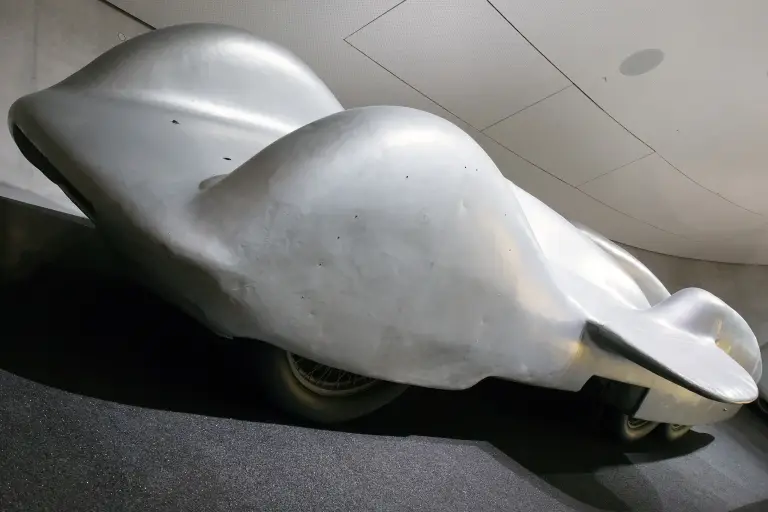
In 1931 a pure racing version, the SSKL or Super Sport Kurz Leicht, was built in a limited run for competition only. Holes cut through the frame saved 125 kg, and with 300 hp and a very light body the car reached 235 km/h. Manfred von Brauchitsch had his SSKL clad in aluminium sheets; the streamlined car reached 251 km/h and won at Avus in May 1932, and radio commentators called the aluminium-bodied car a silver arrow. The S-Series was successful and, unusually, suitable for everyday use, so wealthy customers bought it for the road. By 1934 the company decided that luxury and racing needed separate lines: the 500K took over the sporting luxury car and the silver arrows became pure racing machines.
Design and features
- Supercharged six: the M06 engine from 6.7 to 7.1 litres and up to 300 hp.
- Short wheelbase SSK: built for hillclimbs and better handling.
- Lightweight SSKL: a perforated frame saved 125 kg.
- Silver arrow origin: the streamlined SSKL of 1932 gave the racing cars their name.
Mercedes-Benz S-Series versions
- S (1926): the first model, 180 hp supercharged.
- SS (1928): 7.1 litres and 200 hp.
- SSK (1928): short wheelbase for hillclimbs.
- SSKL (1931): lightweight racing version with 300 hp.
- SSKL streamliner: aluminium-bodied car of 1932.
The S-Series was followed in the luxury market by the 500K, and its racing ideas led to the W25 and the silver arrows. More in the Mercedes-Benz collection.
Video: 1928 Mercedes-Benz SSK
Video by YouTube on YouTube.
Sources
- Mercedes-Benz S-Series, English Wikipedia: models, engines, performance, history