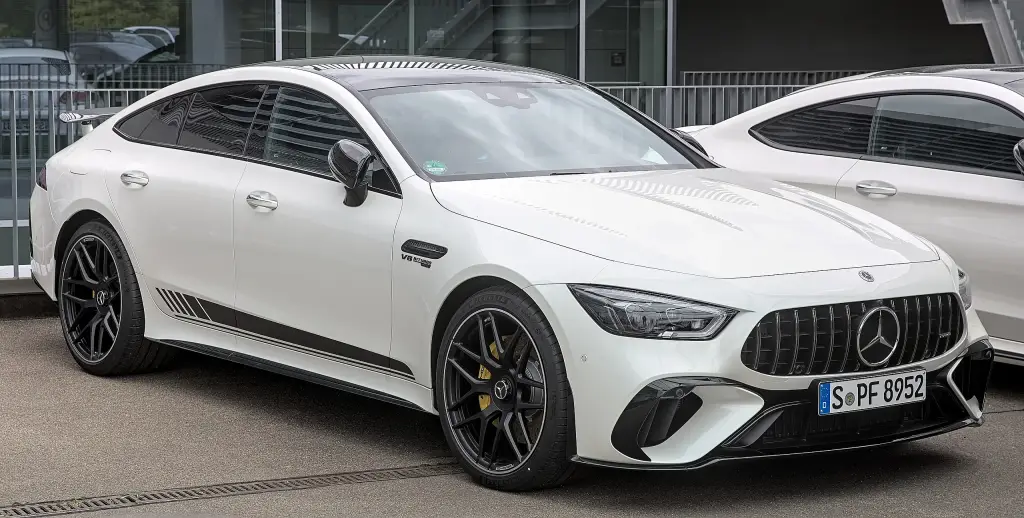
Mercedes-AMG GmbH is the high-performance subsidiary of Mercedes-Benz AG, based in Affalterbach in Baden-Württemberg. Its name comes from the founders Hans Werner Aufrecht and Erhard Melcher and from Aufrecht’s birthplace, Großaspach.
Mercedes-AMG at a glance
| Founded | 1967, Burgstall an der Murr |
|---|---|
| Founders | Hans Werner Aufrecht and Erhard Melcher |
| Name | Aufrecht, Melcher, Großaspach |
| First work | racing engines and tuning kits for Mercedes-Benz cars |
| Move to Affalterbach | 1976 |
| Cooperation with Daimler-Benz | 1990 |
| First joint model | Mercedes-Benz C36 AMG of 1993 |
| DaimlerChrysler takes 51% | 1 January 1999 |
| Renamed | Mercedes-AMG GmbH in 1999 |
| Fully owned | from 1 January 2005 |
| Badging | two numerals, for example E 63 |
| Racing engine division | split off as HWA in Burgstall |
This article is based on one source, the English Wikipedia article on Mercedes-AMG.
History of the Mercedes-AMG
AMG was established in 1967 as a racing engine manufacturer under the name AMG Motorenbau- und Entwicklungsgesellschaft mbH, by two former Mercedes-Benz engineers, Hans Werner Aufrecht and Erhard Melcher. The first workshop was in Burgstall an der Murr near Stuttgart. In 1976 most of the business moved to Affalterbach, while racing-engine development stayed in Burgstall. At that point Erhard Melcher gave up his partnership but continued to work at Burgstall.
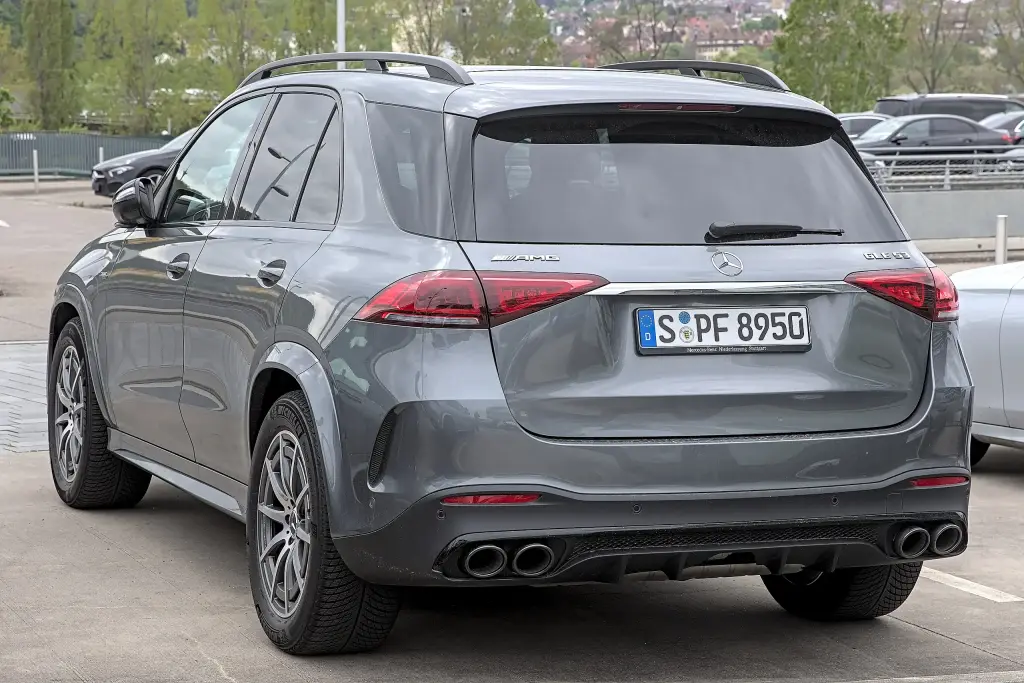
During the 1970s and 1980s AMG was an independent tuner. It produced upgrade and accessory packages for the R107 and C107 SL, the W116 and W126 S-Class, the W123 and W124 saloons and the W201, offering larger engines of 5.2 and 5.4 litres, ported and polished heads, lighter valve trains, five-speed Getrag gearboxes, 15- and 16-inch ATS wheels, suspension kits and wide body conversions. An AMG-modified W124 E-Class of 1986, nicknamed the Hammer, used a 5.6-litre four-valve V8 and was claimed to be the world’s fastest passenger sedan. In 1990 AMG signed a cooperation agreement with Daimler-Benz and its cars began to be sold through Mercedes-Benz dealers. The first joint model was the C36 AMG of 1993.
On 1 January 1999 DaimlerChrysler bought 51 per cent of the shares and the company was renamed Mercedes-AMG GmbH; the racing engine division was separated and continues as HWA. On 1 January 2005 Aufrecht sold his remaining shares, and since then Mercedes-AMG has been wholly owned by the group. In the 2000s AMG moved from supercharged V8 and V6 engines to natural aspiration with the 6.2-litre M156 V8 of 2006, and then to turbocharging with the 5.5-litre M157 of 2011. The first stand-alone Mercedes-AMG dealership opened in Sydney in 2018.
Design and features
- Two-digit badges: AMG models use two numerals where standard cars use three, as in E 63 against E 350.
- Heritage numbering: the numerals do not always match engine size and recall cars such as the 300 SEL 6.3.
- More than engines: body kits, wheels, brakes, suspension, Recaro seats and interior trim were part of the early offer.
- Factory status: from a private tuner to a wholly owned performance division of Mercedes-Benz.
Mercedes-AMG versions
- AMG Hammer (1986): a W124 with a 5.6-litre four-valve V8.
- C36 AMG (1993): the first model developed jointly with Daimler-Benz.
- M156 V8 (2006): a naturally aspirated 6.2-litre engine.
- M157 V8 (2011): a 5.5-litre twin-turbo unit.
- HWA: the racing engine division separated in 1999.
- AMG GT: the division’s own sports car line.
AMG cars are based on models such as the C-Class and S-Class, and the company is a rival of the tuner Brabus. More in the Mercedes-Benz collection.
Video: 2015 Mercedes-Benz S65 AMG Coupe
Video by YouTube on YouTube.
Sources
- Mercedes-AMG, English Wikipedia: history, ownership, engines, models