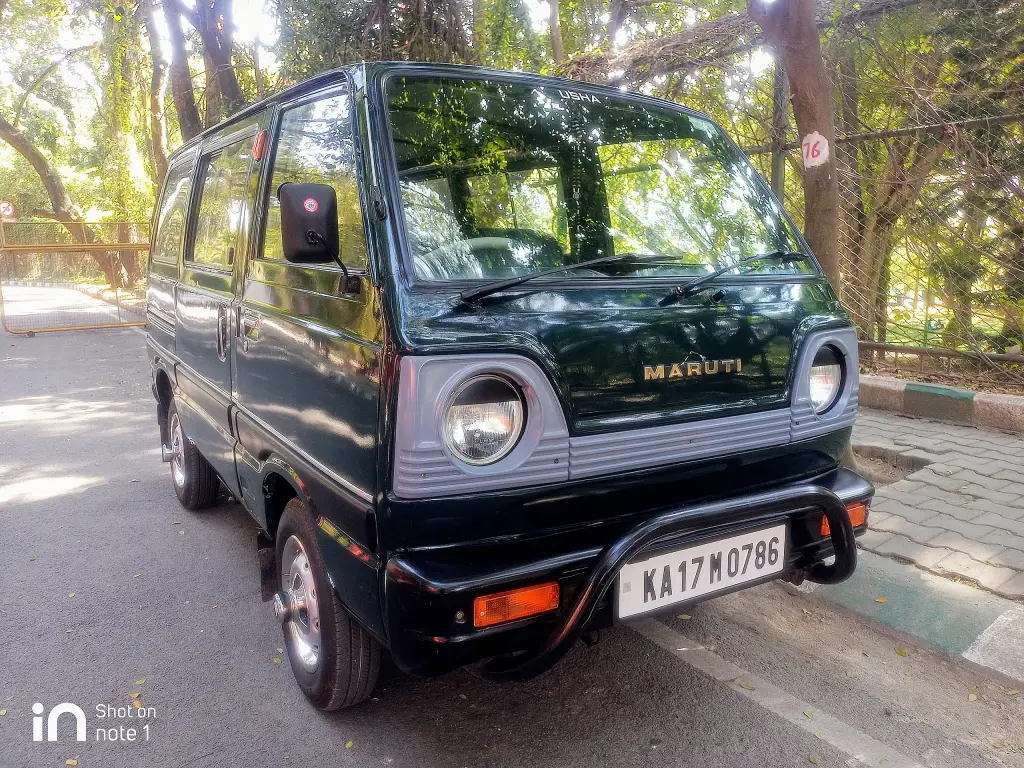
The Maruti Omni was the van version of the company’s early range. Introduced in 1984 with the same three-cylinder engine as the Maruti 800, it was based on the Suzuki Carry and remained on sale until 2019.
Maruti Omni at a glance
| Maker | Maruti Suzuki, Gurgaon, India |
|---|---|
| Production | 1984–2019 |
| Also called | Maruti Van |
| Based on | Suzuki Carry microvan |
| Engine | 796 cc three-cylinder, shared with the Maruti 800 |
| Layout | cabover microvan, front-wheel drive |
| Body | boxy van with sliding side doors |
| Use | family transport, ambulance and school van conversions |
| Replaced by | Maruti Eeco in 2010 |
| End of production | 2019, after safety rules changed |
The Omni has no dedicated English Wikipedia article; this page uses the Suzuki Carry article it derives from and mentions of the Maruti Van in the Maruti Suzuki and Suzuki Eeco articles.
History of the Maruti Omni
A van from the 800’s family
The Omni appeared in 1984, a year after the Maruti 800, and was first known simply as the Maruti Van. It used the same three-cylinder engine as the 800 and was derived from the Suzuki Carry, the Japanese company’s long-running cabover light van. That layout — a short nose, the engine low in the front and a tall boxy body — gave the Omni far more interior space than its small footprint suggested, and made it a natural choice for families and small businesses.
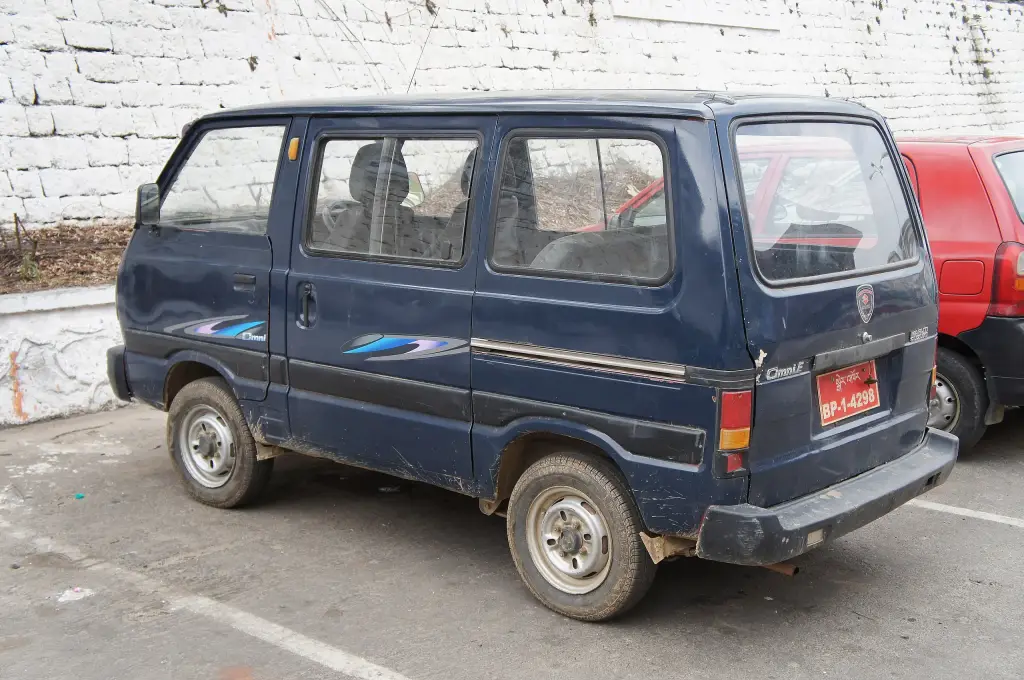
Thirty-five years of service
The Omni changed little over the decades. Its simple mechanicals, low running costs and wide availability of spare parts kept it in demand long after more modern rivals arrived, and it became a common sight as an ambulance, a school van and a delivery vehicle as well as a family car. Maruti Suzuki replaced it in the range with the Eeco in January 2010, but the Omni itself continued in production until 2019, when the company was unable to redesign it to meet India’s new safety standards.
Design and features
- Maximum space for the size: the cabover body placed the engine under the floor at the front and gave a flat, tall cabin.
- Proven engine: the 796 cc three-cylinder unit was shared with the Maruti 800.
- Sliding side doors: easy access in tight streets and for loading.
- Working vehicle: widely converted into ambulances, school vans and delivery vans.
Maruti Omni versions
- Maruti Van (1984): the original name of the passenger microvan.
- Maruti Omni: the later and better-known name for the same van.
- Ambulance conversions: a common role for the type in India.
- Eeco (2010): the revised successor that replaced the Omni in the showroom.
The Omni shared its engine with the Maruti 800 and was eventually replaced by the Maruti Versa’s successor, the Eeco. More cars are in the Maruti collection.
Video: MARUTI OMNI
Video on YouTube.
Sources
- Suzuki Carry, English Wikipedia: cabover layout, engine position, van origins
- Maruti Suzuki, English Wikipedia: Maruti Van of 1984 with the 800’s engine
- Suzuki Eeco, English Wikipedia: replacement of the Omni, end of production in 2019