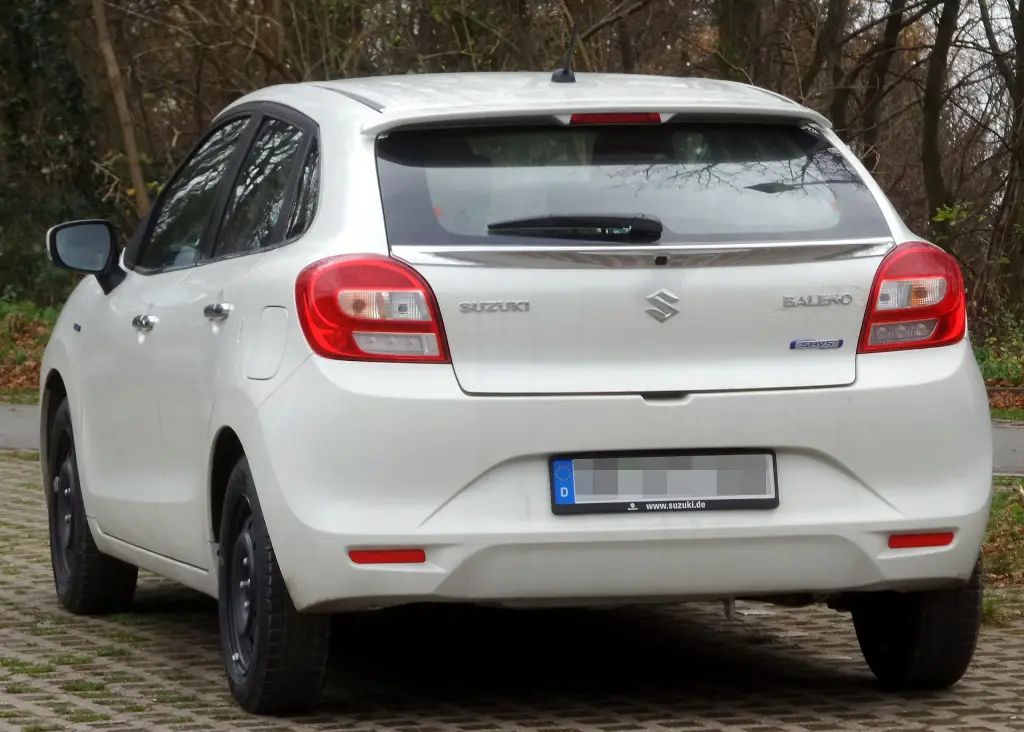
The Suzuki Baleno name has been used since 1996 for several different subcompact cars. In India the Maruti Suzuki Baleno was first a saloon built until 2007; a new five-door Baleno hatchback was introduced in 2015.
Maruti Baleno at a glance
| Maker | Maruti Suzuki, India |
|---|---|
| Nameplate introduced | 1996 |
| Indian saloon | based on the Suzuki Cultus Crescent, sold until 2007 |
| Indonesian Baleno Next-G | rebadged Suzuki Aerio sedan, 2003–2007 |
| Neo Baleno | rebadged Suzuki SX4 sedan, Indonesia 2008–2010 |
| New hatchback | five-door Baleno introduced in 2015 |
| Class | subcompact car |
| Position in 2015 range | between the Ignis and the Swift |
The English Wikipedia article is a short overview of the Baleno nameplate rather than a full model history, so this page is shorter than the other Maruti articles.
History of the Maruti Baleno
One name, several cars
The Baleno name has been used by Suzuki for several different subcompact cars since 1996. From 1996 to 2002 the car sold in Europe and Asia-Pacific as the Baleno was a rebadged Suzuki Cultus Crescent. It was also produced and sold in India as the Maruti Suzuki Baleno, and it remained on the Indian market until 2007. After the introduction of the Aerio in 2001 the Baleno name was discontinued in Europe and Asia-Pacific and survived only in Indonesia, where a rebadged Aerio sedan was marketed as the Baleno Next-G from 2003 to 2007.

Indonesia and the Neo Baleno
From 2008 to 2010 the Indonesian market received yet another car under the name: the Neo Baleno, a rebadged Suzuki SX4 sedan. This pattern — the same nameplate applied to different Suzukis in different markets — makes the Baleno unusual among the company’s models, and it explains why an Indian Baleno of the 2000s and a Baleno of the 2020s have almost nothing in common beyond the badge.
The 2015 hatchback
In 2015 Suzuki introduced a completely new Baleno, a five-door hatchback. In Suzuki’s global range it was positioned between the Ignis and the Swift. The new car revived a name that had been out of use for five years, and it gave Maruti Suzuki a modern hatchback above the Swift in size while remaining a subcompact.
Design and features
- Cultus Crescent basis: the original Baleno was a rebadged version of Suzuki’s Cultus Crescent.
- Indian production: the saloon was built and sold in India as a Maruti Suzuki until 2007.
- Several markets, several cars: the same name was used for the Aerio and SX4 sedans in Indonesia.
- 2015 revival: a new five-door hatchback slotted between the Ignis and the Swift.
Maruti Baleno versions
- Baleno saloon (1996–2007): rebadged Cultus Crescent, sold in Europe, Asia-Pacific and India.
- Baleno Next-G (2003–2007): Indonesian version of the Aerio sedan.
- Neo Baleno (2008–2010): Indonesian version of the SX4 sedan.
- Baleno hatchback (2015): an all-new five-door model.
The Indian Baleno followed the Maruti Esteem as Maruti’s larger saloon, and the 2015 hatchback sits above the Maruti Swift in the range. More cars are in the Maruti collection.
Video: Maruti Baleno Commercial
Video on YouTube.
Sources
- Suzuki Baleno, English Wikipedia: nameplate history, Indian production, 2015 model
- Suzuki Swift, English Wikipedia: position of the Baleno in Suzuki’s range