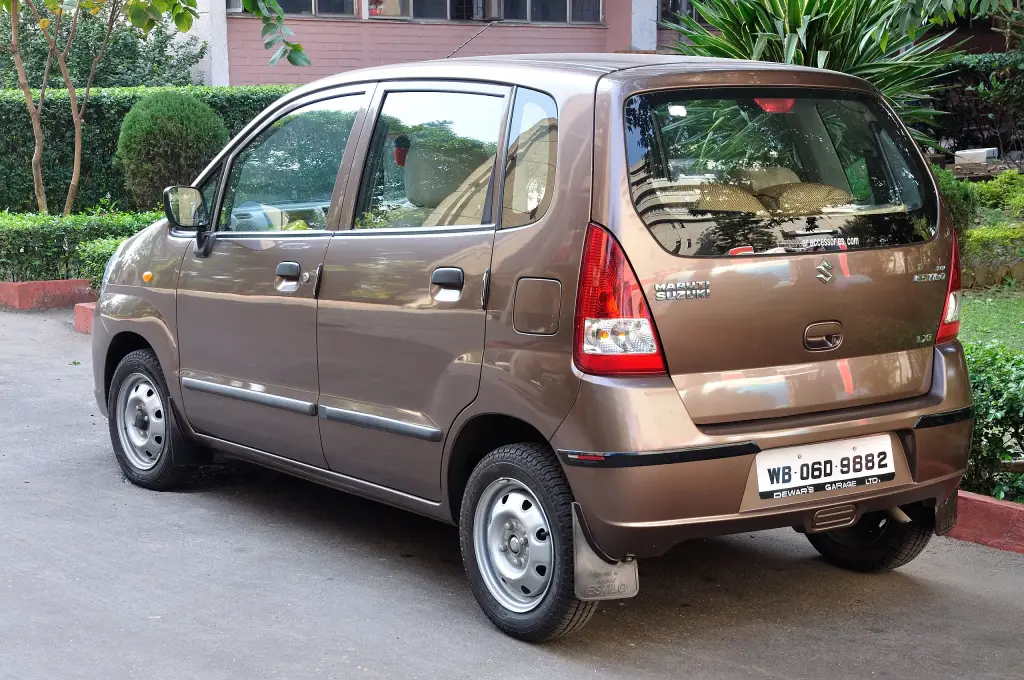
The Maruti Suzuki Zen was a five-door hatchback built in India from 1993 until 2006. A widened version of the Suzuki Cervo Mode, it brought a light all-aluminium engine and go-kart handling to the Indian market and became a favourite of rally drivers.
Maruti Zen at a glance
| Maker | Maruti Suzuki, India |
|---|---|
| Production | 21 May 1993 – 2006 |
| Based on | Suzuki Cervo Mode |
| Model code | MH410 |
| Engine | 993 cc G10B four-cylinder, all-aluminium |
| Power | 50 hp carburetted; 60 hp with 16-valve MPFI from 2000 |
| Torque | 78.5 Nm at 4500 rpm (MPFI) |
| Gearbox | five-speed manual |
| Kerb weight | 765 kg |
| Wheelbase | 2,335 mm |
| Dimensions | 3,465 mm long, 1,495 mm wide, 1,405 mm high |
| Export name | Suzuki Alto |
Based on one source, the English Wikipedia article on the Maruti Suzuki Zen.
History of the Maruti Zen
First generation
Based on the Suzuki Cervo, the first-generation Zen was introduced on 21 May 1993 with the model code MH410. It looked much like the Cervo Mode but had a great deal of unique sheet metal: it was 20 cm longer and 10 cm wider than the Japanese car. In Europe and many other export markets it was sold as the Suzuki Alto. The engine was Suzuki’s all-aluminium G10B, a 993 cc four-cylinder that produced 50 hp at around 6500 rpm; the export Alto 1.0 used an eight-valve version with 54 hp and 74 Nm.
Changes through the years
A minor facelift in 1997 brought body-coloured bumpers. A retro-styled Zen Classic arrived in 1999 but was soon dropped for lack of demand. In 1998 Maruti also launched a diesel Zen with Peugeot’s TUD5 engine; it did not sell well and was discontinued. The big change came in 2000, when a 16-valve MPFI engine with four valves per cylinder raised output by ten horsepower to 60 hp; the Zen LX then cost around Rs 3,40,000. A facelift followed in 2003, when a three-door VXi was offered in two limited editions of 300 cars each, the black Zen Carbon and the silver Zen Steel.
Second generation
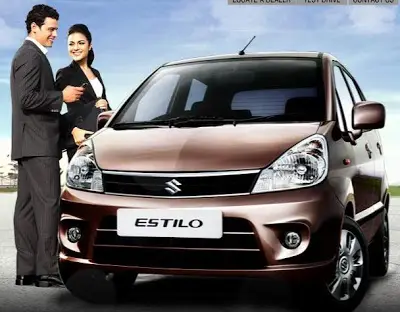
In 2004 the Zen received a new body called the Zen Tiger. The second-generation Maruti Suzuki Zen, the Zen Estilo, was introduced in December 2006 as part of Maruti’s plan to launch a new car every year for five years. It shared its engine and chassis with the Maruti Wagon R, both being based on the Suzuki MR Wagon, and its price was close to the Wagon R’s as well. In 2009, together with a minor facelift, Maruti dropped the Zen name and the car became simply the Estilo.
Reputation
The Zen was a very successful model both in India and abroad. It was called India’s first world car and was exported to Europe from 1994 to 2004, as well as to several other countries. Its light weight, low seating and kart-like handling made it the first fun-to-drive hatchback in the Indian market, and highly modified versions of the 993 cc engine topped 100 bhp in the Indian racing scene. The car was reliable enough that many good examples are still in use, and it holds a relatively high resale value.
Design and features
- All-aluminium engine: the 993 cc G10B four-cylinder kept weight down and revved freely.
- Driver’s car: low seating and go-kart handling made it India’s first fun hatchback.
- Rally and racing: cheap to modify and tune, with tuned engines exceeding 100 bhp.
- Export career: sold in Europe as the Suzuki Alto from 1994 to 2004.
Maruti Zen versions
- MH410 (1993): the original carburetted car, later badged LX, LXi, VXi and D/Di.
- Zen Classic (1999): retro-styled front and rear, short-lived.
- Zen diesel (1998): Peugeot TUD5 engine, discontinued for poor sales.
- Zen Carbon and Zen Steel (2003): 300 black and 300 silver three-door VXi cars.
- Zen Tiger (2004): facelift with a new body.
- Zen Estilo (2006): second generation sharing its chassis with the Wagon R.
The Zen shared its market with the Maruti 800, and its second generation used the chassis of the Maruti Wagon R. More cars are in the Maruti collection.
Sources
- Maruti Suzuki Zen, English Wikipedia: history, engines, versions, reception