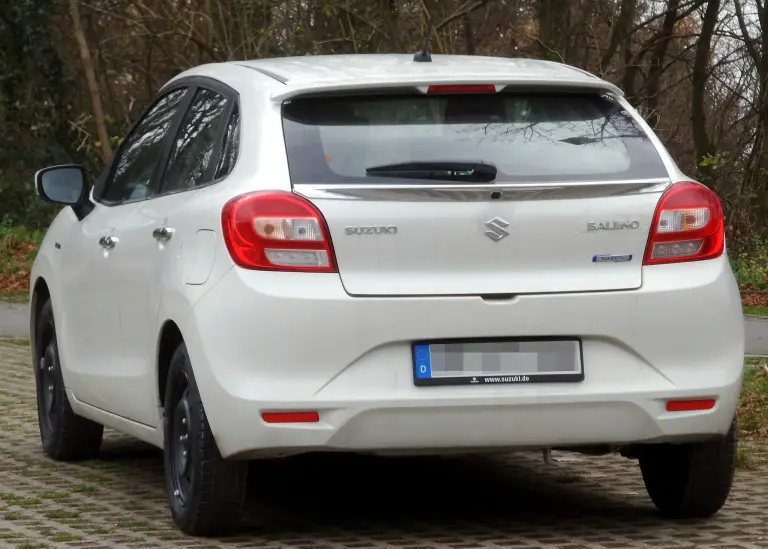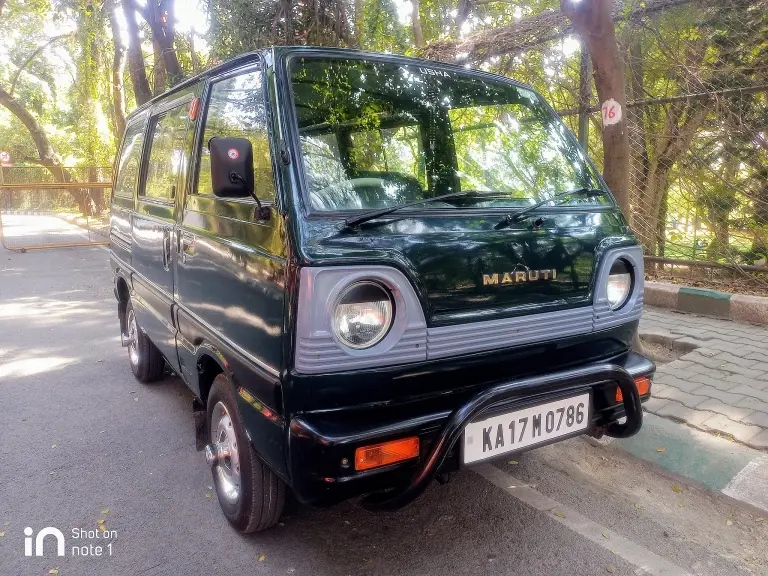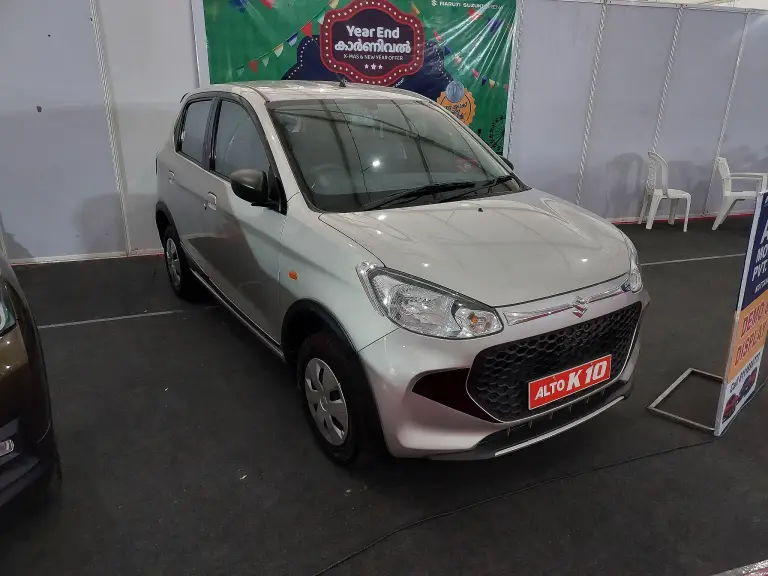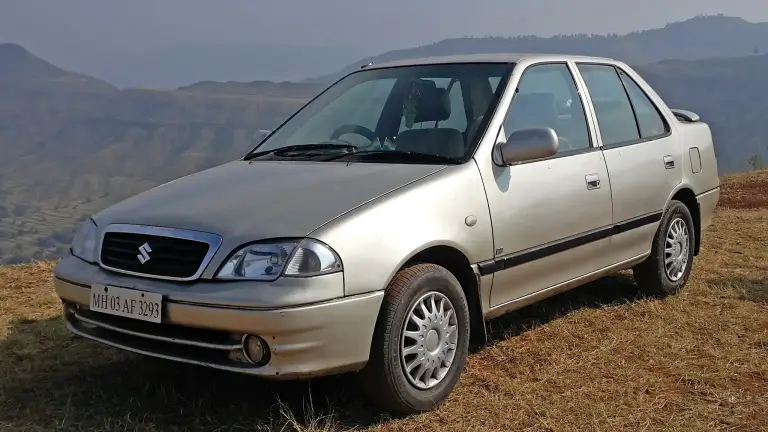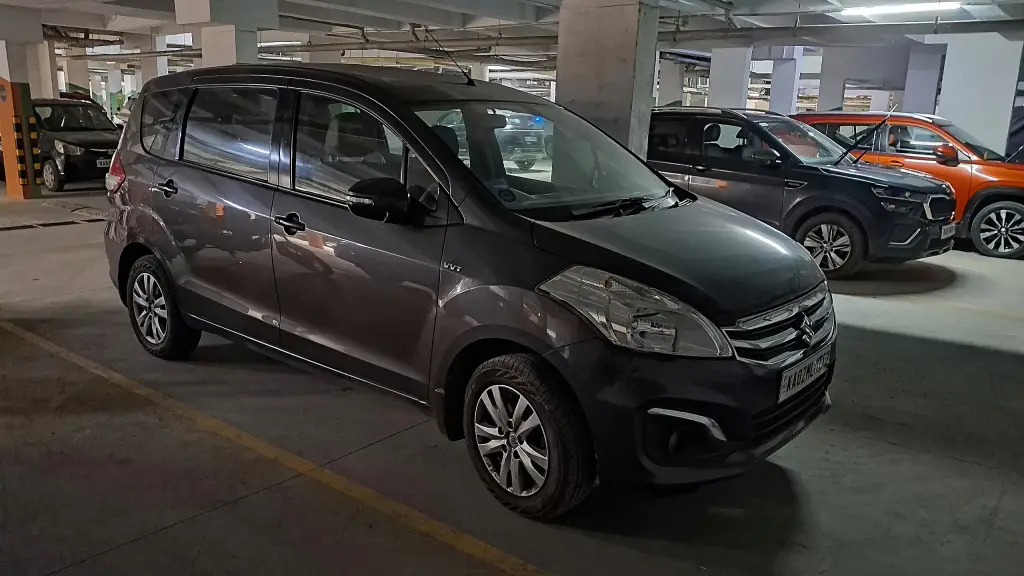
Maruti Suzuki India Limited is the Indian subsidiary of the Japanese automaker Suzuki and the largest car manufacturer in India. It was founded as a state-owned project to build an affordable Indian car and became a joint venture with Suzuki in 1982.
Maruti Suzuki at a glance
| Full name | Maruti Suzuki India Limited |
|---|---|
| Founded | February 1981, as Maruti Udyog Limited |
| Joint venture | agreement with Suzuki signed in October 1982 |
| First plant | Gurugram, Haryana, opened in 1982 |
| First model | Maruti 800, production from December 1983 |
| Early ownership | Government of India majority, Suzuki 26% |
| Suzuki stake | 50% in 1992, 56.21% by 2013 |
| Government exit | remaining shares sold to Suzuki in 2007 |
| Market share | 42% of Indian passenger cars in September 2022 |
| Market value | about US$50–55 billion in 2025 |
Based on one source, the English Wikipedia article on Maruti Suzuki.
History of the Maruti Suzuki
Before Suzuki
The Maruti name goes back to a company established by Sanjay Gandhi, son of Prime Minister Indira Gandhi. In the early 1970s the Indian government was looking for a small-car manufacturer, and the idea of an affordable people’s car had been discussed since the 1950s. Sanjay Gandhi, who had apprenticed with Rolls-Royce in Crewe for three years, returned in 1968 convinced of the potential of small-car production. The government issued a letter of intent in September 1970 for up to 50,000 cars a year, and in August 1971 Maruti Motors Limited was established with Sanjay Gandhi as its first managing director. He acquired 297 acres of land in Gurgaon for the factory.
The prototype years
The first prototype was completed in 1972, with a chassis made in Sanjay Gandhi’s workshop and a Triumph motorcycle engine. It failed a feasibility test by the Vehicle Research & Development Establishment in Ahmednagar and was deemed unsuitable for road use. Maruti nevertheless received an industrial licence in July 1974 to build 50,000 cars a year, but only 21 units had been made by 31 March 1976. After Indira Gandhi’s election defeat in 1977 and a court order for Maruti’s dissolution in 1978, the project stalled; after her return to office in 1980 and Sanjay’s death in a plane crash, the government took control of Maruti through legislation.
The Suzuki tie-up
Indira Gandhi asked Arun Nehru to assess whether her son’s vision could be revived. A team was assembled to look for an experienced partner, and negotiations with Suzuki began in April 1982. Suzuki and Maruti Udyog signed a licence and joint venture agreement in October 1982: Suzuki took a 26% stake, although the government had wanted 40%, and both sides agreed that Suzuki would raise its share to 40% after five years. Maruti was allowed to import two complete Suzuki vehicles in the first two years while it built up local content. Suzuki later increased its equity to 50% in 1992 and to 56.21% by 2013. The government gradually reduced its own stake, made Maruti a public company in 2003 and sold its remaining shares to Suzuki in 2007.
Production and growth
Local production began in December 1983 with the Maruti 800, based on the Suzuki Fronte and Alto. In 1984 the Maruti Van, later known as the Omni, was released with the same three-cylinder engine as the 800. Maruti had targeted 20,000 cars in its first year and 40,000 in its second at the Gurgaon plant, but the rapid success of the 800 exceeded expectations. The company went on to become the largest Suzuki subsidiary by production volume and sales, with a leading 42% share of the Indian passenger car market in September 2022 and a market capitalisation of about US$50–55 billion in 2025.
Design and features
- State origins: born from a government project for an affordable Indian people’s car.
- Suzuki partnership: a joint venture signed in October 1982 that shaped the company’s model range.
- Small-car specialist: the Maruti 800 of 1983 established the formula that still defines the brand.
- Market leader: the largest carmaker in India, with a 42% share of passenger cars in 2022.
Maruti Suzuki versions
- Maruti 800 (1983): the first model, based on Suzuki Fronte and Alto engineering.
- Maruti Van / Omni (1984): the first van, using the 800’s three-cylinder engine.
- Gypsy (1985): a four-wheel-drive model based on the Suzuki Jimny.
- Alto (2000): the long-running best-seller of the Indian market.
- Swift (2005): the European-developed global hatchback built in India.
The company’s first model was the Maruti 800, followed by the Maruti Omni and the Maruti Alto. More cars are in the Maruti collection.
Sources
- Maruti Suzuki, English Wikipedia: company history, ownership, production