The Mack B series was the heavy conventional truck line Mack Trucks built between 1953 and 1966. It replaced the 1940–1956 L series, introduced a more streamlined shape with a sloped windshield and larger rounded fenders, and became the most numerous Mack of its era: 126,745 examples in 13 years.
Mack B series at a glance
| Production | 1953–1966 |
|---|---|
| Replaced | Mack L series (1940–1956) |
| Replaced by | Mack R series, from 1966 |
| Type | heavy conventional-cab truck |
| Body styles | tractor, straight truck, cowled chassis, fire truck |
| Model numbers | B1x to B9x |
| Largest petrol engine | 707 cu in (11.6 L), 232 hp, in the B70 |
| Smallest petrol engine | 291 cu in (4.8 L), 107 hp, in the B20 |
| Diesels | from the B61 upwards, up to the ENDT 673 and END 864 V8 |
| Cummins option | from the B73, 855 cu in up to the NTC335 |
| Built | 126,745 |
Based on one source, the English Wikipedia article on the Mack B series.
History of the Mack B series
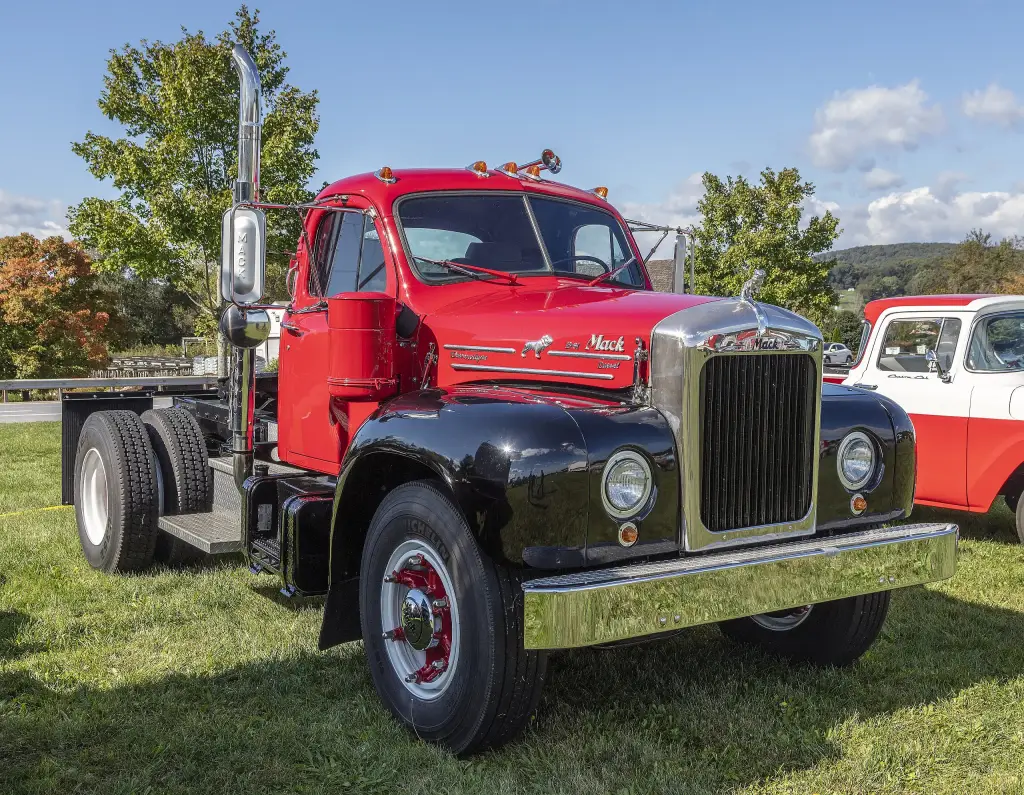
The B series arrived in 1953 as the successor to the L series, which Mack had built since 1940. It was a conventional-cab truck, with the engine ahead of the driver, but its styling was a clear break with the past: the windshield was sloped back and the fenders were larger and rounder than on the L series, giving the truck a more streamlined look that defined Mack’s face for a decade. The range was wide. Buyers could order a tractor unit, a straight truck, a cowled chassis for a delivery body or a bus, or a fire engine chassis.
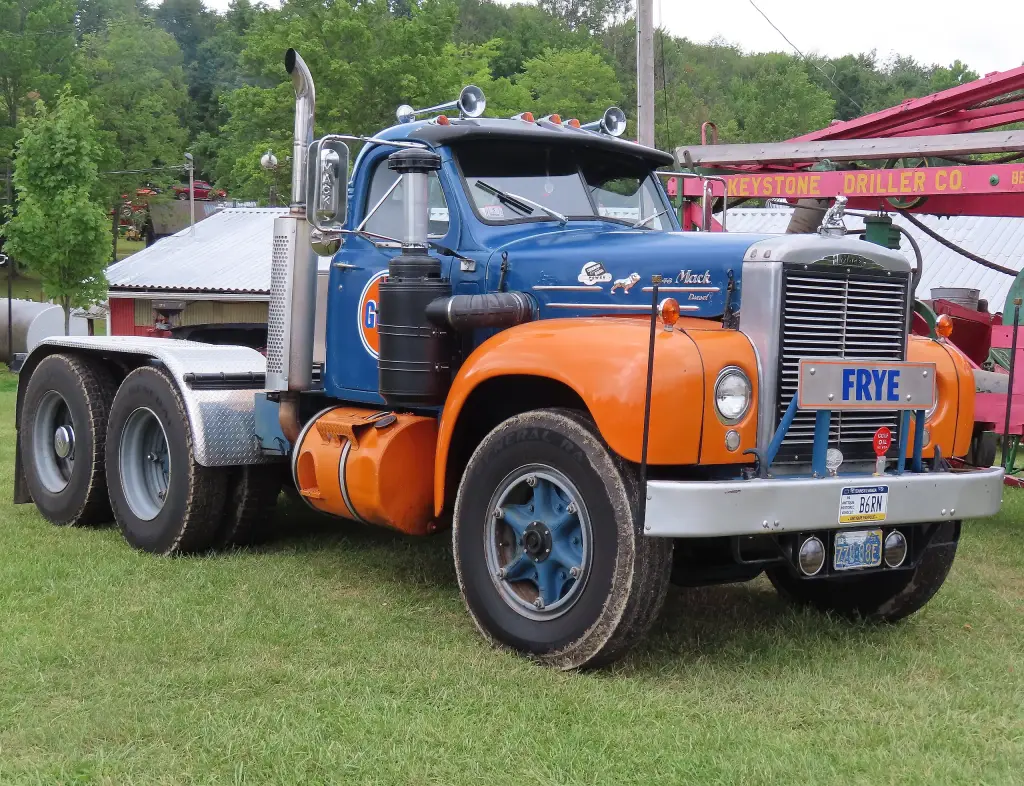
The model numbering was a code as much as a name. The first digit after the B indicated the chassis class, from B1x to B9x, and the letter that followed described the job: school bus chassis, flat-face cowl for a delivery body, export specification, fire truck chassis, lightweight or aluminium-reduced chassis, platform chassis, right-hand drive (from 1964), six-wheel tandem chassis, tractor chassis or severe-service chassis. The engine list was just as long, with ten petrol engines from a 291 cubic inch unit of 107 hp in the B20 to a 707 cubic inch engine of 232 hp in the B70, and a wide range of diesels from the B61 upwards, including the turbocharged ENDT 673 six and the END 864 V8. From the B73, Cummins 855 cubic inch engines were offered up to the NTC335.
In 1966 Mack replaced the B series with the R series, a truck that stayed in production into the 21st century. The B series had done its job: 126,745 trucks in 13 years, sold across North America and abroad, and today the B-61 in particular is one of the most collected American trucks of the 1950s.
Design and features
- Sloped windshield and round fenders: the shape that made a 1950s Mack instantly recognisable.
- Letter-coded chassis: the suffix after the model number told the buyer whether the truck was a tractor, a tandem, a fire engine or an export model.
- Ten petrol engines: from 107 hp in the B20 to 232 hp in the B70.
- Diesels from the B61: including the turbocharged ENDT 673 and the END 864 V8, with Cummins power from the B73.
- Every body style: tractors, rigids, cowled chassis for buses and delivery bodies, and fire engine chassis.
Mack B series versions
- B-61: the best-known model, a heavy tractor and the first of the line to offer the bigger diesels.
- B-73: the model from which Cummins 855 engines were offered.
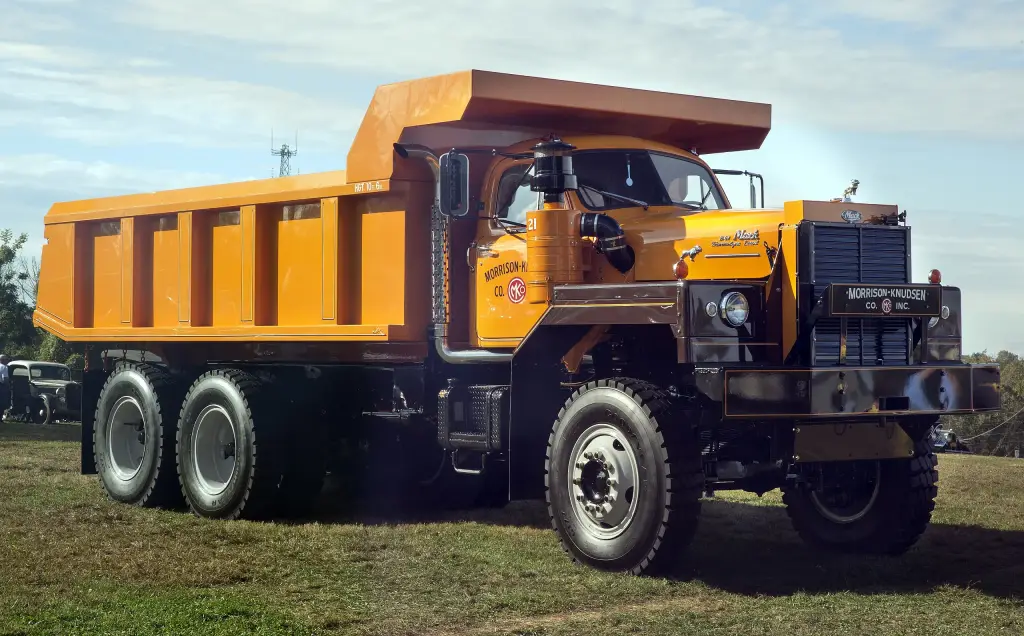
- B-75 and B-81: heavier chassis used for dump and construction work.
- B-42 and B-60: lighter models on the shorter chassis classes.
- B-61T and other lettered chassis: tractor, tandem, right-hand-drive and export versions built to order.
The B series replaced the Mack L series and was replaced in 1966 by the Mack R series. The older heavy truck of the range was the Mack AC. More trucks are in the Mack collection.
Sources
- Mack B series, English Wikipedia: production years, body styles, model codes, engines, total built