The Mack AC was the heavy truck Mack Trucks introduced in 1916 to replace its Senior model of 1905. Designed by chief engineer Edward Hewitt, it carried 18 patents when it appeared, served with British and American armies in the First World War, and earned the nickname that gave the company its bulldog symbol.
Mack AC at a glance
| Production | 1916–1938 |
|---|---|
| Replaced | Mack Senior (1905) |
| Designed by | Edward Hewitt, Mack chief engineer |
| Patents at launch | 18 |
| Payloads | 3.5, 5.5 and 7.5 long tons |
| Engine | pair-cast four-cylinder petrol, 74 hp |
| Transmission | three-speed with clutch brake |
| Final drive | chain drive to the rear wheels |
| Cab | all-steel, optional metal roof |
| Built | 40,299 AC, plus 2,819 AK and 285 AP |
| Military service | about 4,500 to the US government, about 2,000 to Britain |
Based on one source, the English Wikipedia article on the Mack AC.
History of the Mack AC
Mack introduced the AC in 1916 to replace the Senior, a model dating from 1905, and it complemented the smaller AB that Hewitt had designed in 1914 to replace the Junior. The truck was innovative enough to hold 18 patents on its design. It was a two-wheel-drive, two-axle vehicle offered in three sizes with payloads of 3.5, 5.5 and 7.5 long tons, powered by a pair-cast four-cylinder petrol engine of 74 brake horsepower with an aluminium crankcase, inspection ports and a governor built into the camshaft timing gear. Drive went through a three-speed transmission with a clutch brake; from 1936 Buda and Cummins diesel engines were also offered.
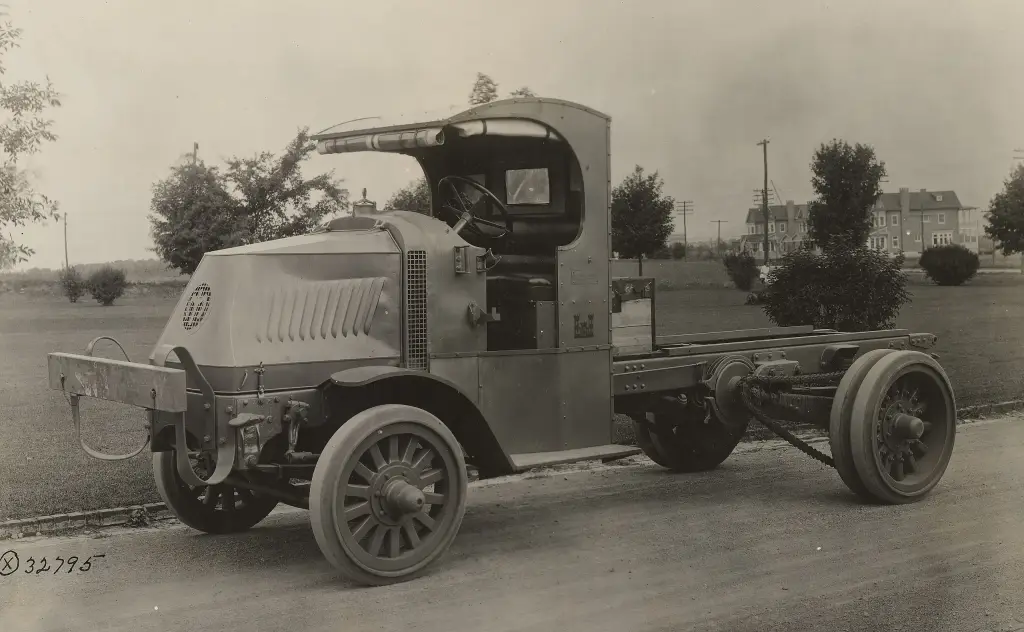
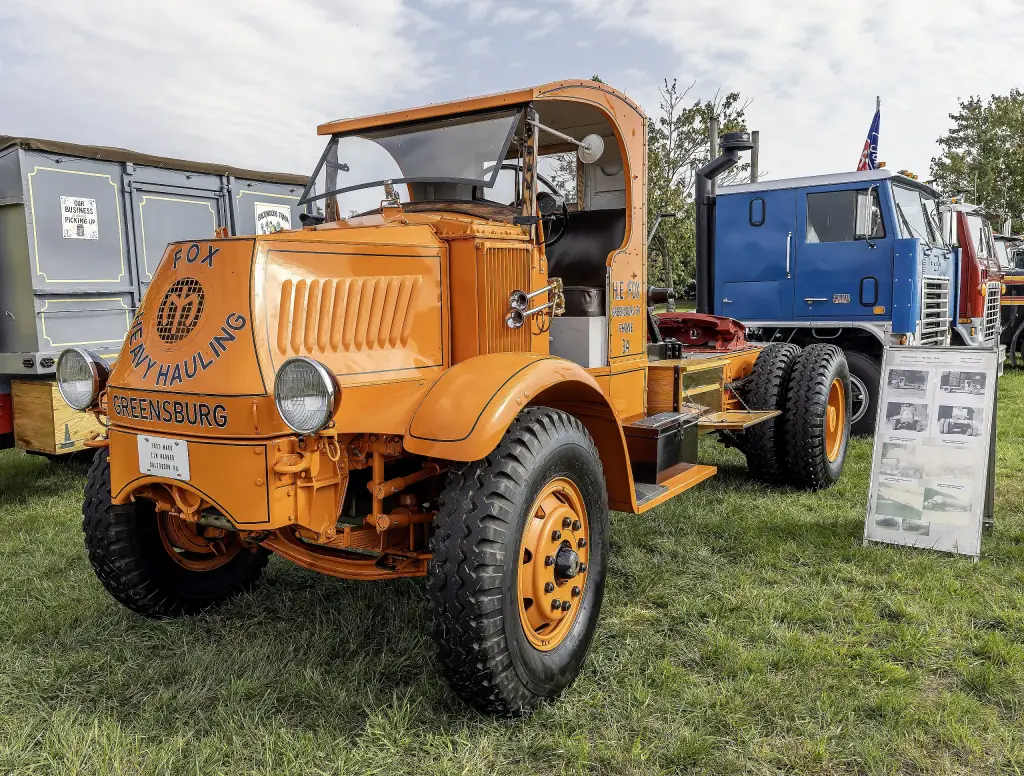
The most distinctive feature was the cooling system: the radiator sat behind the engine, under a squared-off bonnet of coal-scuttle pattern with a small circular grille carrying the Mack emblem at the front. The chassis was pressed chrome-nickel steel, heat-treated for durability, the front axle was drop-forged alloy steel, and the rear wheels were chain driven. Early trucks ran on solid tyres, though many late examples were delivered on pneumatics. Mack also angled the steering wheel at 45 degrees, a small innovation that made the truck much easier to drive.
The AC went to war in large numbers. Mack delivered about 4,500 to the United States government, which adopted it as a standard type in all three payload classes, and about 2,000 to the British military. British troops valued its toughness and its ability to survive extreme overloading, and nicknamed it the Bulldog for its tenacity and stub nose; the name spread to American troops and, in 1922, Mack adopted the bulldog as its corporate symbol. Production continued until 1938, with 40,299 ACs built. Many worked in construction and road building, including on the Hoover Dam, and solid-tyred ACs were still a common sight in American cities in the 1950s.
Design and features
- Coal-scuttle bonnet: the radiator sat behind the engine under a squared bonnet with a small grille, the most recognisable front of any early Mack.
- Chain drive: the rear wheels were driven by chains, as on most heavy trucks of the period.
- Strong chassis: pressed chrome-nickel steel, heat-treated, with a drop-forged alloy front axle.
- 45-degree steering wheel: an early comfort innovation copied by other makers.
- Diesel option: Buda and Cummins diesels became available from 1936.
Mack AC versions
- AC (1916–1938): the standard chain-drive truck in 3.5, 5.5 and 7.5 ton sizes.
- Mack AK (1927–1936): a shaft-driven version of the AC; 2,819 built.
- Mack AP (1926–1938): six-cylinder version in four- and six-wheeled form, with payloads up to 10 tons rigid and 15 tons articulated; 285 built.
- Mack AL (1927–1929): low-mounted cab and low frame for distribution and firefighting work; only 57 made.
The AC’s chassis was a favourite base for fire engines, and the smaller early Mack lines are described separately. The truck that followed the AC family in the heavy range was the Mack B series. More trucks are in the Mack collection.
Sources
- Mack AC, English Wikipedia: design, engines, variants, production totals, war service