The Landini Vélite was the smaller of the two tractors with which the Fabbrico works dominated the Italian market in the 1930s. Put into production in 1935 with 25 CV and a weight of only 2,300 kg, it was easier to use than the big Super Landini and sold in such numbers that Landini became the country’s first tractor manufacturer.
Landini Vélite at a glance
| Maker | Landini, Fabbrico, Emilia-Romagna |
|---|---|
| Production | from 1935 |
| Engine | hot-bulb (testa calda) unit of the 1930s Landini line |
| Power | 25 CV |
| Weight | 2,300 kg |
| Versions | six, according to the French company history |
| Role in the range | smaller and more flexible companion to the 48 CV Super Landini |
| Name | from the title Mussolini gave to farmers who distinguished themselves in the Battle of Grain |
| Bigger stablemate | Super Landini, 1934, 48 CV |
| Intermediate model that followed | Bufalo, 38 CV |
| Company founded | 1884, by Giovanni Landini |
There is no Wikipedia article on the Vélite itself, and the Italian page once linked to it now redirects. This page uses the company histories in Italian and French, which describe the model and its place in the range but give no detailed specification sheet.
History of the Landini Vélite
A small tractor for a country of small farms
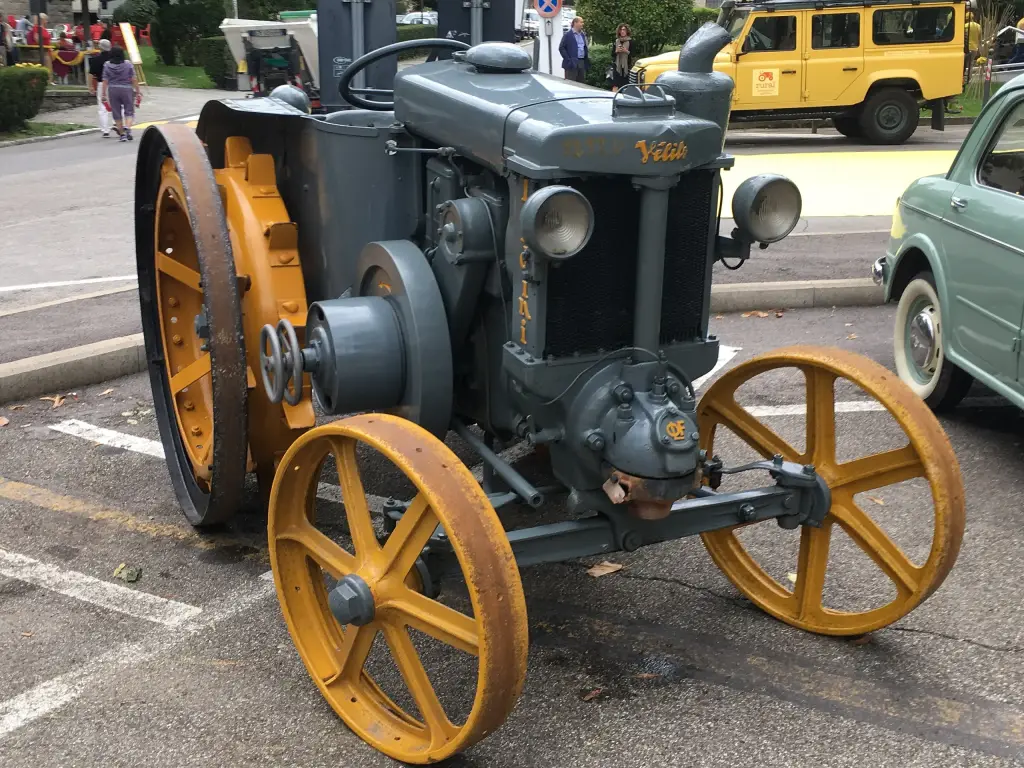
Landini had built stationary hot-bulb engines since 1910 and tractors since the 25/30 HP prototype of 1924. By 1934 the works was producing the Super Landini, a 48 CV machine that remained the most powerful tractor built in Italy until the first postwar years. The Super was aimed at large estates; the Vélite of 1935 was the answer for everyone else. With 25 CV and 2,300 kg it was lighter and its use was described in the Italian company history as more flexible and less demanding.
The name and the sales
The tractor took its name from the title that Mussolini gave to farmers who had distinguished themselves in the Battle of Grain, the campaign for wheat self-sufficiency. The name helped: the Vélite was a great commercial success. The French history of the company records that it was sold in six different versions and that demand was so strong the firm had to enlarge its works to cope with the flow of orders. That success is what made the Reggio Emilia company the leading producer of agricultural tractors in Italy.
Between the Super and the Bufalo
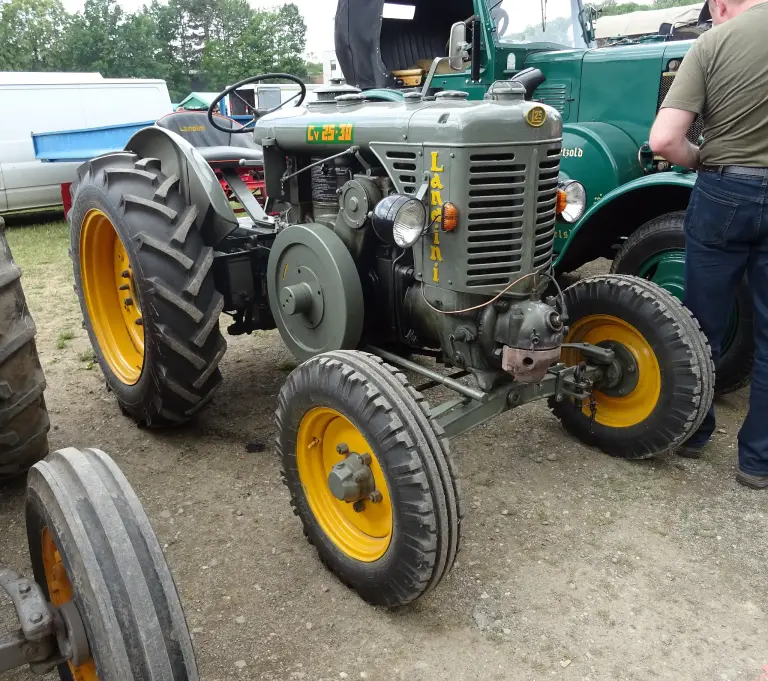
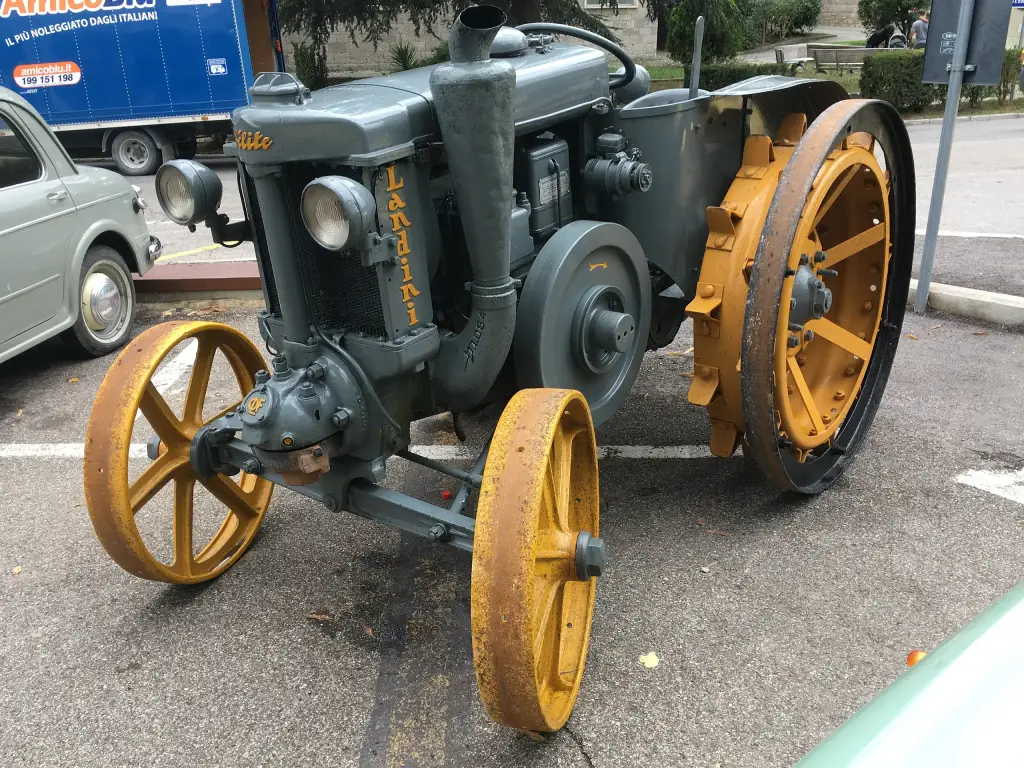
The Vélite did not stay alone in the range. Landini then built an intermediate model, the Bufalo of 38 CV, which did not repeat the success of the two tractors on either side of it. The hot-bulb engines themselves were replaced in the 1950s by faster diesels, first under a Perkins licence from 1957, but the surviving Vélites became collectors’ machines and are still demonstrated at rural festivals in Italy, as in the photographs on this page.
Design and features
- Light for its time: 2,300 kg made the Vélite easier to handle than the 48 CV Super Landini.
- Hot-bulb engine: the semi-diesel principle that Landini had been the first in Italy to apply to farm machinery in 1910.
- Six versions: the French company history records that the tractor was marketed in six different forms.
- A name with a story: it borrowed the title awarded to successful wheat growers in the Battle of Grain.
Landini Vélite versions
- Vélite (1935): the standard 25 CV tractor put into production at Fabbrico.
- The six factory versions: the Italian and French histories mention several forms of the same model but do not list them by name.
- Surviving examples: restored Vélites shown at Italian rural festivals, as in the photographs here.
The Vélite was the smaller companion of the Super Landini, and the hot-bulb line continued after the war with the L25 to L55. More Landini tractors are in the Landini collection.
Video: Accensione Landini Velite
Video on YouTube.
Sources
- Landini (azienda), Italian Wikipedia: founding, hot-bulb tractors, Vélite of 1935, sales success
- Landini, French Wikipedia: six versions, expansion of the works, semi-diesel range