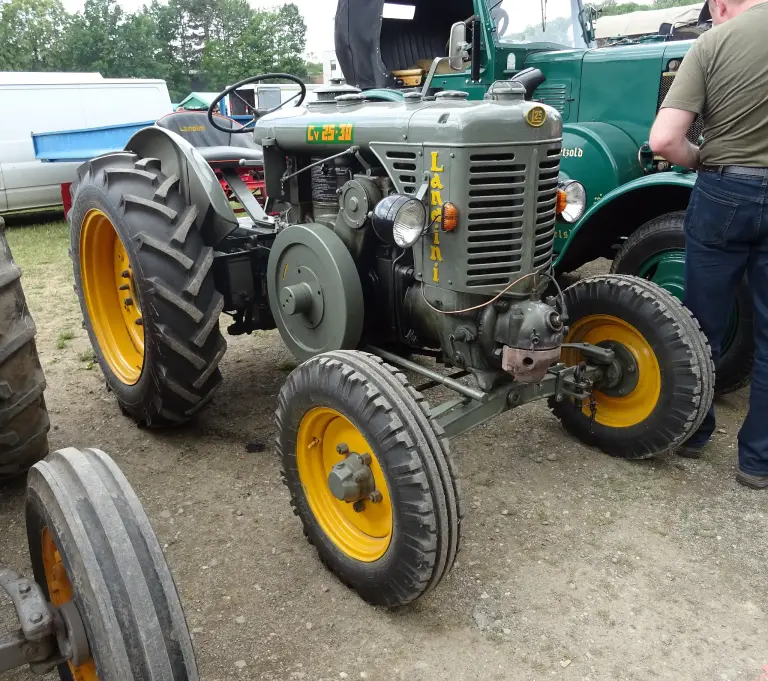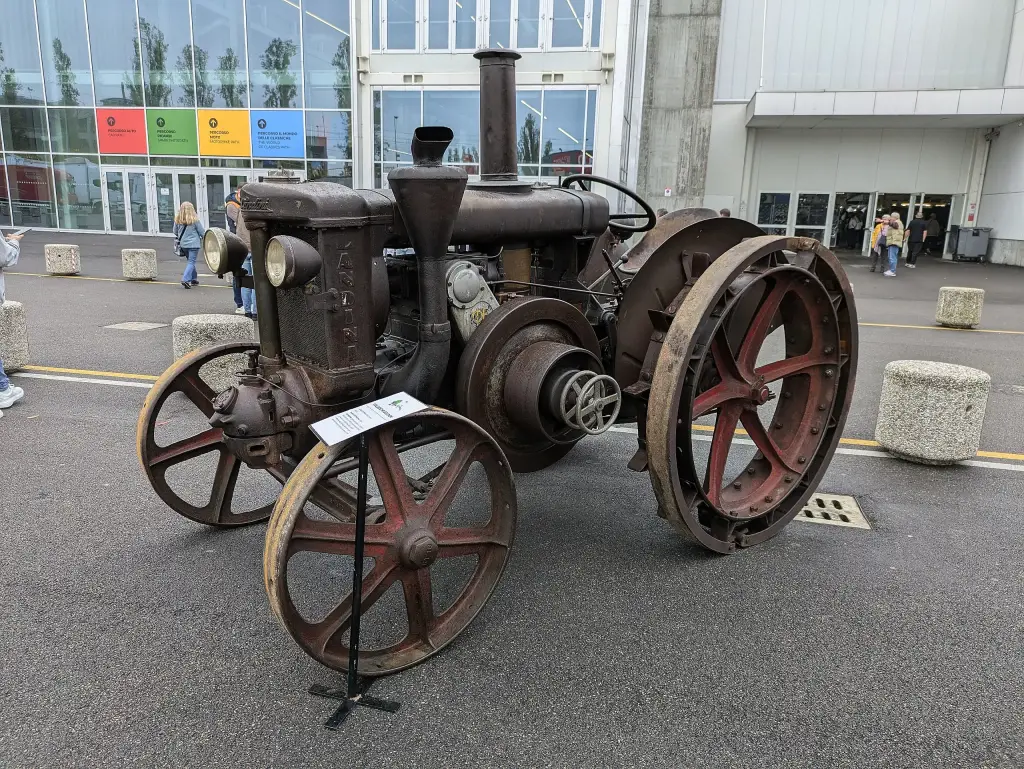
The Super Landini, put into production at Fabbrico in 1934, was the tractor that established the company’s reputation in the 1930s. Its 48 CV made it the most powerful tractor built in Italy until the first postwar years, and the French company history calls its design advanced for the time and the base for the models that came after it.
Super Landini at a glance
| Maker | Landini, Fabbrico, Emilia-Romagna |
|---|---|
| Production | from 1934 |
| Engine | hot-bulb (testa calda) semi-diesel |
| Power | 48 CV |
| Place in the market | the most powerful tractor built in Italy until the early postwar years |
| Design | described as avant-garde in the French company history |
| Predecessors | 25/30 HP prototype of 1924, 40 HP model of 1932 |
| Smaller stablemate | Vélite, 1935, 25 CV and 2,300 kg |
| Role afterwards | base for the hot-bulb range that followed |
| Company founded | 1884, by Giovanni Landini |
No Wikipedia article covers the Super Landini on its own. This page uses the Italian and French company histories, which describe the model in the context of the works but give no full specification sheet.
History of the Super Landini
From stationary engines to a big tractor
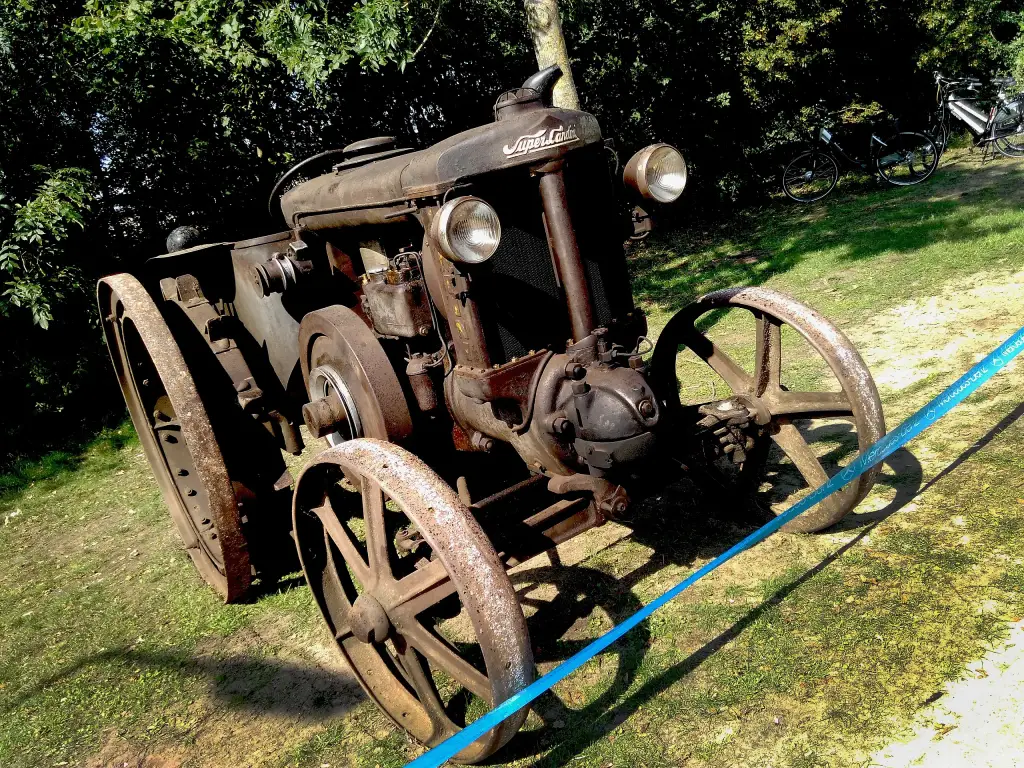
Giovanni Landini built his first fixed hot-bulb engine in 1910 and was the first in Italy to apply that principle to farm machinery. The engine reached a tractor in 1924, in the 25/30 HP prototype, which proved reliable and robust. In 1932 the works put into production a 40 HP model aimed at large landed estates, cooled by evaporation of water like the prototype. The Super Landini of 1934 was the next step, and the French history of the firm describes it as a design ahead of its time.
The most powerful Italian tractor
With 48 CV the Super Landini was the most powerful tractor of national production until the first postwar years. The only machines of equal or slightly greater power came from the United States; in the Italian account they were heavier and less reliable, and were noted for their tendency to stop. The Super carried the technical heritage of the hot-bulb engine into a machine that could work the biggest farms of the Po valley, and it became the reference point of the range.
One model in a growing family
The Super was not alone for long. In 1935 Landini added the smaller Vélite with 25 CV, which sold in great numbers, and then the intermediate Bufalo of 38 CV, which did not repeat the success of the other two. In the 1950s the hot-bulb line was continued by the L25 to L55, and in 1957 the company took a licence for Perkins diesel engines as the semi-diesel gave way to faster power units. Super Landinis survive in museums and private collections; the examples on this page are from the 1930s.
Design and features
- 48 CV: the highest output of any tractor built in Italy until the first postwar years.
- Hot-bulb engine: the semi-diesel principle Landini had introduced to Italian agriculture in 1910.
- Advanced design: so described in the French company history, which makes it the base of the following range.
- Built for large estates: the class of farm the 40 HP model of 1932 had already been aimed at.
Super Landini versions
- Super Landini (1934): the standard 48 CV tractor.
- Surviving 1930s machines: preserved examples such as the 1936 tractor with works number 1700 shown here.
- Later hot-bulb range: the L25 to L55 of the 1950s that continued the same engine principle.
The Super Landini was joined in 1935 by the smaller Vélite, and its hot-bulb line led to the L series of the 1950s. More Landini tractors are in the Landini collection.
Video: Super Landini prove aratura
Video on YouTube.
Sources
- Landini (azienda), Italian Wikipedia: production from 1934, 48 CV, comparison with American tractors
- Landini, French Wikipedia: design, role as base of the following range, hot-bulb range