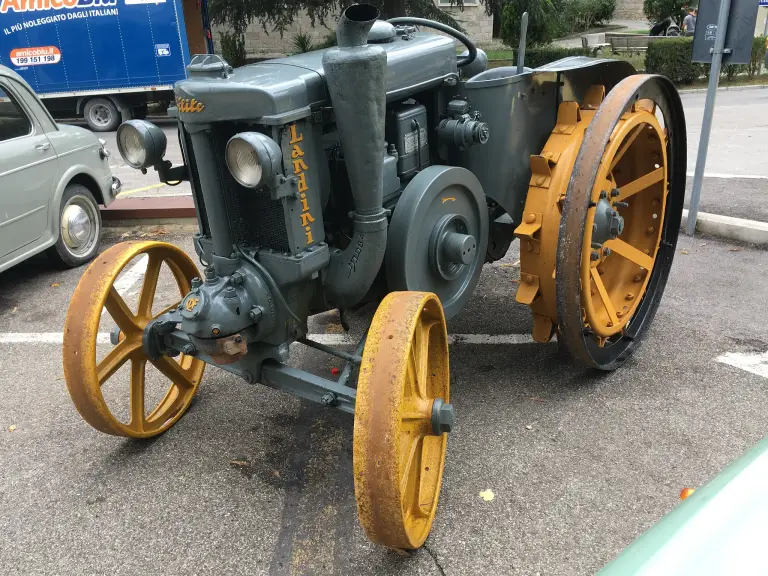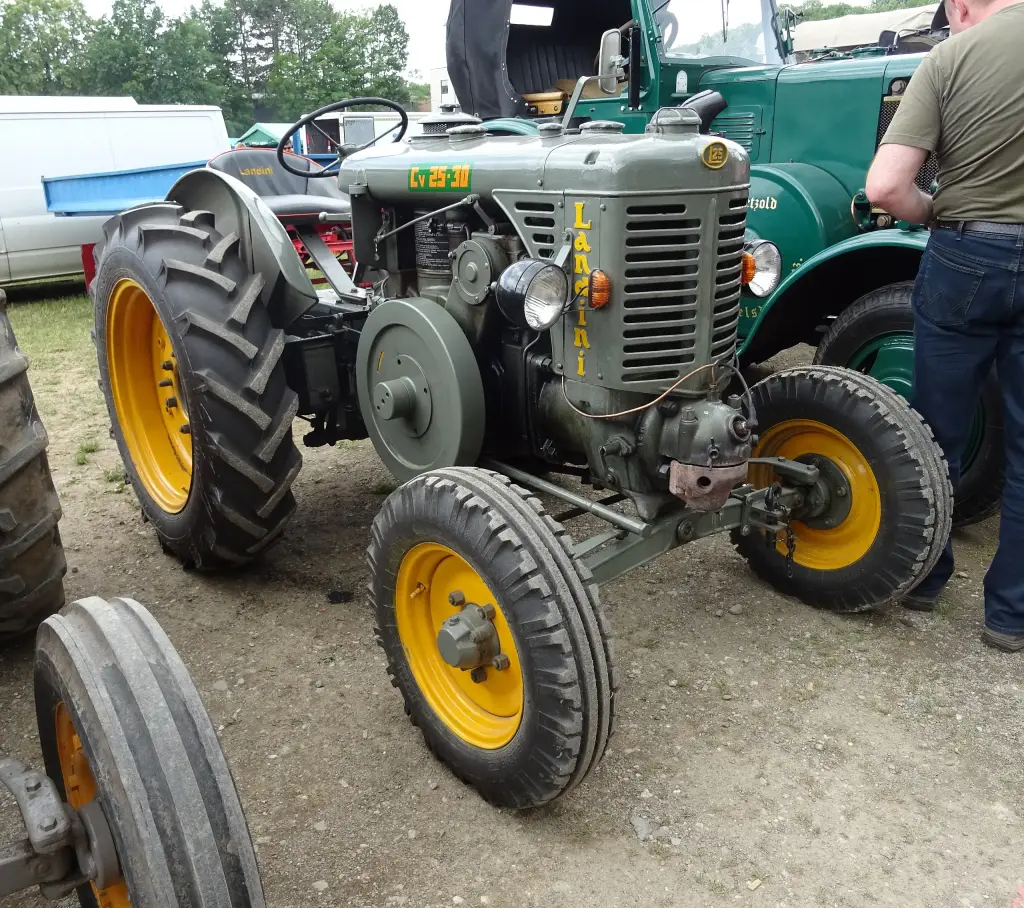
The L25, L35, L45 and L55 were Landini’s hot-bulb tractors of the 1950s, the last generation of a type the firm had pioneered in Italy. The largest of them, the L55, was described at the time as the biggest semi-diesel on the market. Within a decade the range had been overtaken by fast diesel engines and by the company’s first crawler tractor.
Landini L series at a glance
| Maker | Landini, Fabbrico, Emilia-Romagna |
|---|---|
| Production | 1950s |
| Models | L25, L35, L45, L55 |
| Smallest | L25, 25 PS on the 1957 example shown here |
| Largest | L55, the biggest semi-diesel on the market at the time |
| Engine | hot-bulb (testa calda) semi-diesel |
| Diesel turning point | Perkins licence from 1957 |
| First crawler | C35, 1959 |
| Other models of the period | Landinetta 1956, R50 1957, R4000 1960 |
| Ownership | Massey Ferguson from 1959 |
There is no Wikipedia article on the L series. This page uses the Italian and French company histories, which list the four models and the Perkins agreement but give no detailed specification for each version.
History of the Landini L series
Hot-bulb engines until the end
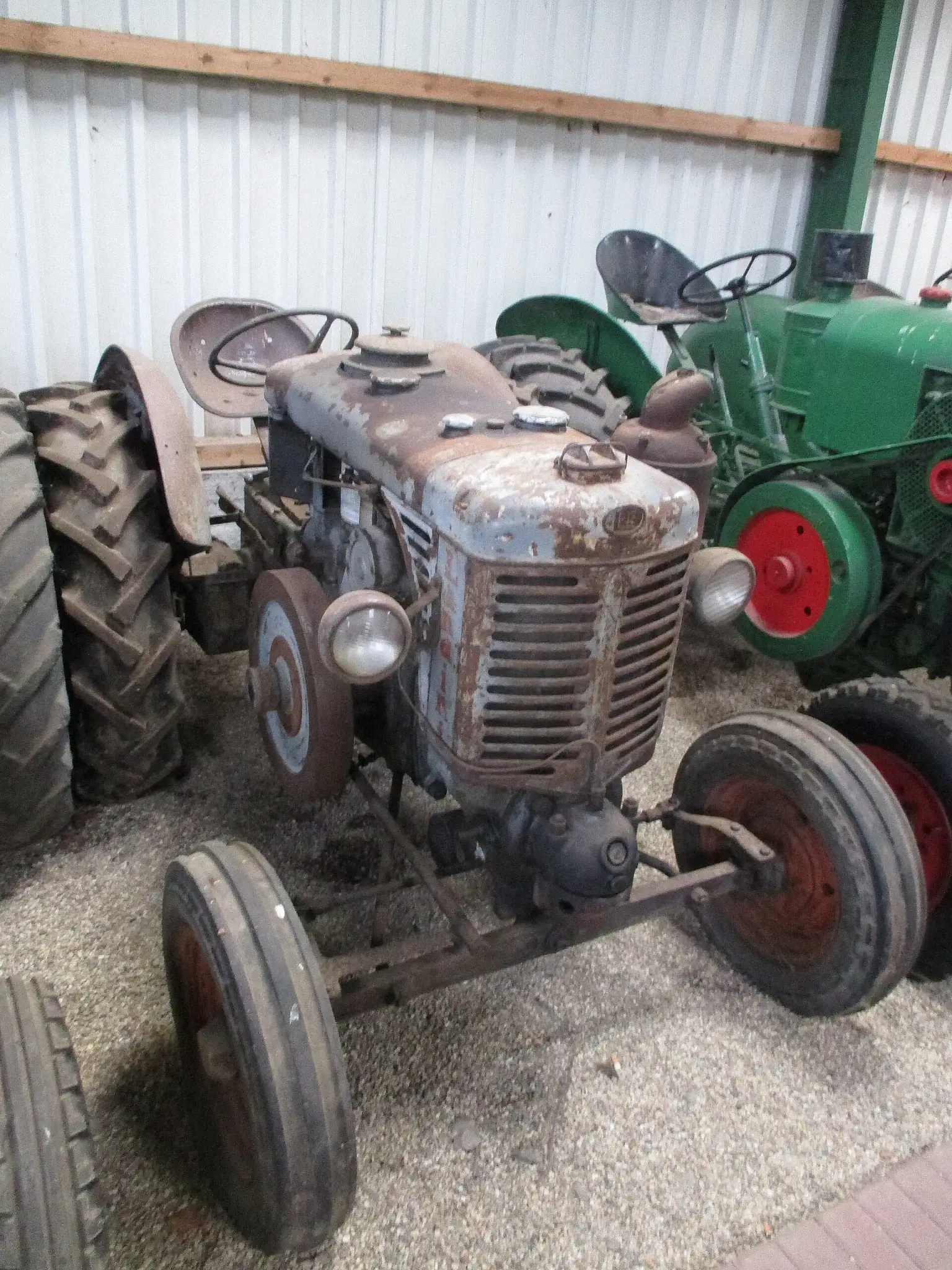
During the 1950s Landini remained faithful to the hot-bulb engine, the semi-diesel that the founder had first applied to Italian farm machinery in 1910. The range of those years was made up of the L25, L35, L45 and L55; the L55 was at the time the biggest semi-diesel on the market. These were simple, heavy tractors of the kind that had made the company’s name, and they remained popular with farmers who valued an engine that needed no electrics to start.
1957: the Perkins licence
By the middle of the decade the end of the semi-diesel was in sight. In 1955 the firm saw the change coming and in 1956 it had difficulties, because its main competitors had all moved to the fast diesel engine. Landini’s answer was a technical collaboration with the English engine maker Perkins of Peterborough, and from 1957 it built diesel engines under Perkins licence. The same licence, developed further, still powered many of its machines decades later.
A range and a new era
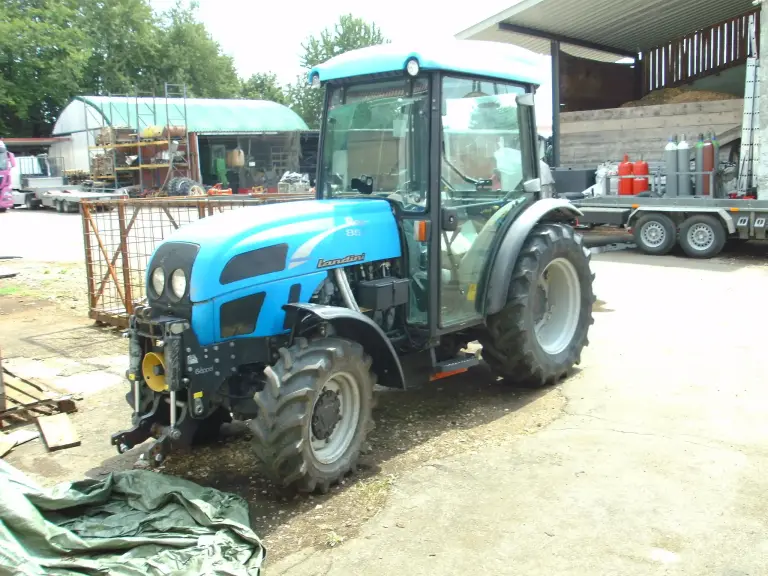
The 1950s were also the years in which Landini widened its catalogue. The Landinetta of 1956 was its first small tractor with a new two-stroke single-cylinder diesel of 15 to 18 CV, the R50 of 1957 had 50 CV and the R4000 of 1960 developed 40 CV. In 1959 the company presented the C35, its first crawler tractor, a type in which it became the market leader, and in the same period it passed under the control of Massey Ferguson while keeping its name and its colours. The L series therefore stands at the end of the hot-bulb story and at the beginning of the modern Landini range.
Design and features
- Four sizes: L25, L35, L45 and L55 covered the small and medium farms of the 1950s.
- The biggest semi-diesel: the L55 held that title when it was new.
- Simple starting: a hot-bulb engine needs no ignition system, which suited farms far from a workshop.
- End of a line: the Perkins licence of 1957 replaced the principle the company had built its reputation on.
Landini L series versions
- L25: the smallest of the range; the 1957 example in the photographs develops 25 PS.
- L35 and L45: the intermediate models listed in the Italian and French company histories.
- L55: the largest, and the biggest semi-diesel on the market at the time.
- Related models: the Landinetta of 1956, the R50 of 1957 and the R4000 of 1960.
The L series followed the Super Landini and the Vélite of the 1930s, and the crawler tradition it opened in 1959 continued with the Trekker. More Landini tractors are in the Landini collection.
Video: Avviamento Landini L 40
Video on YouTube.
Sources
- Landini (azienda), Italian Wikipedia: L range, Perkins agreement, Landinetta, R50 and R4000, C35
- Landini, French Wikipedia: L25 to L55, end of the semi-diesel, Perkins licence, Massey Ferguson