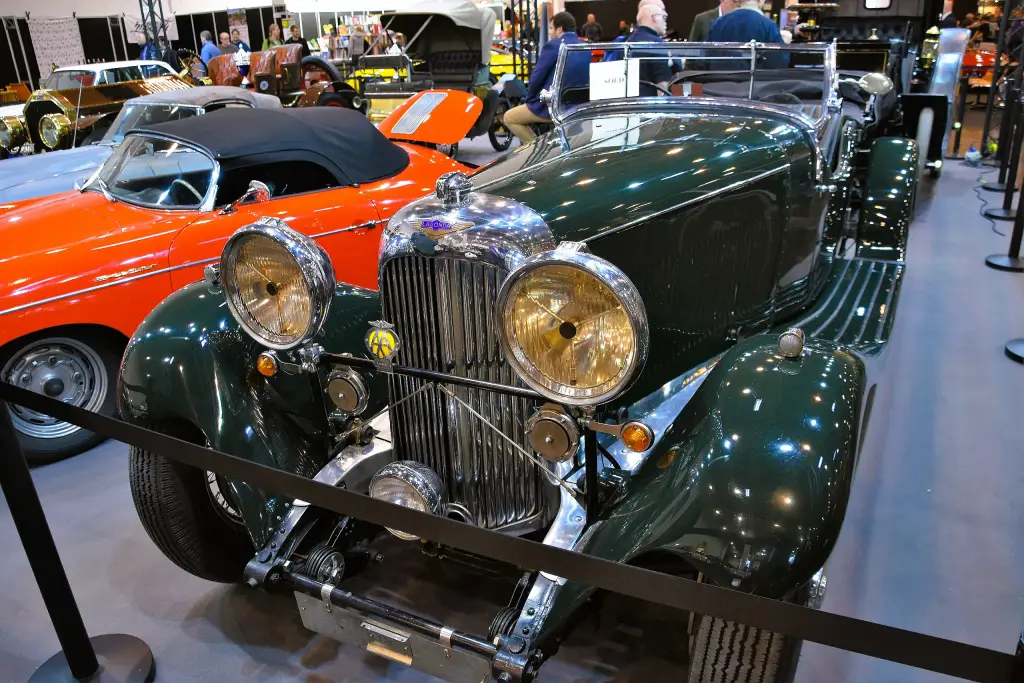
The Lagonda M45 was the first version of the Lagonda 4.5-Litre, presented in September 1933. It used a 4,467 cc six-cylinder Meadows engine and a simple chassis with rigid axles and mechanical brakes. In 1934 the range gained the more sporting M45R Rapide, which gave Lagonda its victory in the 1935 24 Hours of Le Mans.
Lagonda M45 at a glance
| Maker | Lagonda, Staines |
|---|---|
| Production | 1933–1939; 851 cars of the 4.5-Litre family |
| Presented | September 1933 as the M45 |
| Engine | Meadows 4,467 cc straight-six, overhead valves |
| Gearbox | four-speed manual |
| Chassis | rigid axles and rigid suspension, mechanical brakes |
| Drive | rear-wheel drive |
| Body styles | four-door saloon, two-door tourer, coupé and cabriolet |
| Sports version | M45R Rapide from 1934, with a modified engine and lighter body |
| Le Mans 1935 | overall victory for Johnny Hindmarsh and Luis Fontés in an M45R Rapide |
| Replaced by | Lagonda V12 |
The English Wikipedia has no article on the M45; this page is based on the Italian Wikipedia article on the Lagonda 4.5-Litre, which covers the whole family.
History of the Lagonda M45
The first 4.5-litre
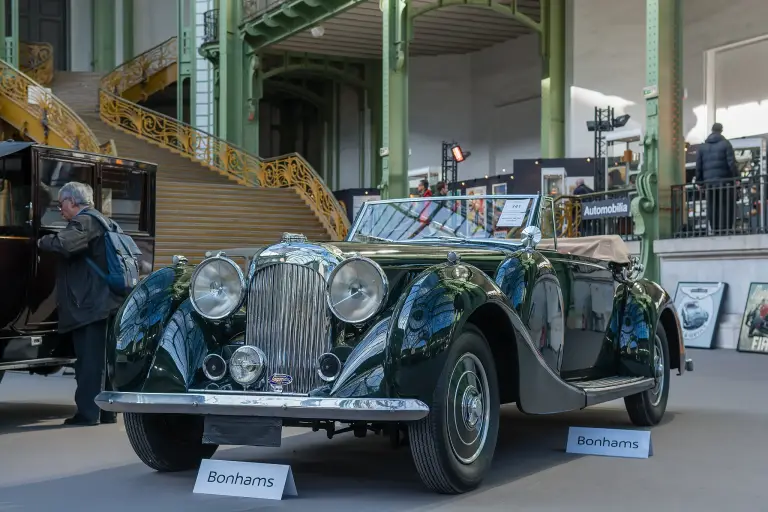
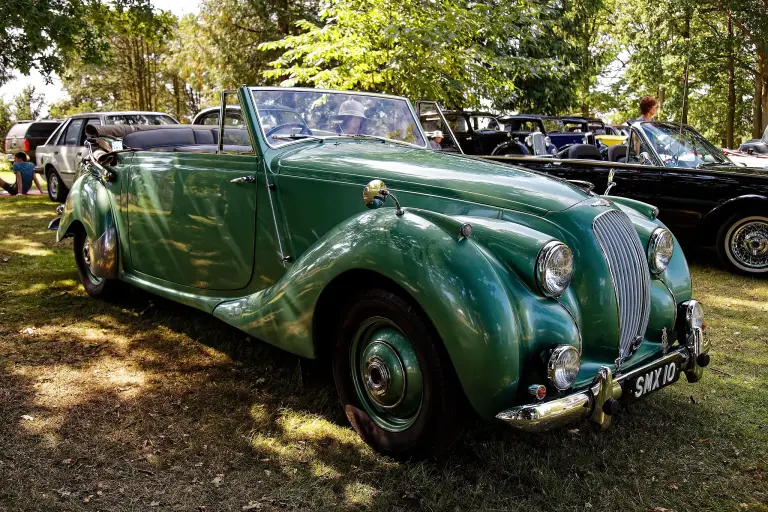
The 4.5-Litre was Lagonda’s flagship model, presented in September 1933 in the form of the M45. Its engine came from Henry Meadows of Wolverhampton: a 4,467 cc six-cylinder unit with overhead valves, which drove through a four-speed manual gearbox to the rear wheels. The chassis was deliberately simple, with rigid axles, rigid suspension and mechanical brakes. The factory offered the car as a four-door saloon and a two-door tourer, the first with four seats and the second as a 2+2; a two-door, two-seat coupé and a two-door, two-seat cabriolet completed the range.
The M45R Rapide
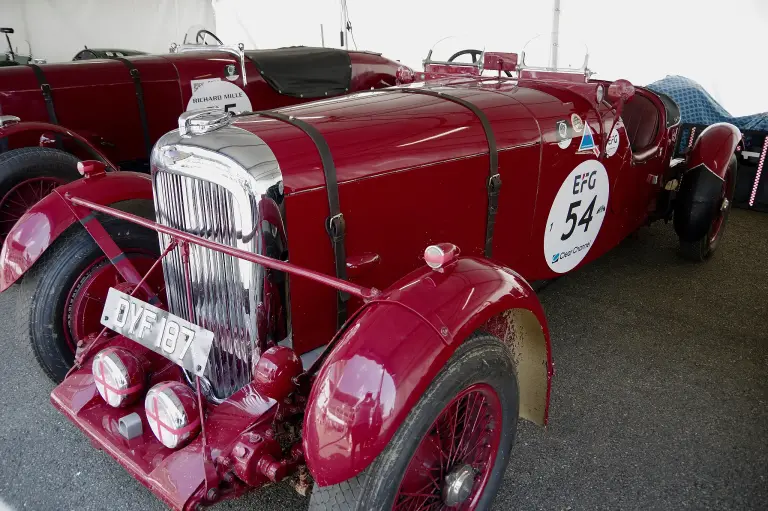
In 1934 the range gained a sporting version, the M45R Rapide. Its engine was slightly modified for greater liveliness and the body was simpler and lighter. The 4.5-Litre was not conceived as a racing car but as a machine for fast road driving, and modified examples took part in several events in Britain. The most famous result came in 1935, when Johnny Hindmarsh and Luis Fontés drove an M45R Rapide to overall victory in the 24 Hours of Le Mans.
Place in the range
The M45 set the pattern for the later 4.5-litre Lagondas. After Alan Good bought the company in 1935, W. O. Bentley modernised the car as the LG45, and in 1937 a new chassis brought the LG6. Production of the 4.5-Litre family ran from 1933 to 1939 and totalled 851 cars, and the model was eventually replaced by the V12.
Design and features
- Meadows six: a 4,467 cc overhead-valve engine supplied by Henry Meadows of Wolverhampton, shared with the later LG45 and LG6.
- Simple chassis: rigid axles, rigid suspension and mechanical brakes, chosen for fast road use rather than racing.
- M45R Rapide: the 1934 sporting version with a modified engine and lighter, simpler bodywork.
- Le Mans winner: an M45R Rapide won the 1935 24 Hours of Le Mans outright with Hindmarsh and Fontés.
Lagonda M45 versions
- Saloon: four-door, four-seat body.
- Tourer: two-door 2+2.
- Coupé and cabriolet: two-door, two-seat bodies.
- M45R Rapide: modified engine and lighter body from 1934.
The M45 was developed into the LG45 and the LG6, and it was eventually replaced by the Lagonda V12. More cars are in the Lagonda collection.
Video: Lagonda M45
Video on YouTube.
Sources
- Lagonda 4.5-Litre, Italian Wikipedia: production, bodies, M45R, Le Mans