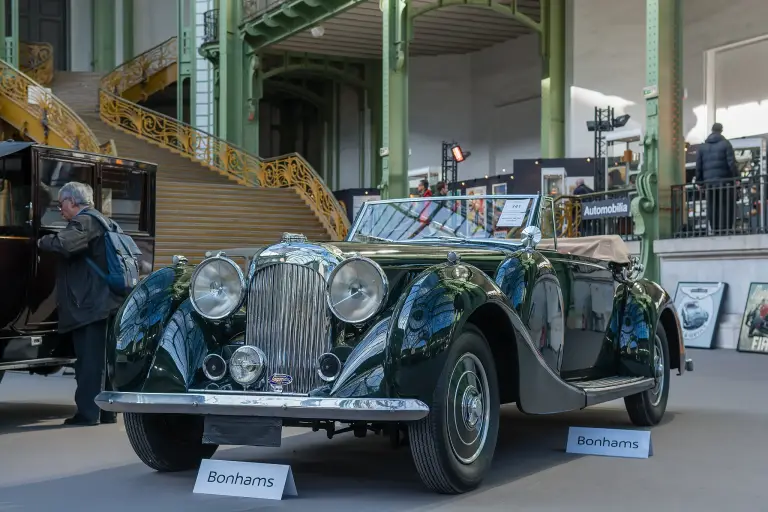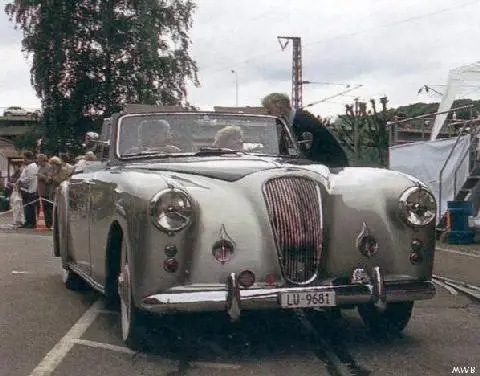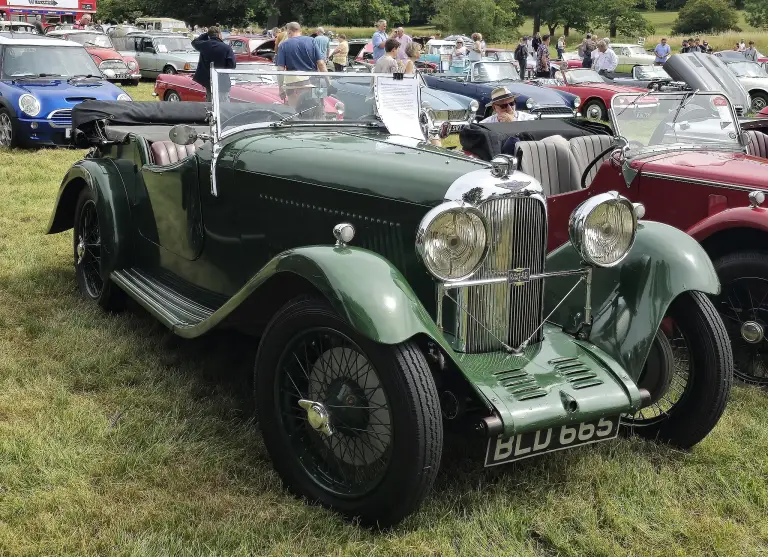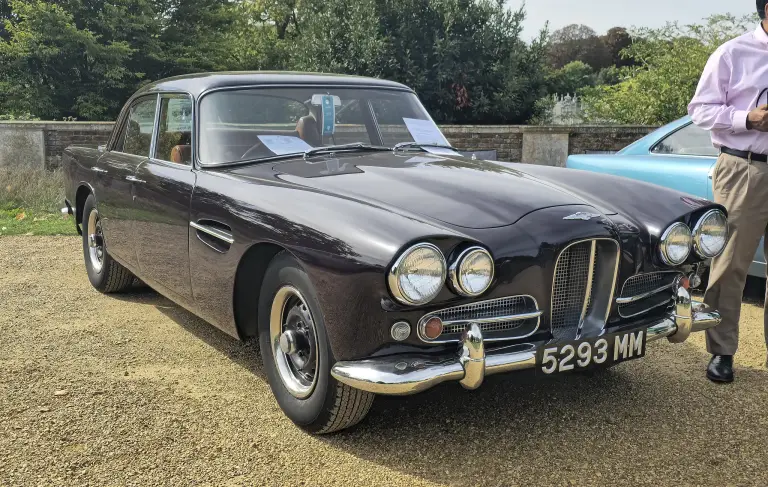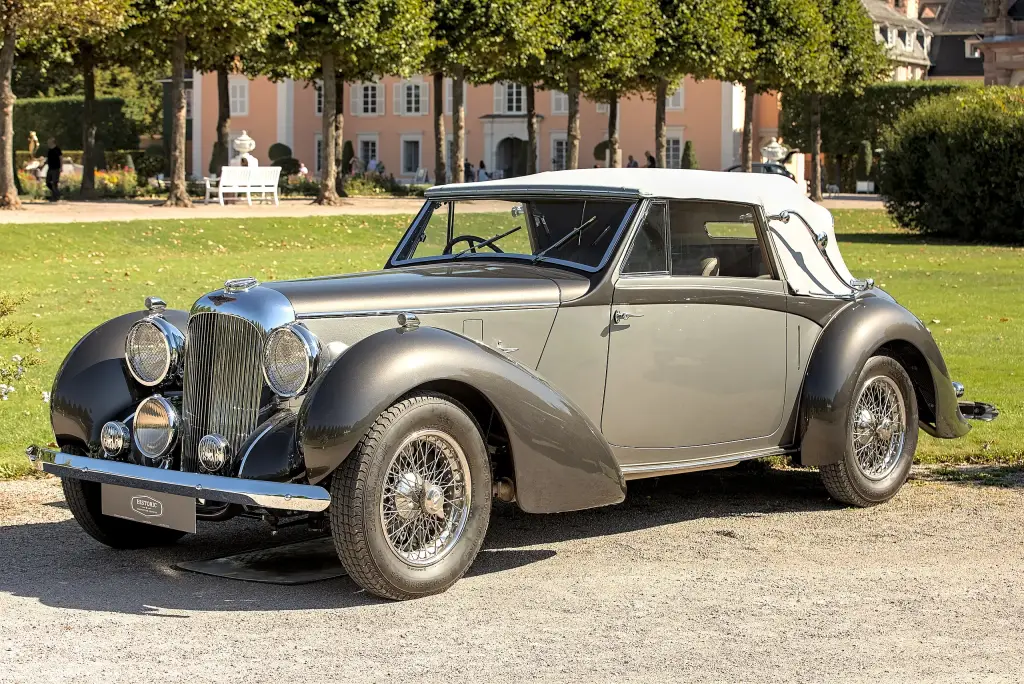
The Lagonda V12 was a large luxury car produced from 1938 to 1940. It was first shown at the 1936 London Motor Show, but production began only in 1938. Its new 60-degree V12 was designed while W. O. Bentley was at Lagonda and produced 180 bhp.
Lagonda V12 at a glance
| Maker | Lagonda, Staines |
|---|---|
| Production | 1938–1940 |
| First shown | 1936 London Motor Show |
| Engine | 4,480 cc 60-degree V12 |
| Valve gear | one chain-driven overhead camshaft per bank |
| Carburettors | twin downdraught SU, between the banks |
| Power | 180 bhp at 5,000 rpm |
| Gearbox | four-speed manual, central lever |
| Chassis | independent front suspension on torsion bars; live rear axle with hypoid drive |
| Brakes | Lockheed hydraulic |
| Wheelbases | 124, 132 or 138 in |
| Le Mans 1939 | two four-carburettor cars finished third and fourth |
History of the Lagonda V12
The engine
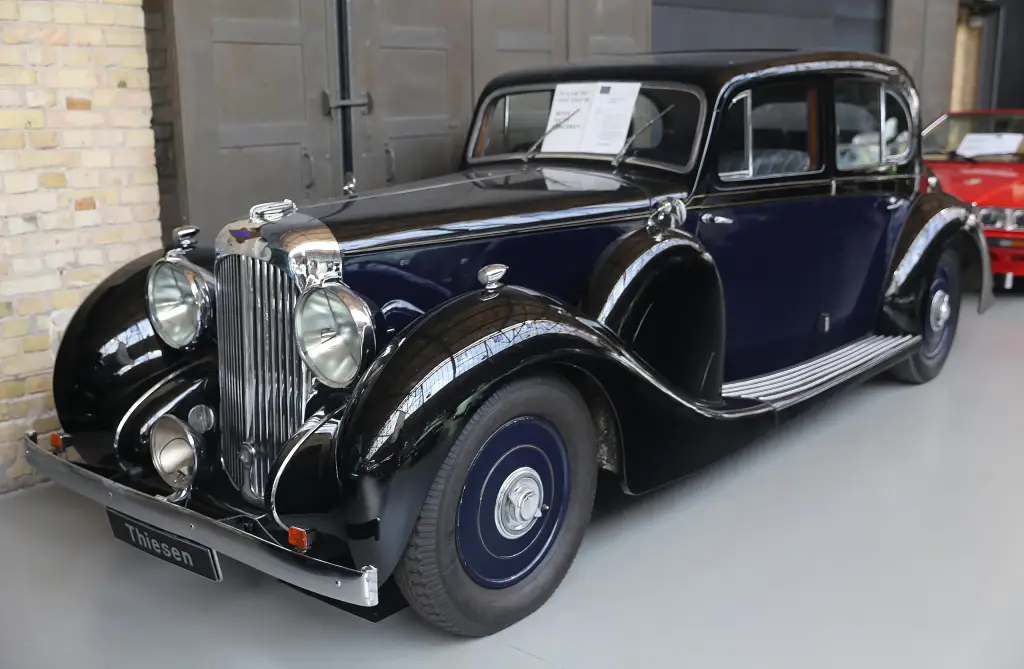
The V12 was an entirely new engine, designed during W. O. Bentley’s tenure at Lagonda. Its concepts followed the work of Stewart Tresilian at Rolls-Royce; Tresilian had followed Bentley from Rolls-Royce to Lagonda and is generally credited with the design. The 4,480 cc unit had two banks of six cylinders at 60 degrees, a combined cylinder block and upper crankcase in cast iron, a light-alloy lower crankcase and cast-iron cylinder heads. Each bank had its own chain-driven single overhead camshaft and its own distributor driven from the back of the camshaft, and twin downdraught SU carburettors sat between the banks. The engine produced 180 bhp at 5,000 rpm and drove through a four-speed gearbox with a centrally mounted lever.
Chassis and bodies
The chassis was new as well, with independent front suspension on torsion bars, a live rear axle with hypoid final drive and Lockheed hydraulic brakes. Coachwork could come from Lagonda or from independent coachbuilders, and three wheelbases were offered, 124, 132 and 138 inches, to suit different bodies; only ten cars were built on the longest. Even with the heavy Saloon de Ville body the car could reach 100 mph, and Autocar recorded 103.45 mph at Brooklands in March 1938 with the short-chassis saloon. A Lagonda V12 Rapide was the most expensive car at the 1939 New York International Motor Show, offered at US$8,900. Two V12s with four-carburettor engines were entered for the 1939 24 Hours of Le Mans and finished third and fourth.
In popular culture
A 1939 drophead coupé appeared in the Twilight Zone episode ‘A Thing About Machines’ as a possessed car, and another drophead was used in a 1959 episode of The Adventures of Ozzie and Harriet, where it was deliberately misidentified as a Buckingham. Roald Dahl featured a V12 with custom coachwork in My Uncle Oswald and in the short story The Visitor.
Design and features
- Bentley-era V12: a 4,480 cc sixty-degree engine with two camshafts and 180 bhp.
- Modern chassis: independent front suspension on torsion bars and a hypoid rear axle.
- Hydraulic brakes: Lockheed hydraulic braking instead of the mechanical system of the M45.
- Coachbuilt bodies: three wheelbases allowed bodies from Lagonda and independent coachbuilders.
Lagonda V12 versions
- Saloon de Ville: the heavy formal saloon body.
- Drophead coupé: the open version, used in film and television.
- Rapide: the most expensive car at the 1939 New York show.
- Long-wheelbase cars: only ten built on the 138-inch chassis.
- Le Mans cars: two V12s with four-carburettor engines, third and fourth in 1939.
The V12 shared its chassis ideas with the later LG6, while the LG45 kept the older 4.5-litre layout. More cars are in the Lagonda collection.
Sources
- Lagonda V12, English Wikipedia: engine, chassis, performance, Le Mans, popular culture