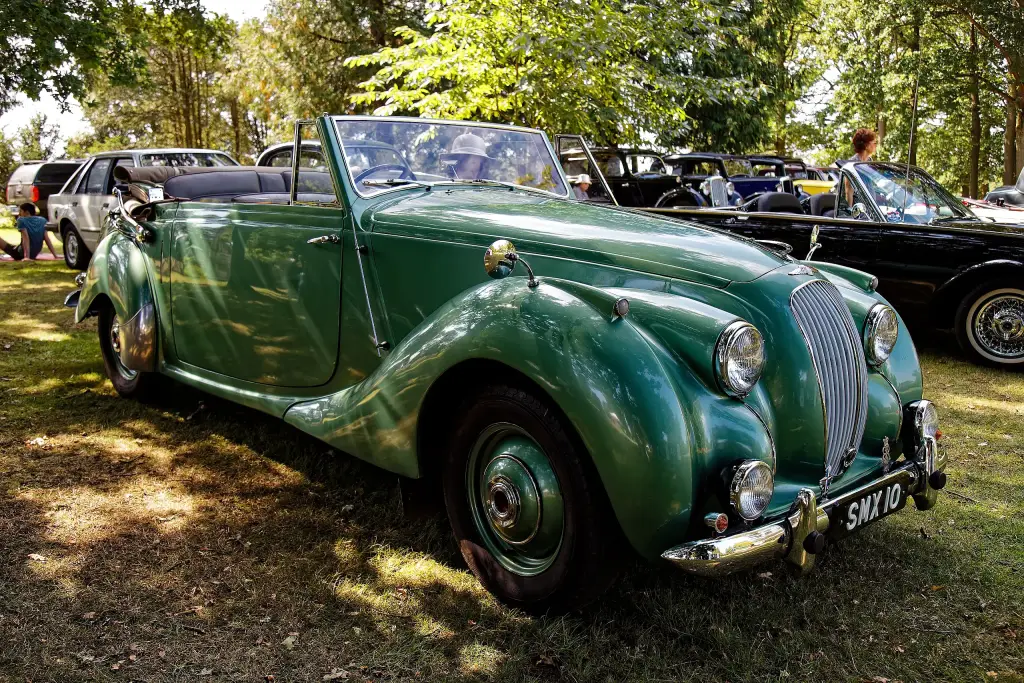
The Lagonda 2.6-Litre was a luxury car produced by Lagonda from 1948 to 1953. It was the first model after David Brown bought the company in 1947 and was named after the new straight-six engine designed by W. O. Bentley, which later made Aston Martin’s name.
Lagonda 2.6-Litre at a glance
| Maker | Lagonda, Staines |
|---|---|
| Production | 1948–1953 |
| Engine | straight-six designed by W. O. Bentley |
| Power | 105 bhp; 125 bhp in the 1952 Mark II |
| Body styles | four-door saloon; two-door drophead coupé from 1949, bodied by Tickford |
| Seats | four |
| Chassis | body-on-frame |
| Suspension | independent all round: coil springs front, torsion bars rear |
| Brakes | Lockheed drum, 12 in front and 11 in rear, rear drums inboard |
| Steering | rack and pinion |
| Performance | 90.2 mph and 0–60 mph in 17.6 seconds (1949 drophead test) |
| Built | 510 |
History of the Lagonda 2.6-Litre
The Bentley engine
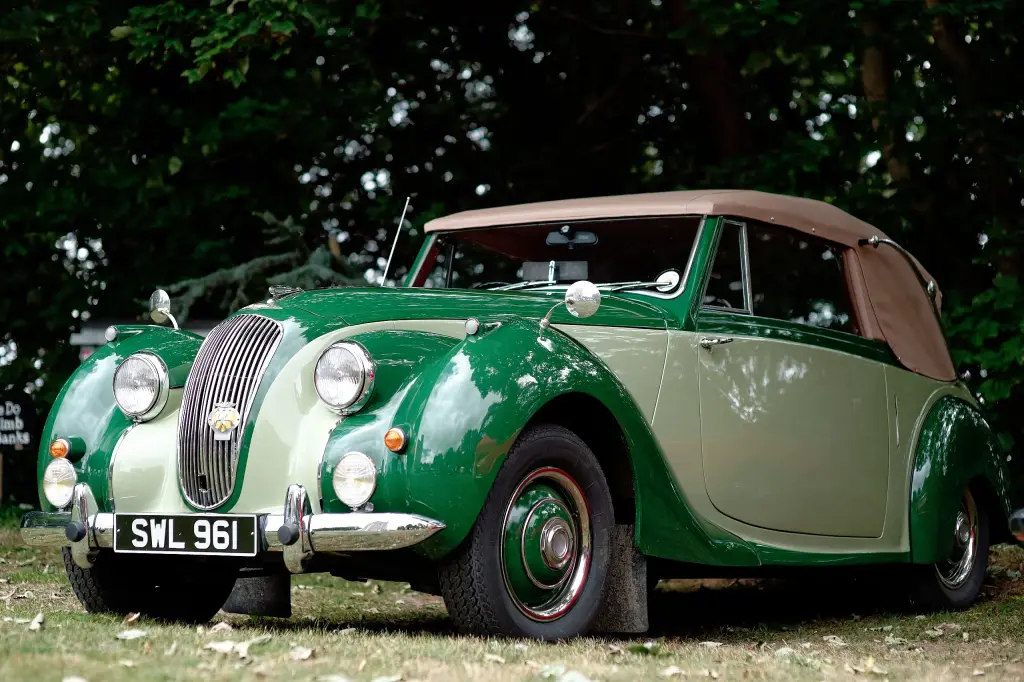
The 2.6-Litre was the first Lagonda after David Brown bought the company in 1947 and merged it with Aston Martin. The engine was the straight-six W. O. Bentley had designed at Lagonda, and Brown bought the company largely to get it: he considered it far superior to Aston Martin’s old four-cylinder units. The engine debuted in the 2.6-Litre and went on to power the Aston Martin DB2, establishing the sporting reputation of the marque in the 1950s.
Chassis and bodies
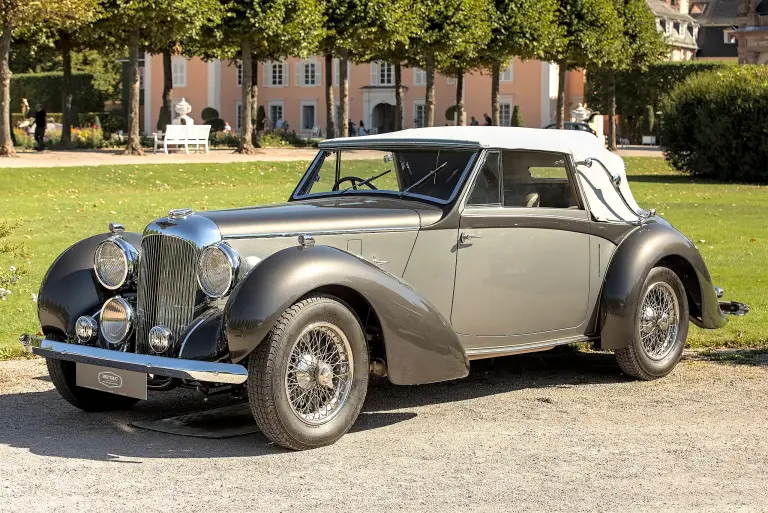
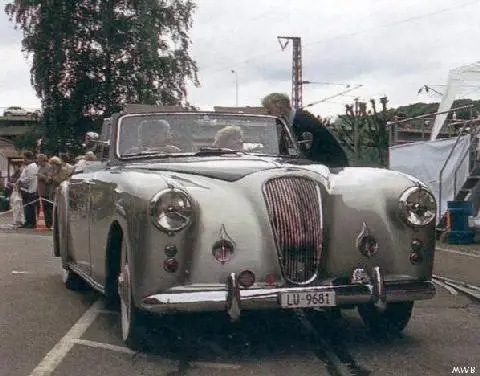
The car was larger than the Aston Martin models and was available as a four-door saloon and, from 1949, as a two-door drophead coupé, both with four seats. The drophead was bodied by Tickford, then not part of Aston Martin. The 2.6-Litre was body-on-frame and had fully independent suspension, with coil springs at the front and torsion bars at the rear; at its introduction it was believed to be the only all-independently sprung British car. The Lockheed brakes had 12-inch drums at the front and 11-inch drums at the rear, the latter mounted inboard, and the steering was rack and pinion.
Mark II and the end
A Mark II version appeared in 1952, in saloon form only, with power raised to 125 bhp. The car sold reasonably well despite being expensive and launched soon after the war: 510 examples were made when production ended in 1953. A 1949 drophead tested by The Motor reached 90.2 mph and accelerated from 0 to 60 mph in 17.6 seconds, recording 17 miles per imperial gallon; the test car cost £3,420 including taxes.
Design and features
- Bentley six: the straight-six designed by W. O. Bentley, later used in the Aston Martin DB2.
- Independent suspension all round: coil springs at the front and torsion bars at the rear, unusual in 1948.
- Tickford drophead: the open two-door body was built by Tickford.
- Inboard rear brakes: Lockheed drums mounted inboard at the rear.
- Rarity: 510 cars built in five years.
Lagonda 2.6-Litre versions
- Saloon: the four-door, four-seat body.
- Drophead coupé: the two-door open car from 1949, bodied by Tickford.
- Mark II: the 1952 saloon with 125 bhp.
The 2.6-Litre was replaced by the Lagonda 3-Litre, and the name returned with the Rapide of 1961. More cars are in the Lagonda collection.
Sources
- Lagonda 2.6-Litre, English Wikipedia: engine, bodies, chassis, performance, production