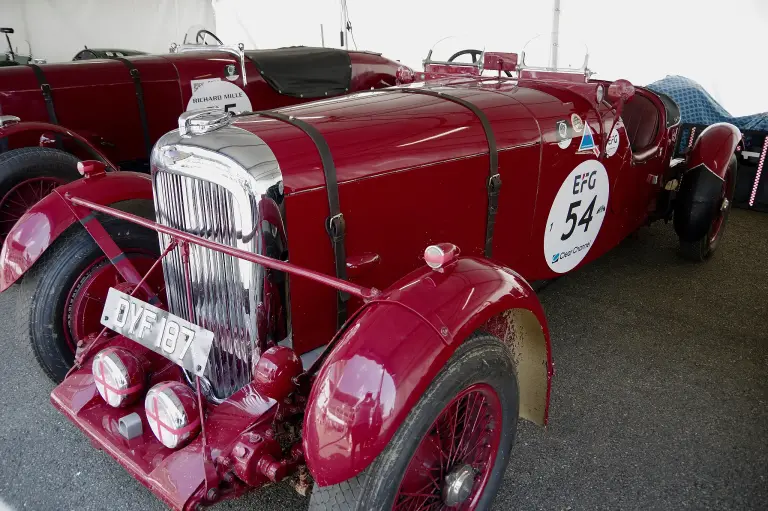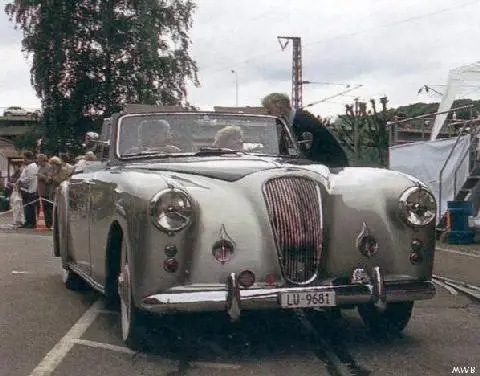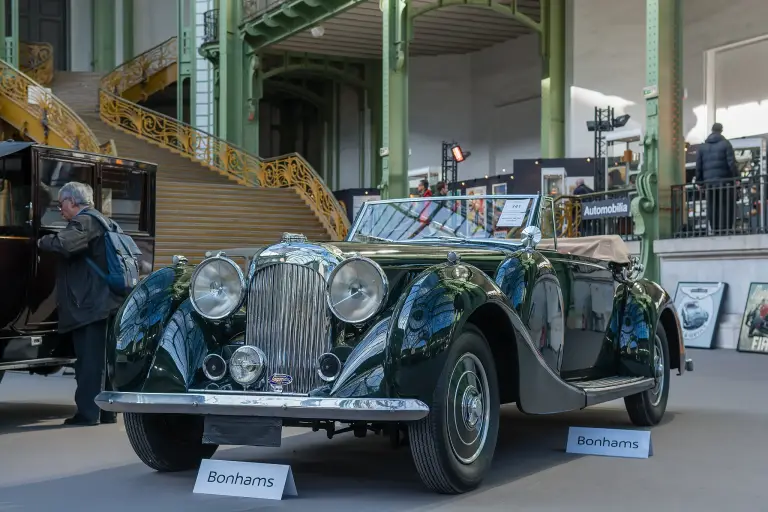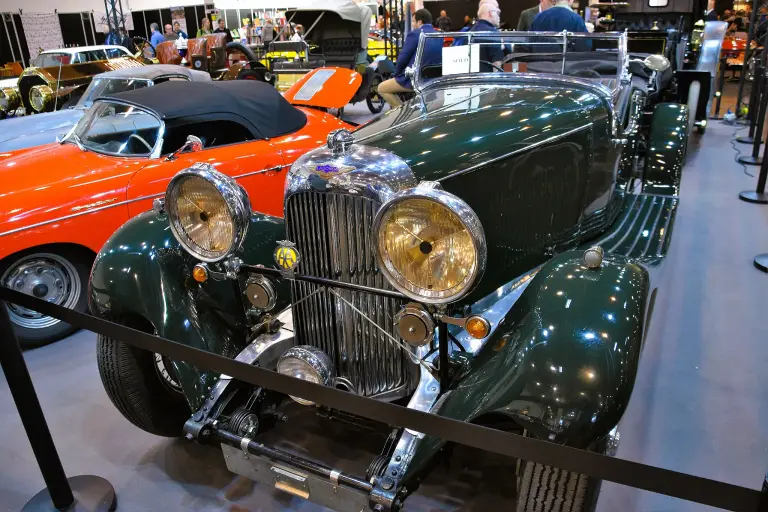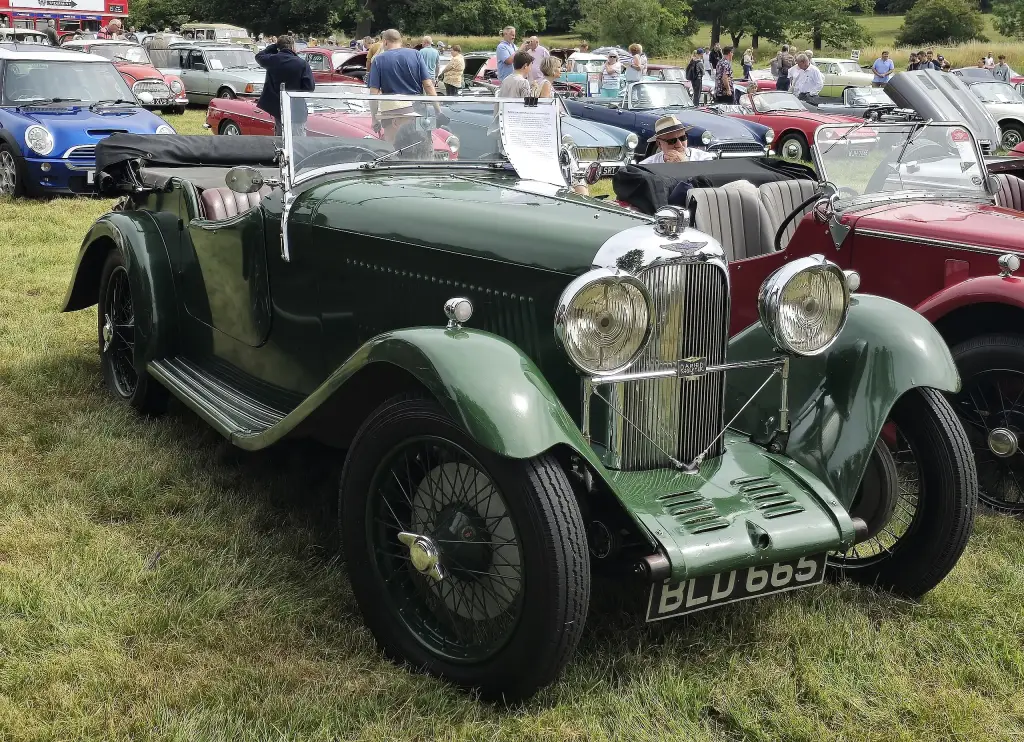
The Lagonda Rapier was a small car produced by Lagonda from 1934 to 1935, and afterwards by the independent Rapier Car Company. At its heart was an all-new 1,104 cc twin overhead camshaft four-cylinder engine that produced 50 bhp.
Lagonda Rapier at a glance
| Maker | Lagonda; Rapier Cars Ltd from 1935 |
|---|---|
| Production | 1934–1935 by Lagonda; to 1938 by Rapier Cars |
| Engine | 1,104 cc four-cylinder, twin overhead camshafts |
| Power | 50 bhp at 5,400 rpm |
| Engine production | Coventry Climax |
| Gearbox | four-speed preselector, right-hand change |
| Brakes | Girling rod-operated, 13 in drums |
| Suspension | half-elliptic springs, friction dampers |
| Wheelbase | 90.75 in at the 1933 show; 98.75 in in production |
| Chassis price | £270; complete Abbott four-seat tourer £368 |
| Coachwork | mostly by E. D. Abbott of Farnham |
| Built | 46 by Rapier Cars after 1935 |
History of the Lagonda Rapier
The engine
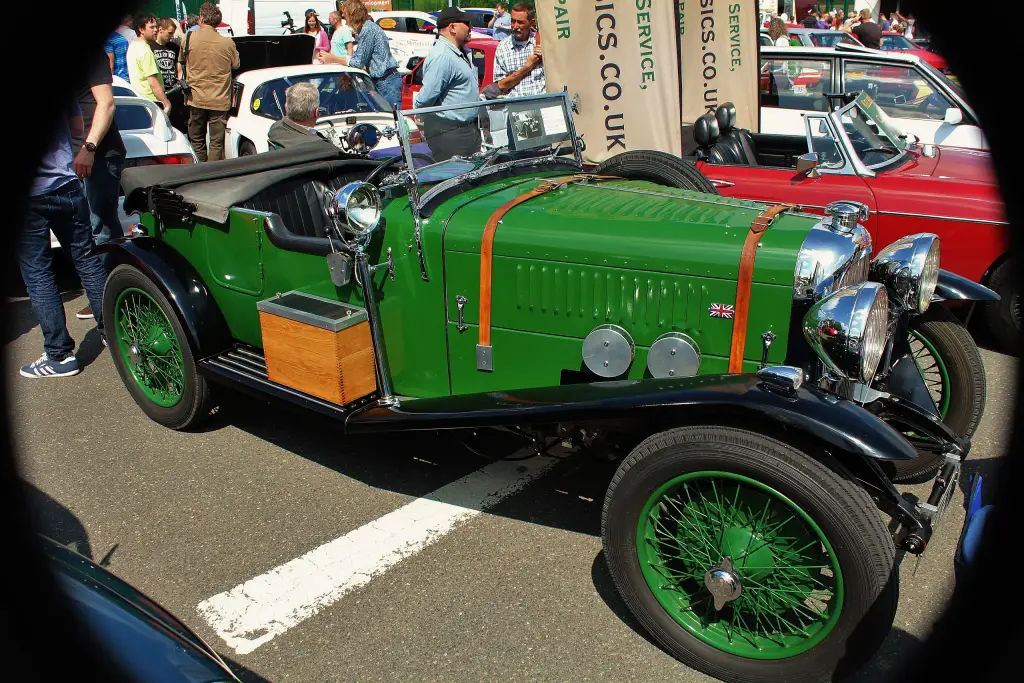
The engine was designed by the consultant Thomas Ashcroft, known as Tim, with the brief of producing ‘Britain’s finest 1,100 cc engine’. It was originally meant to be cast in light alloy, but to save cost it was eventually made in cast iron using the original patterns, which made it rather heavy. Even so it produced 50 bhp at 5,400 rpm, a very good output for the time. Production of the engine was sub-contracted to Coventry Climax.
Chassis and bodies
The chassis was designed by Charles King and consisted of steel sections bolted together. The engine drove through a four-speed preselector gearbox with a right-hand change lever, and the Girling rod-operated brakes had large 13-inch drums. Half-elliptic springs and friction dampers made up the suspension. The car shown at the 1933 London Motor Show had a wheelbase of 90.75 inches, but production cars from 1934 used a wheelbase extended by 8 inches to 98.75 inches to take a wider range of bodies. The factory supplied the running chassis for £270 and customers chose their own coachwork; most cars had bodies by E. D. Abbott of Farnham, and a complete car with an Abbott four-seat tourer body sold for £368. Other coachbuilders included John Charles, Maltby and E. J. Newns, who made about 12 cars later known as Eagles.
After Lagonda
The engine was too large for the popular 1,100 cc class, so a few cars were made with 1,084 cc engines. In 1935 the Lagonda company failed and was bought by Alan Good, who reformed it as LG Motors (Staines) Ltd. As part of the upheaval the rights to the Rapier were sold to a new company, Rapier Cars Ltd of Hammersmith Road in London, on premises Lagonda had used as its London service centre. The intention was now to sell the car complete with a body, and a design was produced by Ranalah; a four-seat tourer was priced at £375. Production continued until 1938, but only 46 cars were made.
Design and features
- Twin-cam 1,104: an all-new engine designed by Thomas Ashcroft and built by Coventry Climax, giving 50 bhp.
- Preselector gearbox: a four-speed preselector with a right-hand change lever.
- Girling brakes: rod-operated brakes with large 13-inch drums.
- Chassis-only sales: the factory sold running chassis for £270 so buyers could choose their own coachwork.
- Coachbuilt bodies: most cars wore bodies by E. D. Abbott of Farnham.
Lagonda Rapier versions
- Factory chassis: sold without bodywork for independent coachbuilders.
- Abbott four-seat tourer: the most common complete car, at £368.
- Eagles: about 12 cars by E. J. Newns.
- 1,084 cc cars: a few built for the 1,100 cc class.
- Rapier Cars Ltd cars: 46 cars sold complete to a Ranalah design from 1935 to 1938.
The Rapier was the small Lagonda of its day, sold alongside the M45 and later the LG45. More cars are in the Lagonda collection.
Video: Lagonda Rapier Northam Flying Fifty 2012 part 1
Video on YouTube.
Sources
- Lagonda Rapier, English Wikipedia: engine, chassis, bodies, production