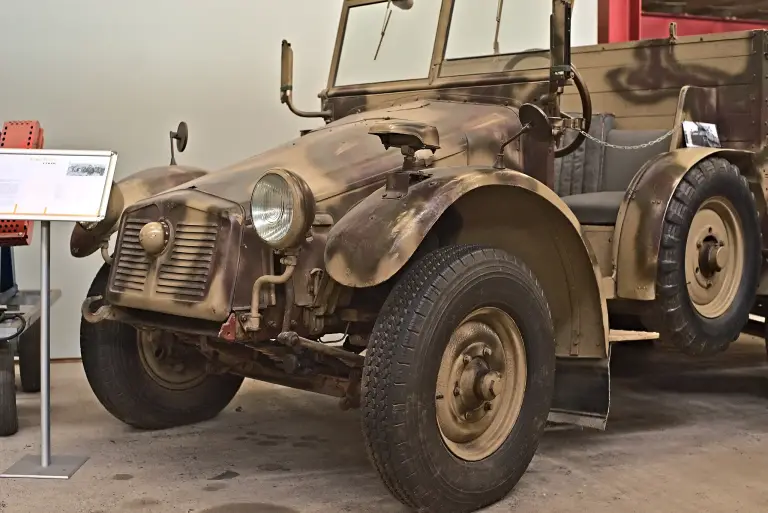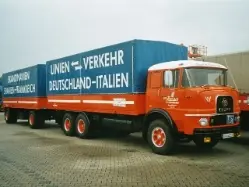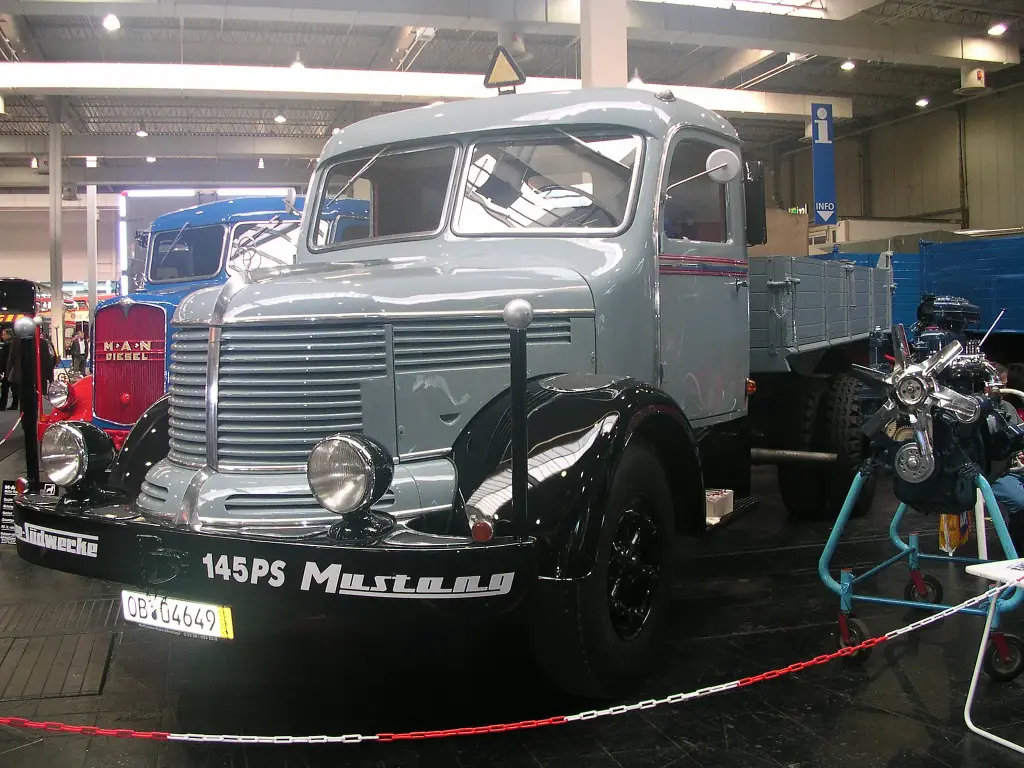
The Krupp Mustang was the smaller of the two lorries that joined Krupp’s post-war range in 1951, below the heavy Titan and above the light Büffel. Like all Krupp lorries of the time it was sold under the Südwerke name until 1954, and it was revised in 1955 without losing its name.
Krupp Mustang at a glance
| Maker | Fried. Krupp Motoren- und Kraftwagenfabriken |
|---|---|
| Brand | Südwerke until 1954, then Krupp |
| Introduced | 1951 |
| Position in range | below the Titan, above the light Büffel |
| Plants | Kulmbach, Bamberg and Nuremberg until 1953; Essen afterwards |
| 1955 update | flatter, squarer bonnet; revised but same name |
| Range mates | Titan, Büffel, Widder (1955), Elch (1956), Drache (1956) |
| Krupp lorry production | 1919–1968 |
Based on one source: the German Wikipedia article on the Krupp works, which mentions the Mustang in its history of the post-war range. There is no separate article on the model.
History of the Krupp Mustang
A new start after the war
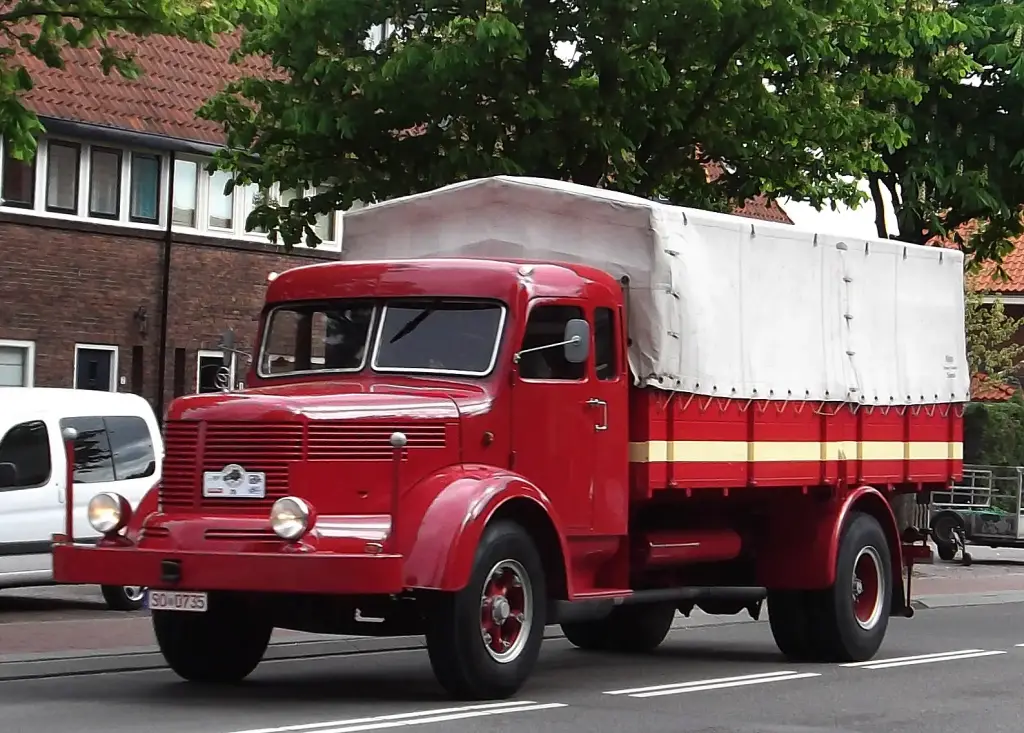
Krupp’s lorry production resumed in 1946, and the work was moved from Essen to Kulmbach, Bamberg and Nuremberg. Until 1954 the vehicles carried the brand name Südwerke rather than Krupp, which was still tainted by its role as an armaments maker. The company had built lorries since 1919 and would continue until 1968, when low sales and continuing losses ended the programme.
The menagerie of 1951
In 1950 Krupp launched the heavy Titan, a long-bonnet lorry with a two-stroke diesel of 190 hp, raised to 210 hp in 1951, and the strongest German lorry of its day. In 1951 the smaller Mustang and the light Büffel joined what the company’s own publicity called its lorry menagerie, all three carrying animal names. Production moved back to Essen in 1953.
The 1955 revision
Krupp modernised its lorry range in 1955. The bonnets became flatter and squarer, the Mustang and the Büffel were revised but kept their names, and a new five-tonner called the Widder was added. The Widder was replaced by the Elch in 1956, the same year that heavy two-axle dumpers of the Drache type were introduced. Changes continued until 1959, among them one-piece instead of split windscreens and the first forward-control cabs with fixed cabins.
Design and features
- Animal names: the Mustang was part of Krupp’s post-war “menagerie” with the Titan and the Büffel.
- Südwerke badge: sold under that name until 1954, then as a Krupp.
- 1955 facelift: a flatter, squarer bonnet and other detail changes.
- Long service: the name stayed in the range into the late 1950s.
Krupp Mustang versions
- Mustang (1951–1954): the original Südwerke-badged lorry.
- Mustang (1954–1955): the same lorry under the Krupp name.
- Revised Mustang (1955 onwards): flatter bonnet, same model name.
The Mustang sat between the heavy Krupp Tiger and the light Krupp Büffel in the post-war range. More vehicles are in the Krupp collection.
Video: Krupp Mustang starting
Video by Kruppfan on YouTube.
Sources
- Fried. Krupp Motoren- und Kraftwagenfabriken, German Wikipedia: post-war range, Südwerke brand, 1955 revision