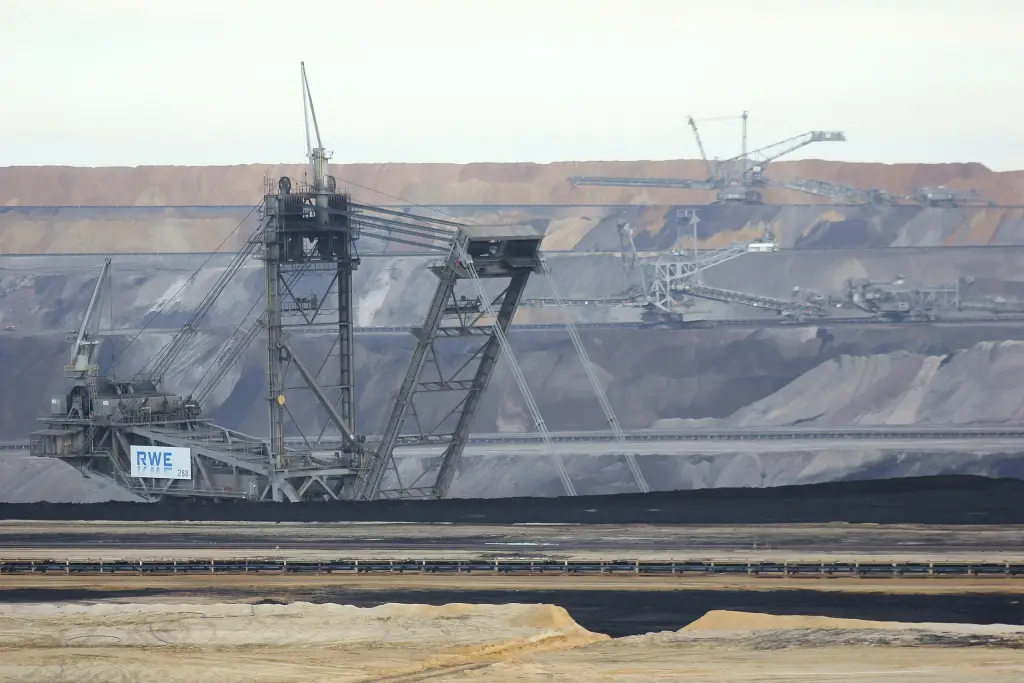
Bagger 288 is a bucket-wheel excavator that Krupp Industrietechnik built for the Rheinbraun mining company and completed in 1978. At 12,840 tonnes it overtook the NASA crawler-transporter as the heaviest land vehicle in the world, a title it held until its slightly heavier sibling Bagger 293 appeared in 1995.
Bagger 288 at a glance
| Builder | Krupp Industrietechnik |
|---|---|
| Operator | Rheinbraun, Hambach open-cast mine |
| Completed | 1978 |
| Type | bucket-wheel excavator |
| Weight | 12,840 tonnes |
| Length | 220–225 m |
| Height | 96 m |
| Bucket wheel | 21.6 m diameter, 18 buckets of 6.6 m³ |
| Output | up to 240,000 tonnes of coal a day |
| Power | 16.56 MW, supplied by cable |
| Speed | 2–10 m per minute |
| Chassis | 46 m wide, twelve caterpillar tracks |
| Crew | five |
Bagger 288 is an excavator, not a road vehicle, but it was built by Krupp and is kept in the marque’s collection.
History of the Bagger 288
Building the giant
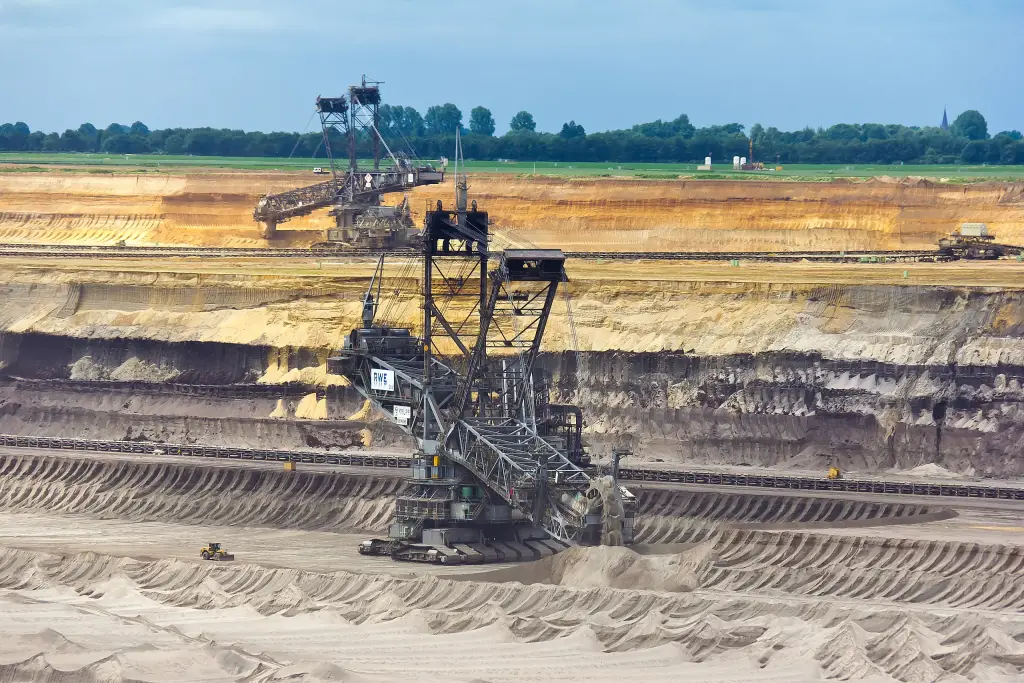
Bagger 288 was designed and manufactured over five years and assembled over another five, at a total cost of about 100 million dollars. It was known earlier as the MAN TAKRAF RB288. Its job was to remove overburden before coal could be mined at the Hambach open-cast mine in Germany, and it is one of a family of similar machines that includes Bagger 281 of 1958, 285 of 1975, 287 of 1976 and 293 of 1995.
How it works
The machine can dig 240,000 tonnes of coal or 240,000 cubic metres of overburden a day, the equivalent of a football pitch dug 30 m deep; the coal from one day fills about 2,400 wagons. It is up to 220–225 m long and about 96 m high, with a chassis 46 m wide sitting on three rows of four caterpillar tracks, each 3.8 m wide. The tracks spread the weight so well that ground pressure is only about 1.71 bar, low enough to cross gravel, earth and even grass without leaving a deep track. It needs 16.56 MW of electricity from an external supply, moves at 2 to 10 m per minute, has a minimum turning radius of about 50 m and can climb a gradient of 1:18. The excavating wheel is 21.6 m across and carries 18 buckets of 6.6 m³ each.
The 22-kilometre move
By February 2001 Bagger 288 had exposed the coal at Hambach and was no longer needed there. In three weeks it travelled 22 km to the Garzweiler mine, crossing Autobahn 61, the river Erft, a railway line and several roads. Rivers were crossed by laying large steel pipes for the water and covering them with rock and gravel; special grass was sown to protect valuable ground. The move cost nearly 15 million German marks and employed seventy workers, and it was cheaper than taking the excavator apart.
Design and features
- Heaviest land vehicle: 12,840 tonnes, ahead of the NASA crawler-transporter, until Bagger 293 came in 1995.
- External power: it runs from a trailing cable, not its own engine, at 16.56 MW.
- Tiny crew: five people operate a machine 96 m high.
- Gentle on the ground: 1.71 bar ground pressure lets it cross grass without deep tracks.
Bagger 288 versions
- Bagger 281 (1958): an earlier machine of the same family.
- Bagger 285 (1975) and 287 (1976): near-contemporaries of the 288.
- Bagger 293 (1995): the slightly heavier successor as the world’s heaviest land vehicle.
Bagger 288 came from the same Essen firm as the military lorries Krupp L2 and Krupp L3 H63. More machines are in the Krupp collection.
Video: Krupp Bagger 288 – Retrieved from Internet
Video by ShkXtreme on YouTube.
Sources
- Bagger 288, English Wikipedia: construction, output, dimensions, 2001 move
- Bagger 288, German Wikipedia: weight, builder, technical data, move